If someone in your household has a high fever this month, dengue needs to be near the top of your list — not at the bottom.
The single most important thing to understand about dengue is this: the most dangerous part of the illness usually arrives after the fever starts to come down. That is the opposite of what most people expect. It is also the reason people delay coming in, and occasionally why a case that looked mild on Tuesday becomes an emergency on Thursday.
Dengue is rising sharply in the Klang Valley right now
Malaysia recorded more than 58,000 dengue cases in 2026 as of August, with 55 deaths — a rise of over 56% compared with the same period last year. The Klang Valley has been hit hardest: Kuala Lumpur and Putrajaya are up more than 100%, and Selangor by around 61%.
This is not somebody else’s problem.
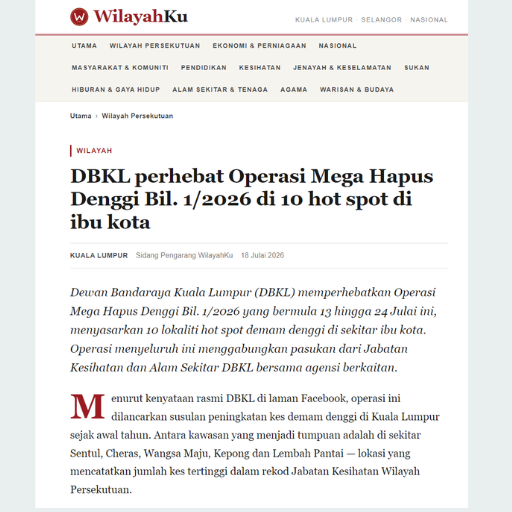
Kepong was named by DBKL as one of the city’s dengue focus areas in its enforcement operations this year. If you live here, your risk this month is genuinely higher than usual.- DBKL Operasi Mega Hapus Denggi 2026
Dengue does not behave like an ordinary fever
Most viral fevers get steadily better. Dengue moves through three distinct stages, and knowing them tells you when to worry.
Days 1-3: the febrile phase
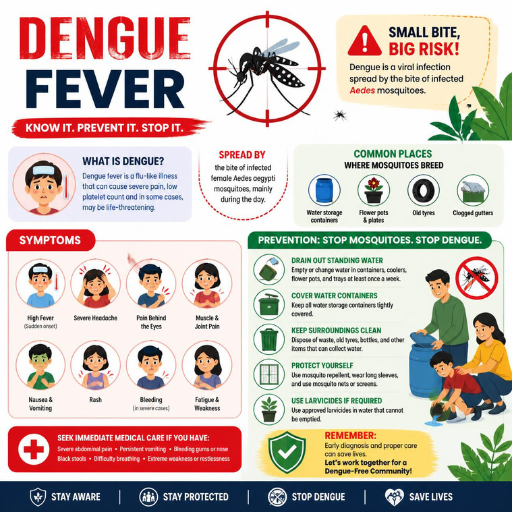
High fever, often 39–40°C, with headache, pain behind the eyes, muscle and joint aches, flushed face, and sometimes a rash. People often feel awful but are not in danger yet.
Days 3-7 : the critical phase
This begins around the time the fever drops, usually after the third day, and lasts roughly 24–48 hours. In some patients, fluid starts leaking out of the small blood vessels. Blood becomes more concentrated, platelets fall, and blood pressure can drop.
Here is the trap: the patient may say they feel better because the fever has gone. Feeling better at day four or five is not automatically reassuring. This is precisely the window when doctors want to be checking on you.
After the critical phase: recovery
Leaked fluid is reabsorbed, appetite returns, and a patchy itchy rash on the limbs is common. Tiredness can linger for a week or two.
The warning signs
Malaysian clinical guidelines list specific warning signs. If any of these appear, do not wait until morning:
Abdominal pain or tenderness of any kind
Persistent vomiting — more than three times in 24 hours
Persistent diarrhoea — more than three times in 24 hours
Any spontaneous bleeding — gums, nose, unusual bruising, black stools, or heavier-than-normal menstrual bleeding
Lethargy, restlessness or confusion — a child who is unusually drowsy or a family member who seems “not quite right”
Not passing much urine, or being unable to keep fluids down
Cold, clammy hands and feet, or feeling faint on standing
Any one of these is enough. You do not need all of them.
What to do at home
Paracetamol yes — ibuprofen and aspirin no
Use paracetamol for fever and aches, at the dose on the packet, and do not exceed the daily maximum. Avoid ibuprofen, diclofenac, mefenamic acid and aspirin. These increase bleeding risk and can irritate the stomach, which is exactly what we do not want when platelets are falling. If you take aspirin or a blood thinner for your heart, tell us — do not simply stop it on your own.
Sponging and rest help. Antibiotics do not, because dengue is a virus.
Fluids and urine output
Drink steadily through the day — water, oral rehydration salts, barley, soup, isotonic drinks. A practical marker to track at home: you should be passing a reasonable amount of pale urine every four to six hours. Less than that, or urine that is dark and scanty, is a reason to come in.
Which tests and when they are useful
NS1 antigen is most reliable in the first three days of fever. Its sensitivity drops noticeably from day four to five onwards.
Dengue IgM becomes detectable in most people from around day five, and is usually positive by days six to ten. A negative IgM before day seven does not exclude dengue — it may need repeating.
Full blood count matters most of all. We look at your platelet count and your haematocrit, and — critically — how they are trending. One reading tells us less than two readings a day apart.
This is why we may ask you to come back daily for a repeat blood test during the danger window. It is not over-caution; the trend is the whole point.
Who needs closer monitoring
Some people should be reviewed earlier and more often, even without warning signs: adults over 65; people with diabetes, hypertension, heart, kidney, liver or chronic lung disease; anyone on aspirin or a blood thinner; pregnant women; infants and young children; and anyone who lives alone.
The 10-minute weekly check that prevents dengue at home
Fogging only kills adult mosquitoes flying at that moment. Removing breeding sites is what actually reduces cases. Once a week, spend ten minutes checking:
Saucers under potted plants and drip trays
Roof gutters and outdoor drains
Pails, tubs, and covered water storage
Air-conditioner and water-dispenser trays
Discarded containers, tyres, and construction debris around the building
Bamboo poles, tarpaulins and anything that holds a puddle after rain
In Kuala Lumpur, property owners found with Aedes breeding on their premises can be compounded — but the better incentive is that the mosquito biting you almost certainly bred close to where you sleep. Daytime protection matters too: Aedes bites in the morning and late afternoon, so repellent, long sleeves and screens all help.
The Dengue Vaccine
My fever broke on day four. Am I in the clear?
Not necessarily. Defervescence is when the critical phase typically begins. Watch closely for the next 48 hours and come in for a review, especially if you have not had a blood test.
Is a low platelet count on its own dangerous?
Not by itself. What we watch is the platelet count together with the haematocrit and how you look clinically. Many people with moderately low platelets are managed at home with daily review; some with higher counts need admission because of warning signs.
Can I get dengue twice?
Yes. There are four dengue serotypes, and a second infection with a different serotype carries a higher risk of severe disease. Previous dengue is a reason to be more careful, not less.
Do I need a drip?
Most people do not. Oral fluids are usually enough if you can keep them down. A drip becomes necessary when you cannot drink, are vomiting persistently, or show signs of plasma leakage.
How long until I feel normal again?
Fatigue for one to two weeks after recovery is common and expected. If you are still feeling unwell beyond that, come and see us.
Seeing us at Klinik Medilove Keponggi
If you or a family member has had a fever for more than two days, come in early. We can do dengue testing and a full blood count on site, arrange daily monitoring during the critical window, and refer promptly to hospital if you need it.
This article is general health information and does not replace an individual medical consultation. If you or someone in your household develops any of the warning signs above, seek medical attention immediately.