










Key facts
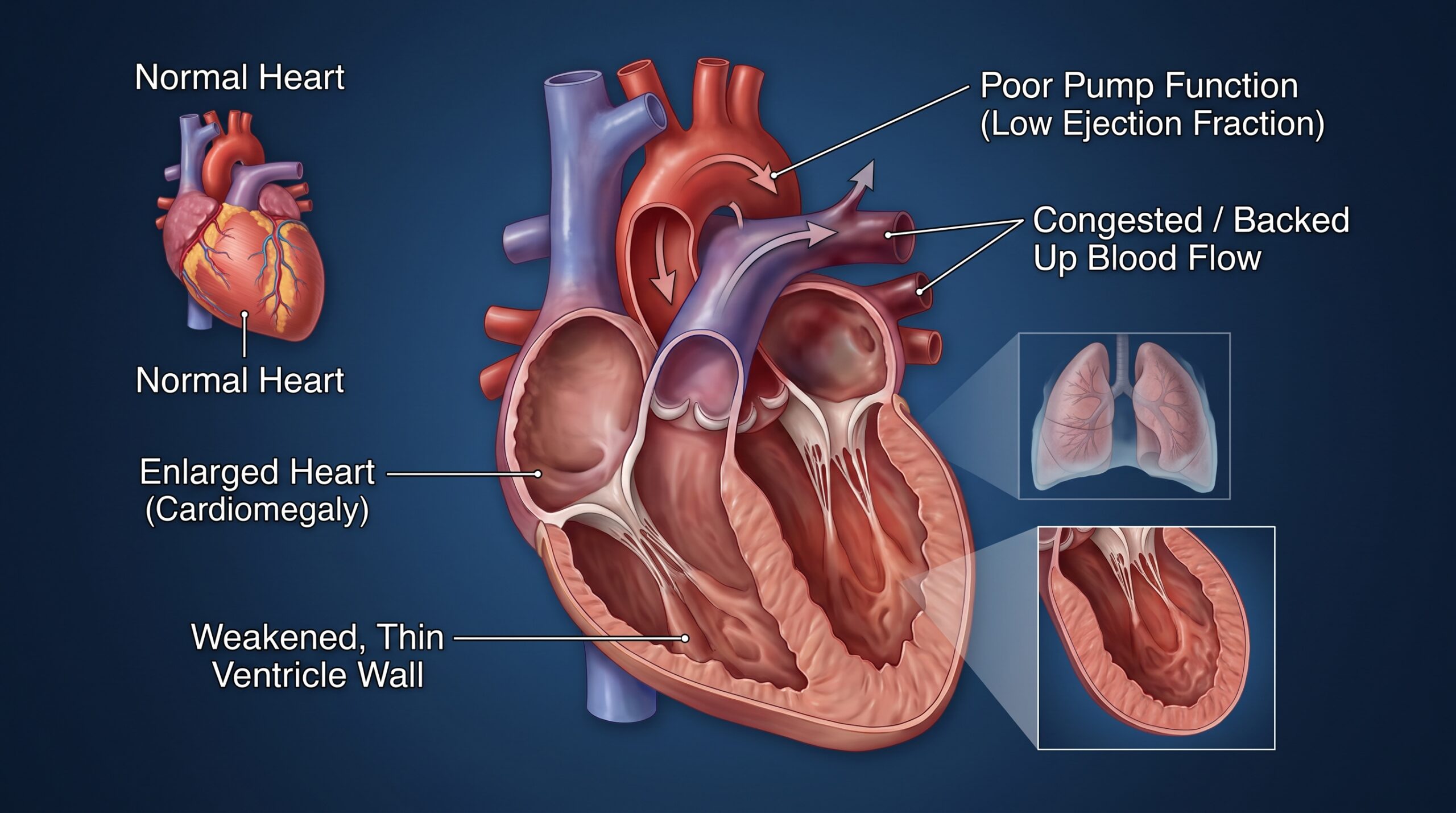
- Heart failure means the heart is not pumping as well as it should. It does not mean the heart has stopped.
- In Malaysia, ischaemic heart disease is the most common cause of heart failure, and patients tend to be younger than in Western countries.
- Breathlessness, tiredness and swelling of the ankles or legs are common symptoms.
- An echocardiogram (heart ultrasound) is the key test to confirm heart failure and its type.
- There is no cure, but treatment can control symptoms and keep the condition stable for many years.
Signs and symptoms
Early heart failure may cause only mild symptoms, such as getting breathless more easily than before. Common symptoms include breathlessness during everyday activities or when lying flat, waking at night breathless or coughing, tiredness, dizziness, and swelling of the feet, ankles, legs or abdomen.
Sudden weight gain over a few days can be a sign of fluid build-up. Symptoms alone cannot confirm heart failure, because breathlessness and swelling have many other causes, including lung, kidney and thyroid problems.
Risk factors
Coronary artery disease or a previous heart attack
High blood pressure
Diabetes
Irregular heart rhythm such as atrial fibrillation
Smoking, heavy alcohol use or obesity
Age 65 or older
Common causes
Most heart failure follows damage or strain on the heart muscle, especially from coronary artery disease, a heart attack or long-standing high blood pressure. Heart valve disease, cardiomyopathy, rhythm problems, kidney disease, anaemia and thyroid problems can also cause or worsen it.
How it is checked
A doctor asks about your symptoms and examines you for signs such as fluid in the lungs or leg swelling. An ECG, chest X-ray and blood tests are usually done, and an echocardiogram shows how well the heart pumps and helps confirm the type of heart failure. Results are reviewed over time to guide treatment.
Assessment and investigations
Heart Ultrasound (Echo)
Ultrasound of the heart showing how well it pumps and fills, and checking the valves. It is the key test to confirm the type of heart failure.
ECG (Heart Tracing)
Records the heart's rhythm and electrical activity. It can show irregular rhythms or signs of a past heart attack that may cause heart failure.
Chest X-ray
Shows the size of the heart and whether fluid has built up in or around the lungs, and helps look for other causes of breathlessness.
Kidney Function and Salts
Checks kidney function and salts such as potassium and sodium, which matter for heart failure and for monitoring some heart medicines.
When to see a doctor
See a doctor if you become breathless more easily than before, get breathless lying flat, notice new ankle or leg swelling, or gain weight quickly over a few days.
Urgent warning signs
Seek emergency care (call 999) if you have severe difficulty breathing, are coughing up frothy pink phlegm, have blue or grey lips, chest pain, or collapse.
Frequently asked questions
Does heart failure mean my heart is about to stop?
No. Heart failure means the heart is not pumping as well as it should. With treatment, many people live with stable heart failure for years.
Can heart failure be cured?
Usually not, but it can be well controlled. Medicines, lifestyle changes and treating the cause, such as blocked arteries or high blood pressure, can improve symptoms and lower the risk of hospital admission.
Why do I get breathless when lying flat?
When the heart is not pumping well, fluid can collect in the lungs, and lying flat makes this worse. New breathlessness when lying down should be checked by a doctor.
What test confirms heart failure?
An echocardiogram (heart ultrasound) is the main test. A doctor interprets it together with your symptoms, an ECG, blood tests and sometimes a chest X-ray.
Is ankle swelling always heart failure?
No. Ankle swelling has many causes, including long periods of standing, vein problems, some medicines, and kidney or liver conditions. A doctor can check whether the heart is involved.