










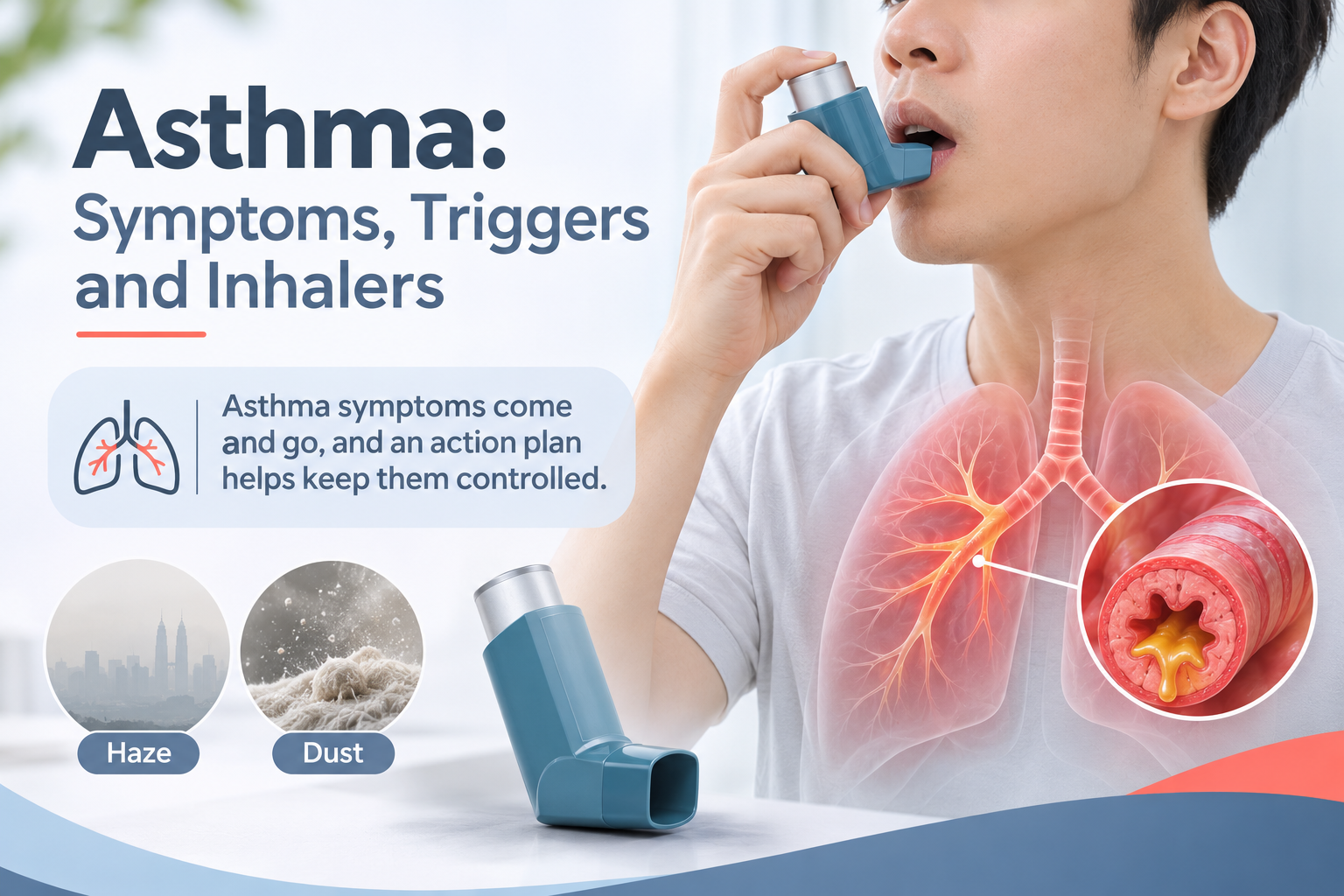
Key facts
- Asthma symptoms often come and go and may be worse at night or early in the morning.
- Common triggers include colds, house dust mites, smoke and haze.
- Breathing tests such as spirometry or peak flow help confirm the diagnosis.
- Guidelines advise that most people with asthma use a steroid-containing inhaler, not a reliever alone.
- A written asthma action plan helps you know what to do when symptoms get worse.
Signs and symptoms
Asthma symptoms include wheeze, cough, chest tightness and shortness of breath. They usually come and go, are often worse at night or early in the morning, and may be set off by exercise, colds or haze.
Some people mainly have a cough, and symptoms can be mild between flare-ups. Symptoms alone cannot confirm asthma, because other heart and lung conditions can feel similar.
Risk factors
Family history of asthma or allergies
Eczema or allergic rhinitis
Smoking or exposure to second-hand smoke
Air pollution and haze
Dusts or chemicals at work
Common causes
The exact cause of asthma is not fully understood, but it involves long-term inflammation of the airways, often linked to genes and allergies. Triggers such as viral infections, dust mites, smoke and haze can narrow the airways and set off symptoms.
How it is checked
Your doctor will ask about your symptoms, triggers and family history, and listen to your chest. Breathing tests such as spirometry before and after a reliever inhaler, or peak flow readings over a few weeks, help show whether airflow changes in the way asthma typically does. If tests are normal when you feel well, they may be repeated when you have symptoms.
Assessment and investigations
Full Blood Count (Eosinophils)
May show raised eosinophils, white blood cells linked to allergic airway inflammation; interpreted together with breathing tests.
Chest X-ray
Does not diagnose asthma but may be used to look for other causes of breathlessness or for complications.
When to see a doctor
See a doctor if you have a wheeze or cough that keeps coming back, symptoms that wake you at night, need your reliever inhaler more often than usual, or have had an asthma attack.
Urgent warning signs
Seek urgent medical care or call 999 if your breathing is getting worse quickly, your reliever inhaler is not helping, you find it hard to walk or talk, or you become drowsy or confused.
Treatment and management
Most people with asthma use an inhaled corticosteroid-containing inhaler to reduce airway inflammation and lower the risk of attacks, with a reliever for symptoms. Your doctor will check your inhaler technique, give you a written asthma action plan and review your control regularly.
Treatment is stepped up or down depending on how well your asthma is controlled.
Prevention
Asthma itself cannot always be prevented, but attacks often can. Use your inhaler as prescribed, avoid smoke and known triggers, keep your reliever with you and follow your action plan. During haze, limit outdoor activity and keep windows closed.
Read Haze in Malaysia: 7 Steps to Protect Your Family for practical tips.
Frequently asked questions
Can asthma be cured?
Not usually, but it can be well controlled. With the right inhaler, an action plan and avoiding triggers, many people have few or no symptoms.
Why shouldn't I use only my reliever inhaler?
Relievers ease symptoms quickly but do not treat the airway inflammation. Guidelines advise against relying on a reliever alone, because frequent use is linked to a higher risk of serious attacks.
Is it safe to use a steroid inhaler every day?
For most people, yes. Inhaled steroids work mainly in the airways and are recommended to reduce attacks. Your doctor will review the dose and check for side effects.
Does haze make asthma worse?
Yes, haze and air pollution can trigger symptoms. During haze, limit outdoor activity, keep windows closed, wear a suitable mask outdoors and keep your inhaler with you.
How do I know if my asthma is under control?
Good control usually means few daytime symptoms, no night waking from asthma, rarely needing your reliever and no attacks. If you need your reliever more often, see your doctor for a review.