










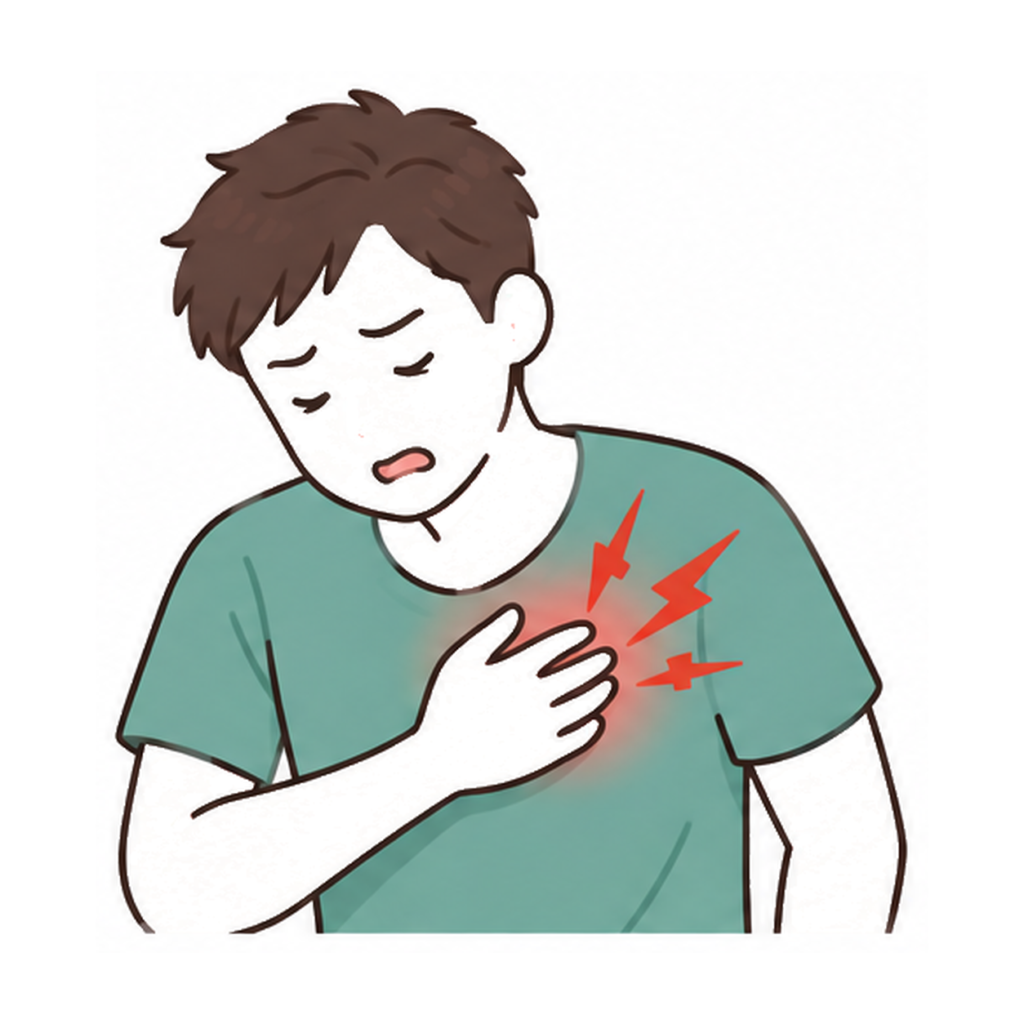
What to notice
- What the discomfort feels like — pressure, tightness, burning, aching or sharp pain
- Where the discomfort is and whether it spreads elsewhere
- Whether it began suddenly or gradually
- How long it lasts and whether it keeps returning
- Whether it happens during activity, at rest or after eating
- Whether there is breathlessness, sweating, nausea, dizziness, palpitations or fainting
Common cause groups
Heart and circulation-related causes
Reduced blood flow to the heart and other cardiovascular problems can cause chest pressure, tightness or discomfort. The pattern, accompanying symptoms and cardiovascular risk factors help determine how urgently heart-related causes need to be assessed.
Muscle and chest-wall causes
Muscle strain, chest-wall irritation and other musculoskeletal problems can cause chest pain, particularly when discomfort changes with movement, posture or pressure on the affected area.
Digestive causes
Acid reflux and other digestive problems can sometimes cause burning or discomfort behind the breastbone. Symptoms related to meals or lying down may provide useful clues, but chest symptoms should not be assumed to be digestive without considering other causes.
Lung and other causes
Respiratory infections and other lung or airway problems can sometimes cause chest discomfort, especially when pain occurs with coughing or difficulty breathing. Other health problems can also cause similar symptoms.
Associated signs
Breathlessness
Palpitations
Dizziness
Sweating
Nausea or vomiting
Cough or fever
Fainting or near-fainting
Pain spreading to the arm, shoulder, jaw or back
How it may be assessed
A doctor will usually ask where the pain is, what it feels like, when it began, how long it lasts and what seems to trigger or relieve it. Blood pressure, pulse and other basic observations may be checked.
Depending on the pattern and urgency, an ECG or other investigations may then be considered. Chest pain that could represent an acute heart or lung problem may need assessment in an emergency setting rather than routine outpatient testing.
Assessment and investigations
Blood Pressure
Blood pressure and pulse are useful basic measurements when chest pain or other cardiovascular symptoms are being assessed.
Electrocardiogram (ECG)
An ECG records the electrical activity of the heart and may identify rhythm changes or other findings relevant to chest pain. A normal resting ECG does not by itself exclude every heart-related cause of chest pain.
When to get checked
Consider medical assessment if chest discomfort keeps returning, occurs during activity, is becoming more frequent, or appears together with breathlessness, palpitations, dizziness or a noticeable reduction in exercise tolerance.
Urgent warning signs
Seek urgent medical care for new, severe or persistent chest pain or pressure, particularly when it occurs with significant breathlessness, sweating, nausea, fainting, or discomfort spreading to the arm, shoulder, jaw or back.
Frequently asked questions
Does chest pain always mean a heart problem?
No. Chest pain can come from the heart, chest wall, digestive system, lungs and other causes. The pattern of pain and accompanying symptoms help determine what needs to be assessed.
Can acid reflux cause chest pain?
Yes. Acid reflux can cause burning or discomfort behind the breastbone, sometimes after meals or when lying down. However, new or concerning chest pain should not automatically be assumed to be reflux.
Can muscle strain cause chest pain?
Yes. Muscles and structures of the chest wall can cause pain, particularly when discomfort changes with movement, posture or pressure on the area. Other causes still need to be considered when the pattern is unclear.
When is chest pain an emergency?
New, severe or persistent chest pain or pressure needs urgent assessment when it occurs with symptoms such as significant breathlessness, sweating, nausea, fainting or pain spreading to the arm, shoulder, jaw or back.
Screening context
Related Screening Guides
Heart & Cardiovascular Screening
Heart screening looks at blood pressure, cholesterol, sugar and smoking to estimate your heart attack and stroke risk, so you can act early.
Learn More