








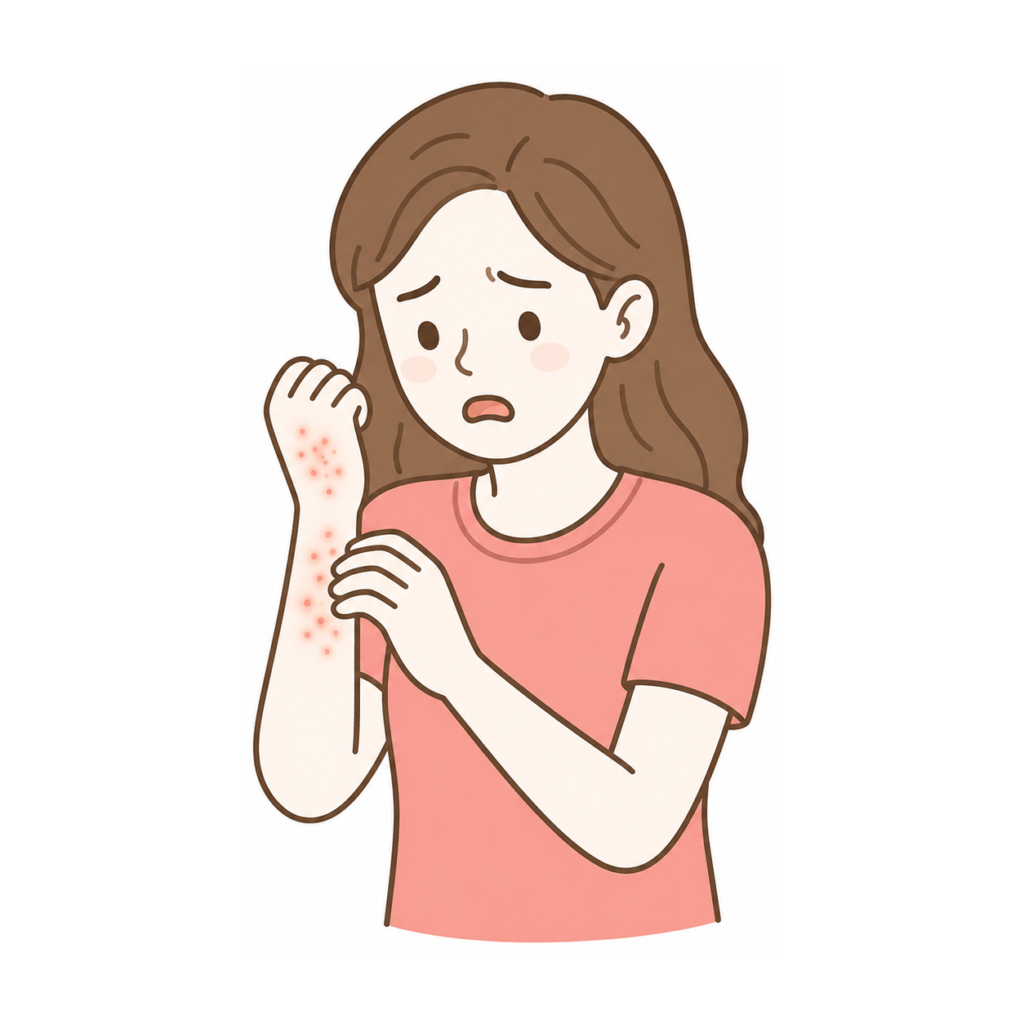
Overview
Skin changes can signal allergy, infection, or other causes
What to notice
- Where the rash appears and whether it is spreading
- Whether it is itchy, painful, burning or otherwise uncomfortable
- Whether the skin is red, raised, scaly, blistered or covered in small spots
- How quickly the rash appeared and how long it has been present
- Whether a new soap, skincare product, medicine, food or other exposure came before it
- Whether there is fever, swelling, breathing difficulty or another new symptom
Common cause groups
Irritation or contact reactions
Soaps, skincare products, detergents, plants, metals and other substances that touch the skin can sometimes cause redness, itching or irritation.
Allergic reactions
Some foods, medicines, insect bites or other exposures can trigger itchy or raised skin changes in people who are sensitive to them.
Heat and environmental triggers
Heat, sweating, friction and prolonged moisture can irritate the skin and contribute to some types of rash.
Infections or inflammatory skin conditions
Viral or bacterial infections and conditions such as eczema can cause different patterns of rash, sometimes together with fever, itching or other symptoms.
Associated signs
Itching
Skin redness
Swelling
Pain or tenderness
Blisters or peeling
Fever
Feeling generally unwell
How it may be assessed
A doctor will usually start by looking at the rash and asking when it appeared, where it started, whether it is itchy or painful, and whether there were any new medicines, products, foods or other exposures. Many rashes can be assessed mainly from their appearance and clinical history, while tests are only needed in selected situations.
Assessment and investigations
Full Blood Examination
A blood count may sometimes be considered when a rash occurs with fever, significant illness or other symptoms suggesting a broader infection or inflammatory process.
When to get checked
Consider medical assessment if a rash is persistent, keeps returning, continues to spread, becomes painful or increasingly uncomfortable, or appears together with fever or other unexplained symptoms.
Urgent warning signs
Seek urgent medical care if a rash occurs with difficulty breathing, swelling of the face or throat, fainting, severe illness, widespread blistering or peeling skin, or rapidly spreading purple or bruise-like spots.
Frequently asked questions
What are common causes of a skin rash?
Skin rashes can result from irritation, allergic reactions, heat, infections and inflammatory skin conditions. How the rash looks, where it appears and what other symptoms are present can help narrow the possibilities.
Why is my rash itchy?
Itching can occur when the skin is irritated or inflamed and is common with several different types of rash. An itchy rash alone does not identify the cause.
When should I see a doctor for a rash?
Consider medical assessment if the rash persists, spreads, becomes painful or occurs with fever or other significant symptoms. Difficulty breathing, facial or throat swelling, widespread blistering or rapidly worsening illness needs urgent medical attention.