










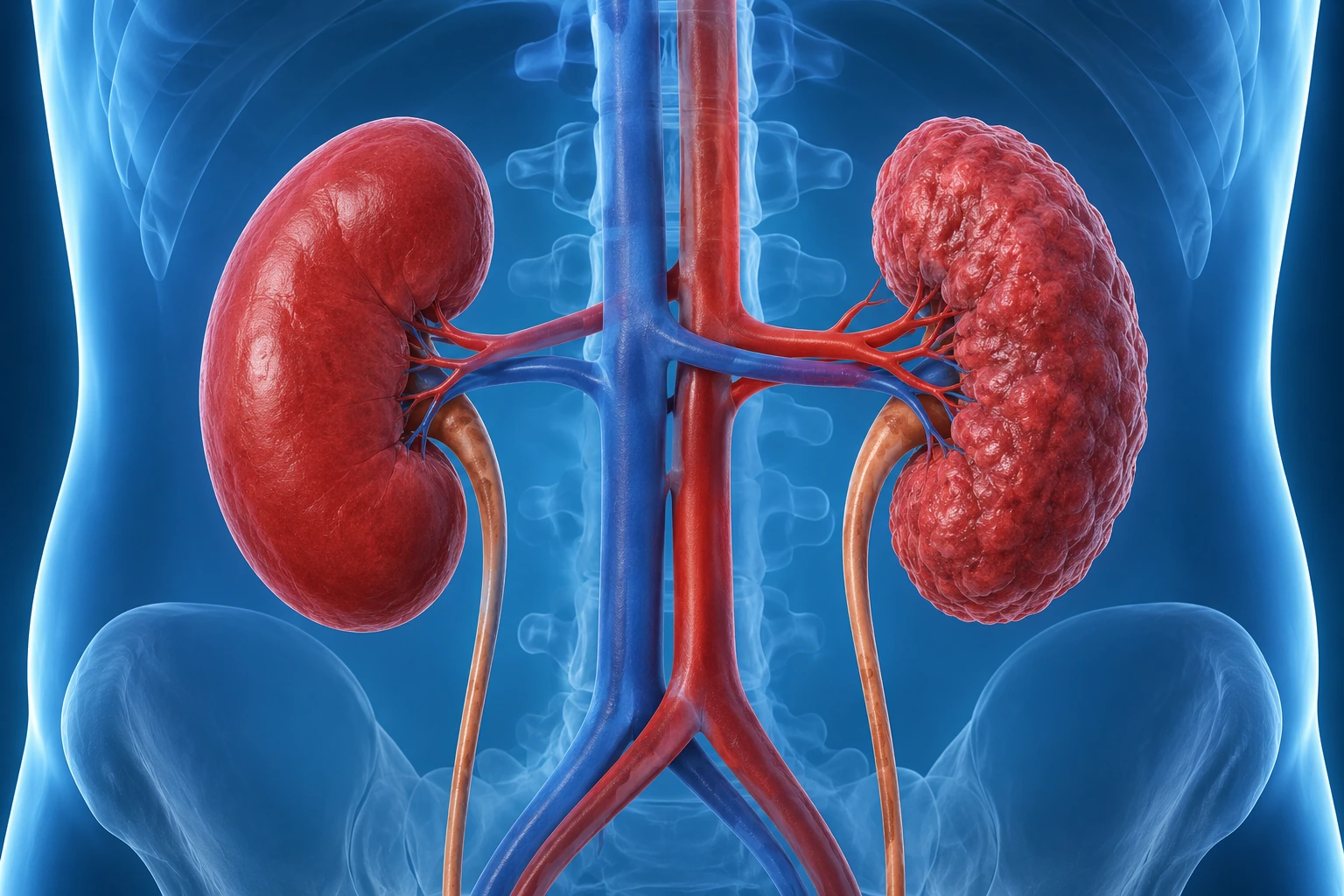
Key facts
- Early chronic kidney disease may cause no noticeable symptoms.
- Blood and urine tests are usually considered together when assessing kidney health.
- eGFR helps estimate how well the kidneys are filtering the blood.
- Protein in the urine can be a sign of kidney damage but needs clinical interpretation.
- Diabetes and high blood pressure are important risk factors for CKD.
Signs and symptoms
Early CKD may cause no symptoms at all.
When symptoms do occur, they can include fatigue, foamy urine, leg or ankle swelling, changes in urination, reduced appetite or feeling generally unwell. Symptoms alone cannot tell how well the kidneys are working.
Risk factors
Type 2 diabetes
High blood pressure
Previous kidney disease or persistently abnormal kidney or urine results
A family history of kidney disease
Increasing age, especially when other kidney risk factors are present
Common causes
Diabetes-related kidney damage and long-standing high blood pressure are among the common causes of chronic kidney disease. Other kidney conditions can also cause persistent kidney damage or reduced kidney function over time.
How it is checked
A doctor will usually consider your medical history, blood pressure, kidney-function blood tests and urine results together. Creatinine is used to help estimate kidney filtration through eGFR, while urine tests can look for protein or other abnormalities. Results may need to be repeated or followed over time rather than interpreted from one test alone.
Assessment and investigations
Kidney Function Test
Kidney-function blood tests include measurements such as creatinine that help assess how well the kidneys are filtering and maintaining normal body chemistry.
eFGR Test
eGFR estimates how well the kidneys are filtering the blood. A single eGFR result should be interpreted together with other findings and may need follow-up over time.
Urine Test
A urine examination can identify protein, blood and other changes that may provide useful information about kidney and urinary health.
Urine Microalbumin
Urine microalbumin testing can detect small amounts of albumin in the urine and may help identify kidney damage, particularly when diabetes or high blood pressure is relevant.
When to see a doctor
Consider speaking with a doctor if you have diabetes or high blood pressure and are concerned about kidney health, have persistent foamy urine or unexplained swelling, notice ongoing changes in urination, or have previously had abnormal kidney or urine results.
Urgent warning signs
Seek prompt medical care if you develop markedly reduced urine output, severe or rapidly worsening swelling, significant shortness of breath, confusion, or become acutely unwell.
Frequently asked questions
Can you have chronic kidney disease without symptoms?
Yes. Early CKD often causes no noticeable symptoms, which is why kidney blood and urine tests can be important for people with risk factors such as diabetes or high blood pressure.
What tests are used to check kidney function?
Kidney assessment commonly includes blood tests such as creatinine and eGFR together with urine tests that look for protein or other abnormalities. Results are interpreted together and may need follow-up.
Does a low eGFR mean I have chronic kidney disease?
Not necessarily. eGFR can vary, and one low result alone may not establish chronic kidney disease. A doctor will consider it together with previous results, urine findings and your overall health.
What does protein in the urine mean?
Protein in the urine can be a sign of kidney damage, but it can have different causes and needs clinical interpretation. Persistent abnormal results may require further assessment.