










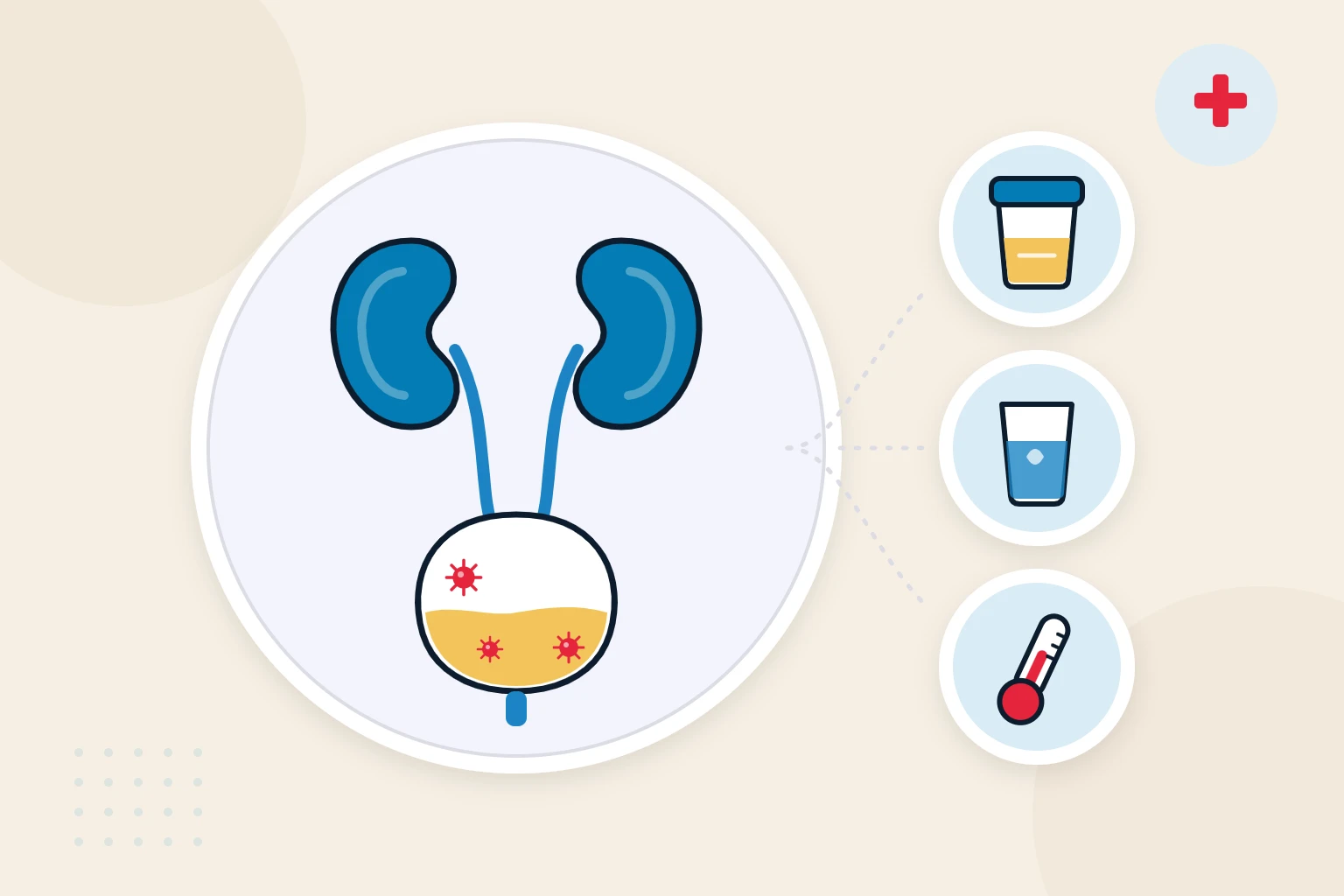
Key facts
- Bladder infection (cystitis) is the most common type of UTI.
- About half of all women will have a bladder infection at some point in their life.
- E. coli bacteria from the bowel cause most UTIs.
- Fever, back pain or vomiting can mean the infection has reached the kidneys.
- Men, pregnant women, children and older adults with UTI symptoms need a medical review.
Signs and symptoms
A bladder infection usually causes burning or pain when passing urine, needing to pass urine often or urgently, lower tummy pain, and cloudy, strong-smelling or bloody urine. Older people may instead become confused or agitated.
Fever, chills, pain in the back or side and vomiting can be signs of a kidney infection. Symptoms alone cannot always tell a UTI apart from other conditions, so a doctor may recommend a urine test.
Risk factors
Being female
Sexual activity
Menopause
Pregnancy
Diabetes or a weakened immune system
Kidney stones, an enlarged prostate or a urinary catheter
Common causes
Most UTIs happen when bacteria from the bowel, usually E. coli, enter the urethra and travel up to the bladder. Women are more prone because the urethra is shorter, and anything that stops the bladder emptying fully raises the risk.
How it is checked
Your doctor will ask about your symptoms, previous infections and pregnancy, and may check your temperature, tummy and back. A urine test (urine FEME) or urine culture may be done, especially for men, pregnant women, children, older adults or infections that keep coming back. Recurrent or complicated infections may need further tests to look for an underlying cause.
Assessment and investigations
Urine Test (Urine FEME)
Checks urine for white cells, blood and bacteria that can point to infection; results are read together with your symptoms.
Blood Sugar Test
May be checked if UTIs keep coming back, as high blood sugar can raise the risk of infection.
Kidney Function Test
May be checked in kidney infection or recurrent UTIs to see how well the kidneys are working.
When to see a doctor
See a doctor if UTI symptoms do not improve within 2 days, get worse or keep coming back, or if you are a man, pregnant, or caring for a child or older adult with symptoms.
Urgent warning signs
Seek prompt medical care if you have a high fever or shivering, pain in the back or side, vomiting, confusion or drowsiness, or if a baby under 3 months has a fever.
Treatment and management
Treatment depends on the type of infection and who is affected. Some mild bladder infections in healthy women settle by themselves, while others need antibiotics chosen by your doctor. Pain relief and drinking enough fluids can ease symptoms. If antibiotics are prescribed, take the full course even if you feel better.
Kidney infections and UTIs in pregnancy, men and children need prompt medical treatment and follow-up.
Prevention
Drinking enough water, not holding in urine, passing urine after sex, wiping from front to back and wearing cotton underwear may help reduce UTIs. Cranberry products may reduce repeat infections in some women and children, but they do not treat an active infection.
If you have frequent UTIs, your doctor can look for an underlying cause such as diabetes.
Frequently asked questions
Can a UTI go away on its own?
Sometimes. A mild bladder infection in an otherwise healthy woman can settle without antibiotics, but see a doctor if symptoms do not improve within 2 days, get worse, or you are pregnant, male or have kidney symptoms.
Do I always need antibiotics for a UTI?
Not always. Your doctor will decide based on your symptoms and risk factors. If antibiotics are prescribed, take the full course even if you feel better.
Does cranberry juice prevent UTIs?
It may help some people. Studies suggest cranberry products can reduce repeat UTIs in some women and children, but they do not treat an infection that has already started. Check with your doctor if you take warfarin.
Why do I keep getting UTIs?
Repeat UTIs can be linked to sexual activity, menopause, diabetes or problems that stop the bladder emptying fully. Your doctor may arrange a urine culture and further tests to look for a cause.
Is a UTI dangerous in pregnancy?
It needs prompt attention. UTIs in pregnancy should be checked with a urine culture and treated, so see your doctor as soon as you notice symptoms.