








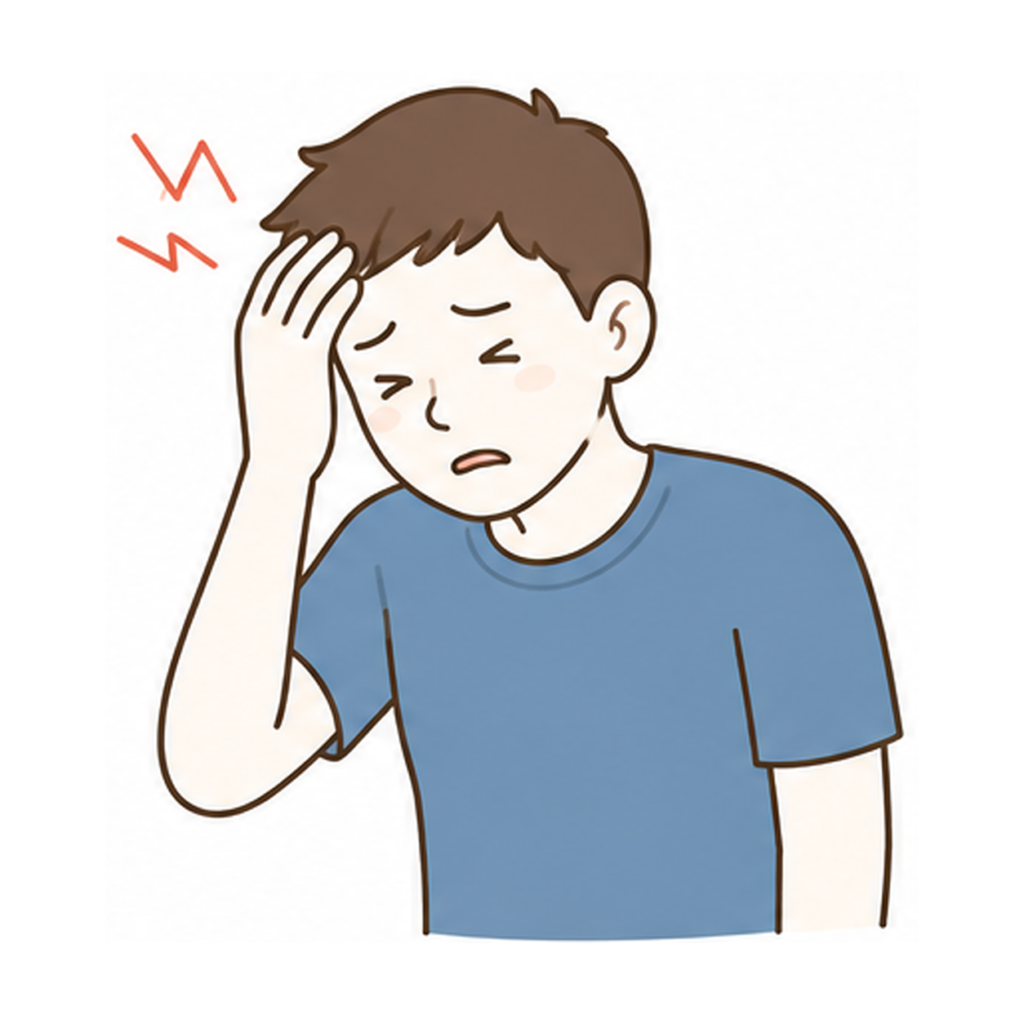
Overview
Ranges from tension to something requiring evaluation
What to notice
- Where the headache is — one side, both sides, behind the eyes or all over
- Whether it feels like pressure, aching or throbbing
- How often the headaches happen and how long they last
- Whether there are triggers such as poor sleep, missed meals or prolonged screen use
- Whether there is fever, nausea, dizziness, vision change or sensitivity to light
- Whether the headache is new, unusually severe or different from your usual headaches
Common cause groups
Everyday triggers
Poor sleep, dehydration, missed meals, prolonged screen use, stress and tiredness can contribute to short-lived headaches.
Tension or migraine-type headaches
Some headaches cause pressure or tightness, while migraine may cause more intense or throbbing pain and can occur with nausea or sensitivity to light.
Infections and illness
Colds, flu-like illnesses and other infections can cause headache, especially when fever, body aches or other symptoms are also present.
Other health-related causes
Anaemia and some other medical conditions can sometimes contribute to recurrent headaches. Blood pressure is also commonly checked when headaches are being assessed.
Associated signs
Dizziness
Fever
Nausea or vomiting
Sensitivity to light
Blurred or changed vision
Neck discomfort
Weakness or numbness
Fainting
How it may be assessed
A doctor will usually ask where the headache is, how it feels, how often it occurs, what may trigger it and whether there are other symptoms. Blood pressure and a basic clinical assessment may be useful first steps. Further tests are considered according to the headache pattern and other findings rather than being routinely required for every headache.
Assessment and investigations
Blood Pressure
Blood pressure is often checked during assessment of recurrent or severe headaches, although a headache by itself does not mean that blood pressure is high.
Full Blood Examination
A blood count may be considered when headaches occur with tiredness, dizziness, breathlessness or other symptoms that could suggest anaemia or another blood-related issue.
When to get checked
Consider medical assessment if headaches keep returning, are becoming more frequent or severe, interfere with normal activities, or are accompanied by symptoms such as persistent dizziness, vomiting or vision changes.
Urgent warning signs
Seek urgent medical care for a sudden extremely severe headache, a new headache with weakness or numbness, difficulty speaking, fainting or confusion, or headache with fever and marked neck stiffness.
Frequently asked questions
What are common causes of headaches?
Headaches can be related to everyday factors such as poor sleep, dehydration, missed meals, stress or prolonged screen use. Migraine, infections and some medical conditions can also cause recurrent headaches.
Why do I keep getting headaches?
Frequent headaches can have different triggers and causes. Keeping track of when they happen, how long they last and what other symptoms occur can help a doctor decide whether further assessment is needed.
When is a headache serious?
Seek urgent medical care for a sudden extremely severe headache or a headache accompanied by new weakness, numbness, difficulty speaking, confusion, fainting, or fever with marked neck stiffness.
Screening context
Related Screening Guides
Comprehensive Health Screening
Comprehensive health screening builds on the basics with extra checks chosen for your age, risk and history, rather than every test available.
Learn More