








Receiving a prediabetes diagnosis after a routine blood test can feel overwhelming—especially if the gym has never been part of your daily routine. If your doctor just told you that your fasting glucose or HbA1c is creeping into the borderline zone, you do not need to start running marathons or lifting heavy weights tomorrow.
In fact, some of the most effective ways to reverse prediabetes require zero gym equipment, zero prior fitness experience, and as little as 10 minutes at a time.
At Klinik Medilove Keponggi, we help patients across Kepong and Kuala Lumpur turn borderline blood sugar results around every week. Here is a realistic, beginner-friendly guide to using everyday movement to bring your blood sugar back into the healthy range.

Why Exercise Works Like “Natural Insulin” for Prediabetes
When you have prediabetes, your cells become resistant to insulin—the hormone responsible for moving glucose (sugar) out of your bloodstream and into your muscles for energy. As a result, sugar lingers in your blood.
Physical movement changes this immediately through two mechanisms:
- Immediate Sugar Uptake (No Insulin Required): When your muscles contract—even during a gentle walk—they pull glucose directly from your bloodstream for fuel without needing much insulin.
- Improved Insulin Sensitivity: Over weeks of consistent movement, your muscle cells become much more responsive to insulin, keeping your fasting blood sugar and HbA1c lower around the clock.
Step 1: Start With the “10-Minute Post-Meal Walk”
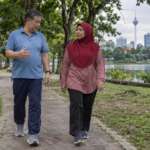
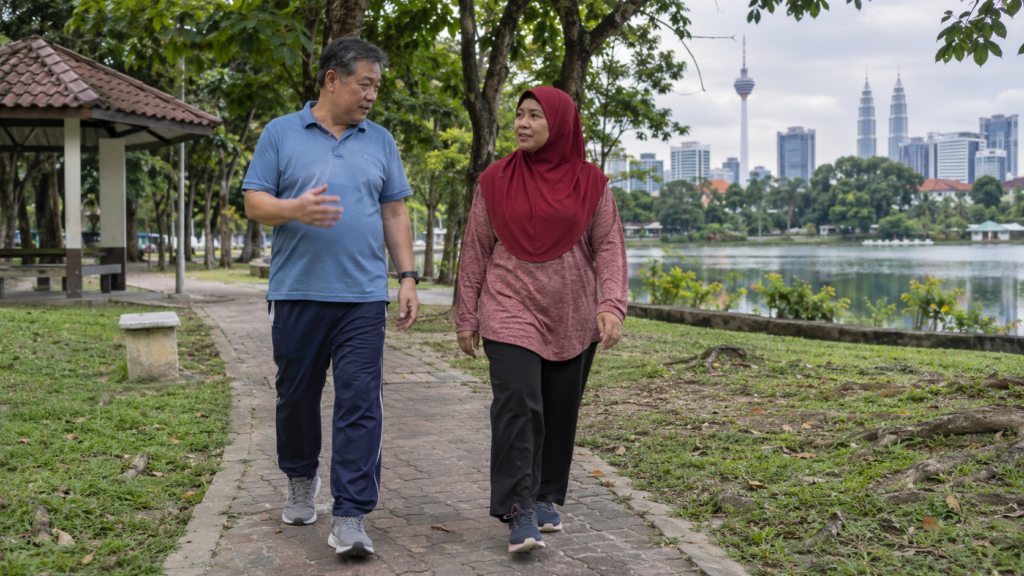
If you currently do zero formal exercise, do not aim for 60-minute workouts. Start with the single highest-impact habit for blood sugar control: walking for 10 to 15 minutes right after eating.
Why it works: Blood sugar spikes highest 30 to 60 minutes after a meal—especially after carb-heavy Malaysian favourites like nasi lemak, char kway teow, or white rice. Walking immediately after eating blunts that glucose spike before it peaks.
How to do it: Walk around your neighbourhood, pace inside your house or office corridor, or take a slow stroll around Kepong Metropolitan Park or your local taman after dinner.
The goal: Just one 10-minute walk after your largest meal of the day for the first two weeks.
Step 2: Break Up Long Sitting Sessions (“Exercise Snacks”)
Sitting at a desk or in KL traffic for hours slows down muscle glucose uptake. You can counter this with 2-minute movement breaks every 45 to 60 minutes:
- Sit-to-Stands (Chair Squats): Stand up from your office chair and sit back down slowly 10 times. Your thigh muscles (quadriceps) are the largest muscles in your body and act like a giant sponge for excess blood sugar.
- Calf Raises While Waiting: Standing in line or waiting for the kettle to boil? Rise onto your tiptoes and lower back down 15 to 20 times. Research shows the soleus muscle in the calf burns blood glucose steadily with very little fatigue.
- Stair Climbing: Take one or two flights of stairs instead of the lift once a day.
Step 3: Build Up to the 150-Minute Weekly Target Gradually
Build towards 150 minutes of moderate-intensity activity each week. In the Diabetes Prevention Program, a structured programme combining activity, dietary changes and a weight-loss goal reduced progression to type 2 diabetes by 58% over about three years. This benefit was from the combined programme, not exercise alone. Read the NIDDK evidence summary.
You do not need to hit 150 minutes in Week 1. Use this gentle 4-week ramp-up plan:
| Timeline | Daily Cardio Goal | Strength / Resistance Goal | Intensity Check |
|---|---|---|---|
| Week 1 | 10-min walk after dinner (5 days/week) | 10 chair squats, 2x/week | You can talk comfortably while moving |
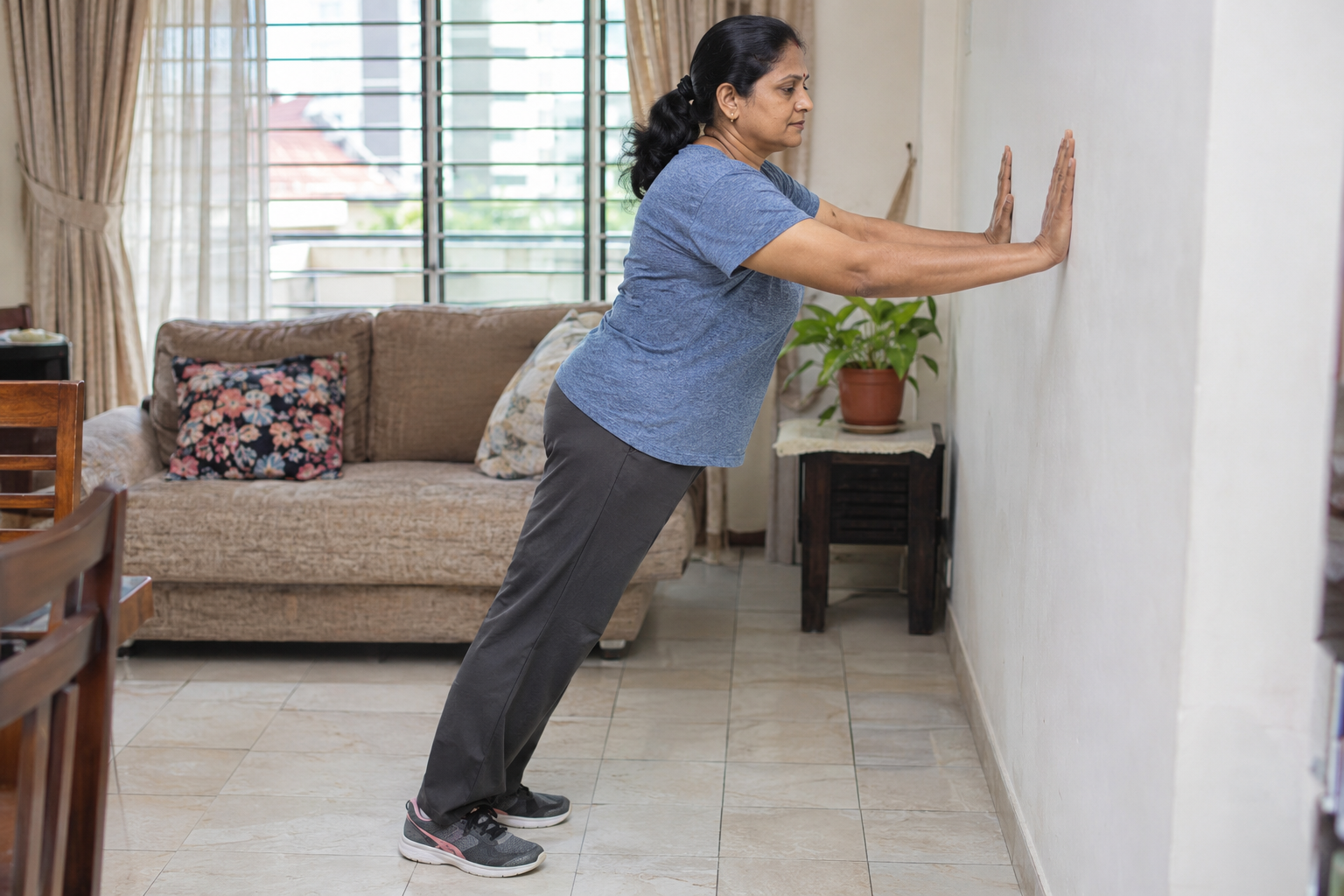
| Week 2 | 10-min walk after lunch and dinner | 10 chair squats + 10 wall push-ups, 2x/week | Light warmth, steady breathing |
| Week 3 | 20-min brisk walk (5 days/week) | 2 sets of squats & wall push-ups, 2x/week | Slightly out of breath, can still speak in sentences |
| Week 4+ | 30-min brisk walk, cycling, or swimming (5 days/week) | 15-min beginner bodyweight routine, 2x/week | Sustainably challenging without joint pain |
4 Beginner-Friendly Exercises That Don’t Feel Like a Workout
If walking gets repetitive, swap in any of these low-impact alternatives:
- Indoor Walking Workouts: Free 15-minute “walk at home” videos on YouTube let you exercise in air-conditioned comfort regardless of rain or haze.
- Water Walking or Swimming: Ideal if you carry extra weight or experience knee or lower-back stiffness.
- Stationary Cycling: Watch your favourite show while pedalling at an easy pace for 15 to 20 minutes.
- Household Chores at a Brisk Pace: Mopping floors, gardening, or washing the car counts toward your daily active minutes.
Safety Tips Before You Start
- Start slow to protect your joints: Soreness that fades in a day is normal; sharp knee, ankle, or chest pain is a sign to stop and consult a doctor.
- Stay hydrated: Malaysia’s heat and humidity can cause mild dehydration, which temporarily concentrates blood sugar. Drink water before and after walking outdoors.
- Check your footwear: Wear supportive, cushioned sneakers—especially if you have numbness or tingling in your feet.
Track Your Progress With a Follow-Up Blood Test in Kepong
You cannot feel your blood sugar dropping day-to-day, which is why re-testing your HbA1c after 3 months of consistent movement is one of the most motivating steps you can take. Seeing your numbers move from the prediabetic range (5.7% – 6.4%) back into the normal range (below 5.7%) proves your daily habits are working.
Need a Personalized Prediabetes Plan?
Visit Klinik Medilove Keponggi at Teratai 1, Lot C-08-G, Keponggi, Jalan Rimbunan. Our doctors provide comprehensive HbA1c and fasting glucose blood tests, body composition assessments, and practical lifestyle guidance tailored to your schedule.
Walk-ins are welcome, or WhatsApp our clinic team at +6011-1560 7148 to book your health screening today.
Chat on WhatsApp