









Overview
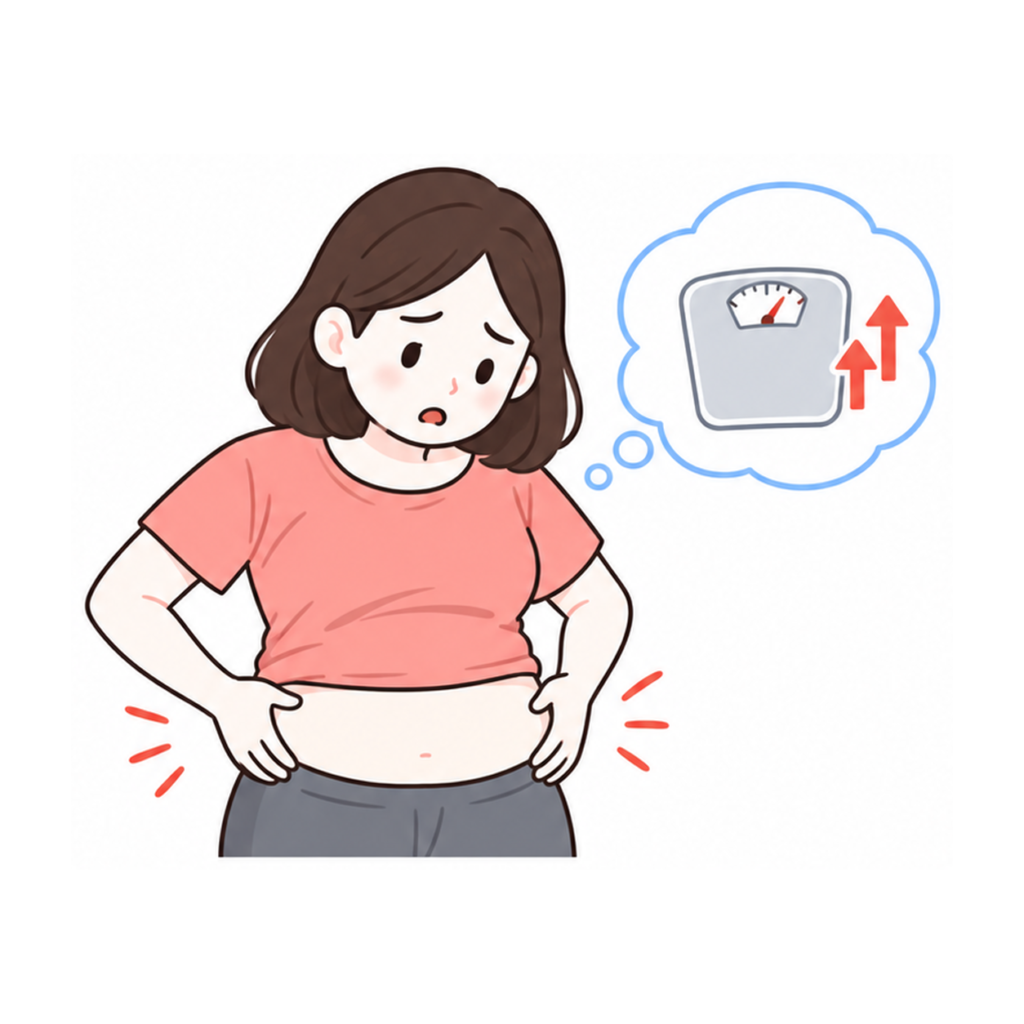
Weight gain has many possible causes, from daily habits to medicines and hormones
What to notice
- How much weight has been gained, and over how many weeks or months
- Whether it built up gradually or appeared over days
- Whether clothes feel tighter around the waist in particular
- Whether appetite, portion sizes, snacking or sugary drinks have changed
- Whether sleep, work shifts, stress or activity levels have changed
- Whether a new medicine was started around the time the weight began to rise
- Whether there is swelling of the legs, ankles or tummy
- Whether there are other symptoms such as tiredness, feeling cold, constipation, irregular periods, thirst or passing urine more often
Common cause groups
Everyday habits and routine
Larger portions, frequent eating out, sugary drinks, irregular meals, less physical activity, shift work and poor sleep are the most common reasons weight creeps up over months or years.
Medicines
Several commonly prescribed medicines can cause weight gain, including steroids such as prednisolone, insulin and sulphonylureas, some antidepressants and antipsychotics, some epilepsy and mood medicines, and certain blood pressure medicines. Never stop a prescribed medicine on your own — raise it with your doctor.
Hormone-related causes
An underactive thyroid can cause weight gain along with tiredness, feeling cold and constipation. In women, polycystic ovary syndrome can cause weight gain or difficulty losing weight together with irregular periods and excess hair growth.
Fluid retention
Weight that rises quickly over days, especially with swollen legs, ankles or tummy, may be fluid rather than fat, and can relate to the heart, kidneys or liver. This needs prompt medical assessment.
Life stages and transitions
Pregnancy, menopause, stopping smoking and recovery from illness or injury can all change weight, and some of these changes are expected rather than a sign of disease.
Associated signs
Tiredness
Feeling cold more than usual
Constipation
Irregular or missed periods
Excess hair growth or acne
Swollen legs, ankles or tummy
Breathlessness on exertion
Excessive thirst
Passing urine more often
Snoring or daytime sleepiness
Joint or back pain
How it may be assessed
A doctor will usually ask how much weight has been gained and over what period, about eating patterns, activity, sleep, stress and alcohol, about all current medicines, and about symptoms that point to a hormonal or fluid cause. Height, weight and waist measurement are usually recorded. Malaysian guidelines use Asian cut-offs: a BMI of 23.0 to 27.4 is considered overweight and 27.5 or above obese, with a waist above 90 cm in men or 80 cm in women indicating higher risk. Selected blood tests may be considered based on the clinical picture rather than one standard panel for everyone.
Assessment and investigations
Weight, Height and BMI
Height, weight and waist measurement place your weight in context and are used to follow change over time.
Thyroid Function Test
Checks whether an underactive thyroid is contributing, particularly alongside tiredness, feeling cold or constipation.
Blood Sugar Test
Weight gain and raised blood sugar often occur together, and diabetes can be present without symptoms.
Cholesterol Test
Weight gain often affects cholesterol, which forms part of assessing overall cardiovascular risk.
When to get checked
Consider medical assessment if weight has risen steadily despite reasonable changes to diet and activity, if it began soon after starting a new medicine, if it comes with tiredness, feeling cold, constipation or irregular periods, if your waist has increased noticeably, or if you already have diabetes, high blood pressure, high cholesterol or fatty liver.
Urgent warning signs
Seek prompt medical care if weight rises quickly over a few days, or if weight gain occurs with swelling of the legs, ankles or tummy, breathlessness at rest or when lying flat, chest tightness, or waking at night short of breath. This may indicate fluid retention rather than fat gain.
Frequently asked questions
Why am I gaining weight even though I have not changed my diet?
Weight can rise slowly when activity, sleep or stress change, even with the same diet. Medicines, an underactive thyroid and, in women, polycystic ovary syndrome are also possible. Persistent or unexplained gain is best assessed alongside your other symptoms.
Could my medicine be causing weight gain?
Possibly. Steroids, insulin and sulphonylureas, some antidepressants and antipsychotics, and certain epilepsy, mood and blood pressure medicines are recognised causes. Do not stop a prescribed medicine yourself; ask your doctor whether an alternative is suitable.
Is my thyroid making me gain weight?
An underactive thyroid can cause weight gain, usually together with tiredness, feeling cold, constipation and dry skin. A thyroid test can check this, though thyroid problems account for only a small proportion of weight gain.
What BMI is considered overweight in Malaysia?
Malaysian guidelines use Asian cut-offs: 23.0 to 27.4 is overweight and 27.5 or above is obese. A waist above 90 cm in men or 80 cm in women also indicates higher health risk.
When is weight gain an emergency?
Weight that climbs over days rather than months, especially with swollen legs or breathlessness, may be fluid retention rather than fat and needs prompt medical care.
Screening context
Related Screening Guides
Comprehensive Health Screening
Comprehensive health screening builds on the basics with extra checks chosen for your age, risk and history, rather than every test available.
Learn MoreDiabetes Screening
Diabetes screening uses HbA1c or fasting glucose to find raised blood sugar early, when lifestyle changes and treatment work best.
Learn MoreExtensive Health Screening
Extensive screening adds more detailed tests when your risk calls for them. More tests are not always better, so your doctor helps you pick wisely.
Learn MoreGeneral Health Screening
General health screening covers a few simple, well-proven checks, like blood pressure and blood sugar, that can pick up common silent conditions early.
Learn MoreHeart & Cardiovascular Screening
Heart screening looks at blood pressure, cholesterol, sugar and smoking to estimate your heart attack and stroke risk, so you can act early.
Learn MoreLiver Health Screening
Liver screening looks for silent problems such as hepatitis B, hepatitis C and fatty liver, so they can be managed before serious damage is done.
Learn More