








Key facts
- Hypothyroidism usually develops slowly, and early symptoms can be easy to miss.
- Hashimoto's thyroiditis, an autoimmune condition, is one of the most common causes.
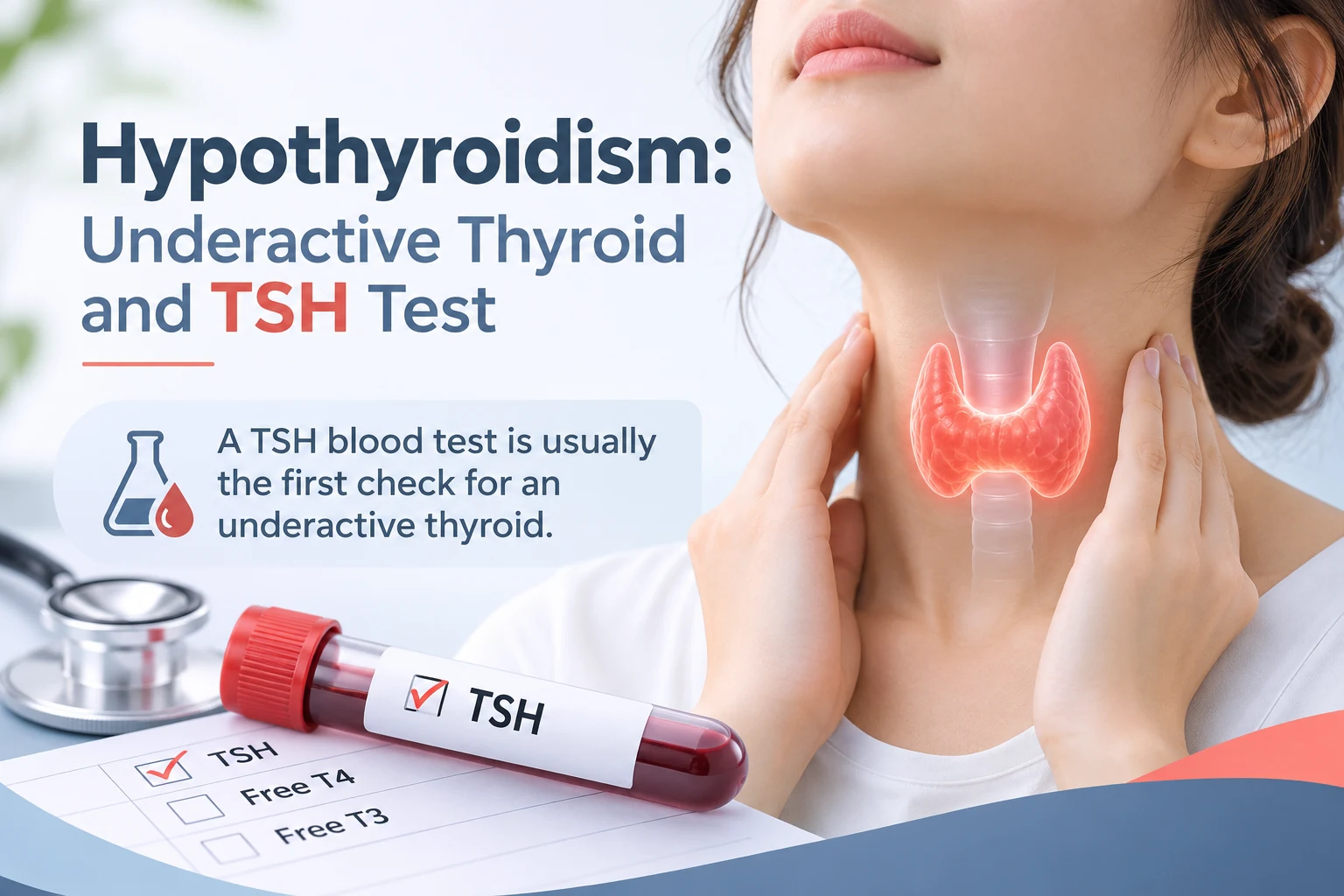
- TSH is usually the first blood test used to check thyroid function.
- A Malaysian guideline reports hypothyroidism in about 2 in 100 people, more often in women.
- Treatment is usually a daily thyroid hormone tablet with regular blood tests.
Signs and symptoms
Hypothyroidism often develops slowly over months or years, and some people have few or no symptoms at first. Common symptoms include tiredness, feeling cold, weight gain, constipation, dry skin or hair, low mood, poor concentration and irregular or heavy periods.
These symptoms are common and can be caused by many other conditions. Symptoms alone cannot tell whether the thyroid is underactive, so a blood test is needed.
Risk factors
Being female
Age over 60
Family history of thyroid disease
Type 1 diabetes or another autoimmune condition
Previous thyroid surgery, radioactive iodine or neck radiotherapy
Pregnancy within the past 6 months
Common causes
The most common causes are Hashimoto's thyroiditis, where the immune system damages the thyroid, and previous treatment for an overactive thyroid. Thyroid surgery, neck radiotherapy, some medicines such as lithium or amiodarone, and too much or too little iodine can also cause it.
How it is checked
Your doctor will ask about your symptoms, medicines and family history, and may examine your neck. A TSH blood test is usually done first, with free T4 if TSH is abnormal, and thyroid antibodies may sometimes be checked. Borderline results are usually repeated after a few months before treatment decisions are made.
Assessment and investigations
TSH Test
The most sensitive first test of thyroid function; a raised TSH can suggest the thyroid is underactive.
Free T4
Measures the main thyroid hormone in the blood and helps tell overt hypothyroidism apart from milder, subclinical changes.
Thyroid Function Test
Combines thyroid hormone tests so your doctor can see the overall pattern and follow your results over time.
When to see a doctor
See a doctor if you have ongoing tiredness, unexplained weight gain, feel cold more than others or notice changes to your periods, have a family history of thyroid disease, or are planning pregnancy with a known thyroid condition.
Urgent warning signs
Seek prompt medical care if someone with known or suspected hypothyroidism becomes very drowsy, confused, unusually cold or hard to wake. Severe hypothyroidism is rare but needs hospital treatment.
Treatment and management
Overt hypothyroidism is usually treated with levothyroxine, a tablet that replaces the missing thyroid hormone and is often taken long-term. The dose is adjusted using TSH blood tests, repeated after any dose change and then regularly once stable.
Subclinical hypothyroidism is not always treated; your doctor will consider your TSH level, symptoms, age and pregnancy plans. Do not stop or change your medicine without discussing it with your doctor.
Prevention
Most hypothyroidism, such as autoimmune thyroiditis, cannot be prevented. Getting checked if you have symptoms or risk factors means it can be found and treated early. People with known thyroid disease who are planning pregnancy should see their doctor beforehand, and those taking medicines such as lithium or amiodarone may need regular thyroid checks.
Frequently asked questions
Can hypothyroidism be cured?
It is usually a long-term condition, but it can be well controlled. Most people take a daily thyroid hormone tablet and have regular blood tests to keep their levels in range.
Is subclinical hypothyroidism serious?
Not always. A mildly raised TSH with a normal free T4 is often rechecked first, and treatment depends on your TSH level, symptoms, age and whether you are pregnant or planning pregnancy.
Can hypothyroidism cause weight gain?
It can cause some weight gain, often alongside tiredness and feeling cold. Weight gain has many causes, so a blood test is needed to know whether the thyroid is involved.
Do I need to tell my doctor if I have hypothyroidism and become pregnant?
Yes. Many women need a higher dose during pregnancy, so contact your doctor as soon as you know you are pregnant, or earlier if you are planning pregnancy.
Can I stop my thyroid medicine if I feel better?
No. Feeling better usually means the treatment is working. Do not stop or change your dose without talking to your doctor.