










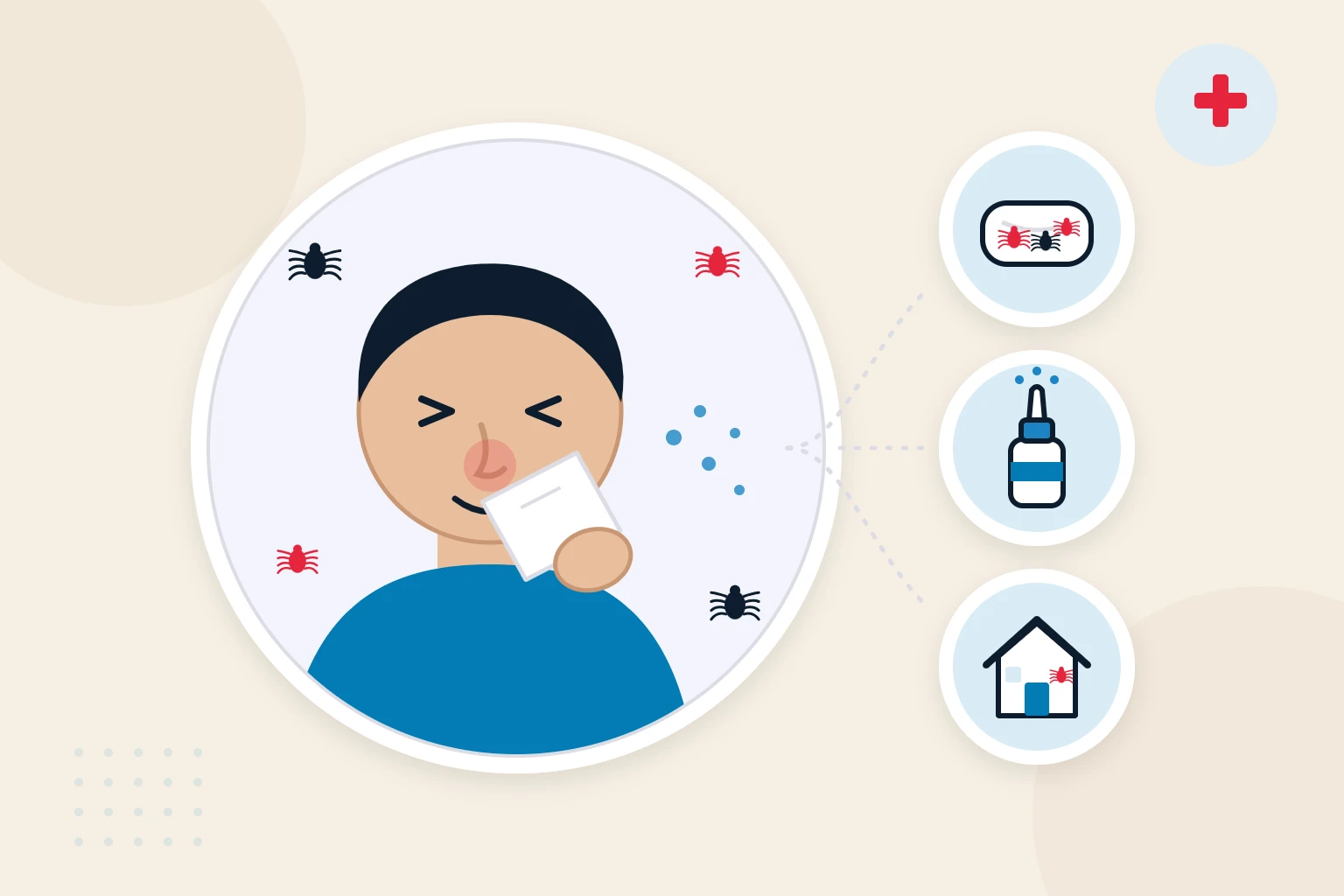
Key facts
- House dust mites are the most common allergy trigger in Malaysia.
- In Malaysia, allergic rhinitis symptoms are often present all year round.
- Many people with asthma also have allergic rhinitis, and treating the nose may help asthma control.
- Steroid nasal sprays are a first-line treatment for persistent or more severe symptoms.
- Decongestant nasal sprays should only be used for a few days to avoid rebound congestion.
Signs and symptoms
Common symptoms include sneezing, a runny or blocked nose, mucus dripping down the back of the throat, and an itchy nose, eyes, ears or throat. Symptoms may start within minutes of exposure and can disturb sleep, causing daytime tiredness and poor concentration.
Similar symptoms can be caused by colds, sinus infections or non-allergic rhinitis. Symptoms alone cannot always show the cause, so a doctor's review helps guide treatment.
Risk factors
Family history of allergies
Asthma or eczema
Allergic conjunctivitis (eye allergy)
Exposure to house dust mites, cockroaches, pets or mould
Common causes
Allergic rhinitis is caused by the immune system overreacting to harmless substances (allergens). In Malaysia, house dust mites are the main trigger, followed by cockroaches, pet dander and mould.
How it is checked
Your doctor will ask about your symptoms, when they happen, possible triggers and any asthma or eczema, and examine your nose. A skin prick test or a specific allergy blood test (specific IgE) can identify triggers when needed. One-sided or unusual symptoms may need referral to an ear, nose and throat (ENT) specialist.
When to see a doctor
See a doctor if nasal symptoms affect your sleep, work or school, do not improve with simple treatment, or if you have asthma that is getting worse.
Urgent warning signs
Seek prompt medical review if symptoms are only on one side of the nose, you have heavily blood-stained discharge or facial pain, or you develop swelling around the eye or a severe headache with fever.
Treatment and management
Treatment includes reducing exposure to triggers, saline nasal rinses, and medicines such as steroid nasal sprays and non-drowsy antihistamines. Steroid nasal sprays are the first-line choice for persistent or more severe symptoms. Decongestant sprays should only be used for a few days.
For selected people, a specialist may offer allergen immunotherapy, usually given over 3 to 5 years.
Prevention
Allergic rhinitis cannot always be prevented, but flare-ups can be reduced. Keep bedrooms clean and less dusty, wash bedding regularly, reduce exposure to cockroaches, pets and mould, and use your treatment as advised. Good control of allergic rhinitis may also help asthma.
Frequently asked questions
Is resdung the same as allergic rhinitis?
Often. Many Malaysians use 'resdung' for a nasal allergy with sneezing and a runny or blocked nose, but the word is sometimes used for sinus problems too, so a doctor can help tell them apart.
Can allergic rhinitis be cured?
Usually not, but it can be well controlled. Allergen immunotherapy, started by a specialist, is the only treatment that can change the course of the allergy.
Are steroid nasal sprays safe to use long-term?
For most people, yes, when used as directed. They act mainly inside the nose and are a recommended first-line treatment, and your doctor will review how you use them.
Why shouldn't I use a decongestant spray for long?
Using a decongestant spray for more than a few days can cause rebound congestion, making your nose feel more blocked. Ask your doctor about longer-term options.
How can I reduce dust mites at home?
Regularly washing bedding and reducing dust in the bedroom may help, but single measures alone have limited evidence, so most people also need treatment.