








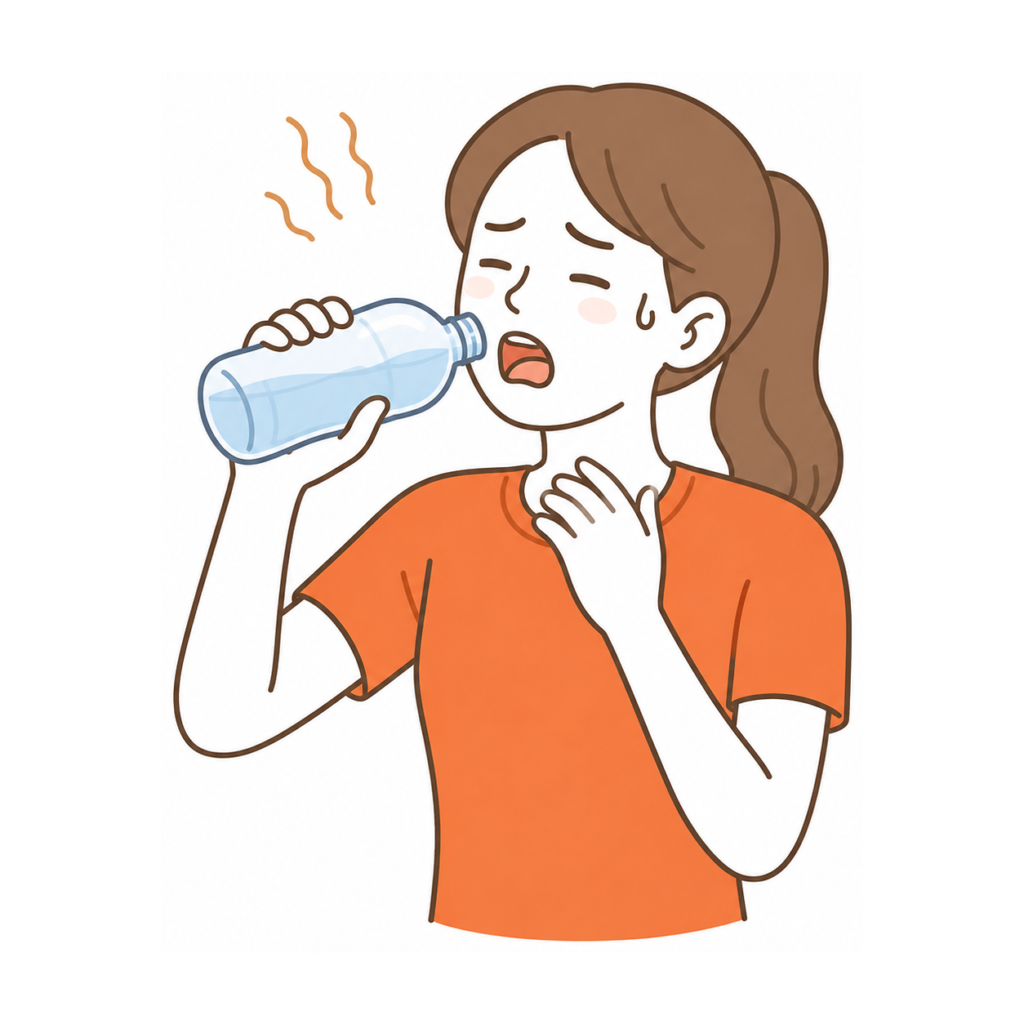
What to notice
- How long the increased thirst has been present
- Whether drinking seems to relieve the thirst
- Whether you have recently been exercising more, sweating heavily or spending time in hot weather
- Whether you are also urinating more often than usual
- Whether you wake at night because of thirst or urination
- Whether there is fatigue, unexplained weight change or another new symptom
- Whether any medicines or supplements recently changed
Common cause groups
Dehydration and fluid loss
Hot weather, exercise, sweating, vomiting or diarrhoea can increase the body's need for fluids and make you feel more thirsty.
Diet and daily habits
Salty foods, changes in eating habits and some drinks can temporarily increase thirst.
Medicines and other health factors
Some medicines and illnesses can affect fluid balance or cause a dry mouth that feels like increased thirst.
Blood glucose or metabolic causes
Persistent thirst can occur when blood glucose is high, particularly when it happens together with frequent urination, although thirst alone does not mean that diabetes is present.
Associated signs
Frequent urination
Fatigue
Dry mouth
Night-time urination
Unexplained weight change
Dizziness or weakness
How it may be assessed
A doctor will usually ask how long the thirst has been present, how much you are drinking, whether you are urinating more often and whether there have been changes in medicines, activity or general health. If the thirst is persistent or unexplained, blood glucose and selected kidney-related tests may be considered.
Assessment and investigations
Blood Glucose
A blood glucose test may help assess whether current blood sugar levels could be relevant when excessive thirst occurs together with symptoms such as frequent urination.
HbA1c
HbA1c provides information about average blood glucose over a longer period and may be considered when diabetes or ongoing blood-sugar changes need assessment.
Kidney Function Test
Kidney-function testing may be considered when persistent thirst occurs with urinary changes or when broader fluid and kidney health needs assessment.
When to get checked
Consider medical assessment if excessive thirst persists despite normal drinking, keeps returning, noticeably changes how much you drink, or occurs together with frequent urination, fatigue, unexplained weight change or other new symptoms.
Urgent warning signs
Seek prompt medical care if excessive thirst occurs with severe weakness, confusion, repeated vomiting, inability to keep fluids down, or signs of significant dehydration or rapidly worsening illness.
Frequently asked questions
Why am I always thirsty?
Feeling unusually thirsty can happen because of dehydration, hot weather, exercise, diet, medicines or some health conditions. Persistent thirst, especially with other symptoms, may be worth assessing.
Can excessive thirst be a sign of diabetes?
Excessive thirst can occur with diabetes, particularly when it is accompanied by frequent urination, but thirst has many possible causes and cannot diagnose diabetes by itself.
What is polydipsia?
Polydipsia is the medical term for excessive or unusually persistent thirst and drinking. The reason for it depends on the person's symptoms, fluid needs and overall health.
Screening context
Related Screening Guides
Comprehensive Health Screening
Comprehensive health screening builds on the basics with extra checks chosen for your age, risk and history, rather than every test available.
Learn MoreDiabetes Screening
Diabetes screening uses HbA1c or fasting glucose to find raised blood sugar early, when lifestyle changes and treatment work best.
Learn More