










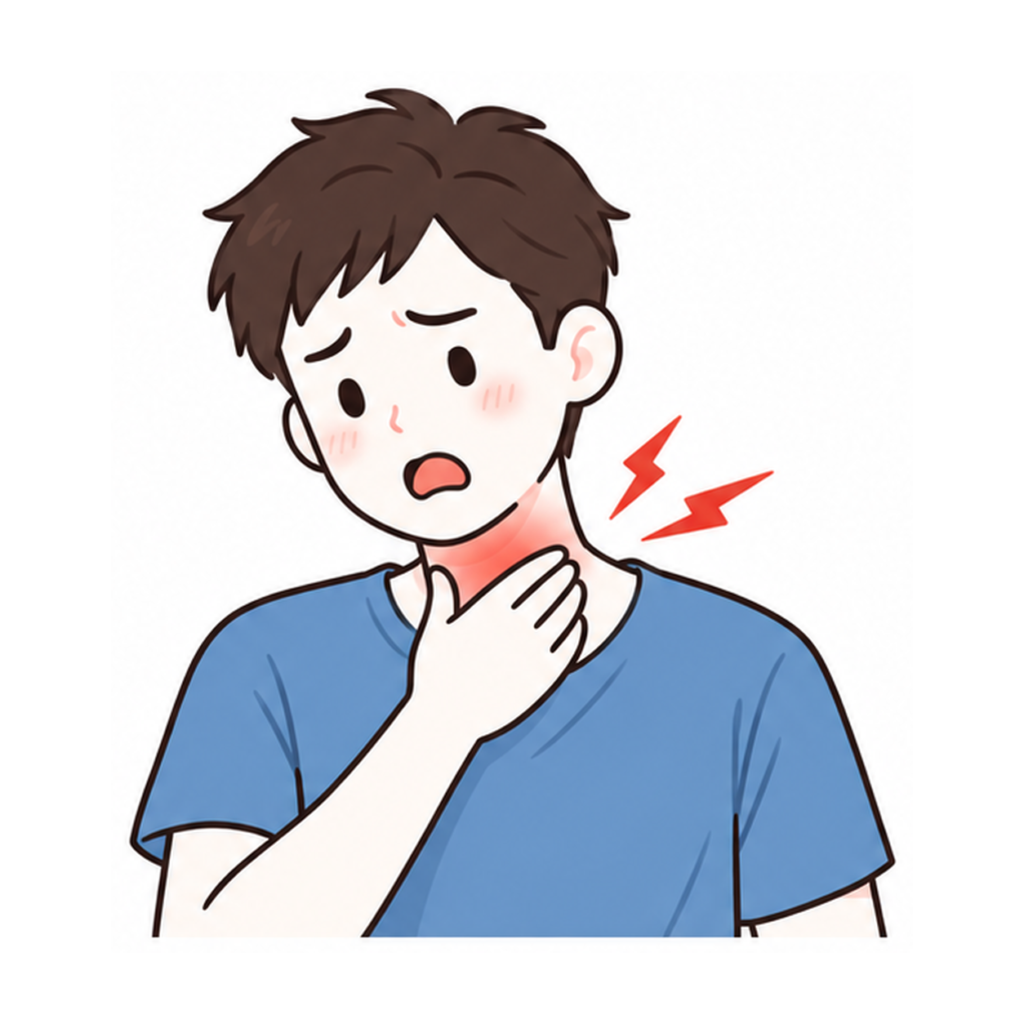
Overview
Most sore throats are part of a common cold or flu and settle with rest, fluids and simple pain relief. Only a minority are caused by bacteria such as group A Streptococcus ("strep throat"), which is more common in school-age children than in adults. Your doctor will look at your symptoms and examine your throat to decide whether antibiotics or any tests are needed.
What to notice
- How long the sore throat has lasted
- Whether swallowing is painful or difficult
- Whether there is fever, cough, runny nose or a hoarse voice
- Whether the tonsils look swollen or have white patches
- Whether there are tender or swollen lumps in the neck
- Whether sore throats keep coming back
Common cause groups
Viral infections
Colds, flu and other viruses cause most sore throats. They usually improve within about a week, and antibiotics do not help.
Bacterial infections
Some sore throats, such as strep throat, are caused by bacteria. A doctor may consider this when there is fever and swollen tonsils without cough or runny nose.
Irritants and dry air
Haze, smoking, second-hand smoke, dry air-conditioned rooms or voice strain can irritate the throat without an infection.
Allergies and post-nasal drip
Mucus dripping from the back of the nose can make the throat feel scratchy, often worse in the morning.
Acid reflux
Stomach acid reaching the throat can cause a burning or lingering sore throat, sometimes with hoarseness or frequent throat clearing.
Associated signs
Fever
Painful or difficult swallowing
Red or swollen tonsils, sometimes with white patches
Tender, swollen neck glands
Cough, runny or blocked nose
Hoarse voice
Ear pain
Headache, tiredness or body aches
How it may be assessed
The doctor will usually ask how long the sore throat has lasted, whether there is fever, cough or a runny nose, and whether swallowing or breathing is affected, then examine the throat, tonsils, ears and neck. Most sore throats can be managed based on this history and examination without tests. Selected blood tests may be considered if symptoms are severe, prolonged or suggest a particular infection.
Assessment and investigations
Blood Test
A full blood examination may be considered when a sore throat comes with persistent fever, marked tiredness or signs that an infection is not settling.
Glandular Fever Test
An EBV test may be considered when a prolonged sore throat comes with fever, swollen neck lymph nodes and marked tiredness.
When to get checked
See a doctor if your sore throat has not improved after about a week, is severe, keeps coming back, or comes with high or persistent fever, a rash, ear pain, joint pain or signs of dehydration. A lump in the neck, a mouth ulcer or hoarseness lasting more than three weeks, or blood in your saliva or phlegm, should also be checked. People with a weakened immune system should seek assessment earlier.
Urgent warning signs
Seek urgent medical care if there is difficulty breathing, a high-pitched noisy breathing sound, drooling or being unable to swallow saliva, difficulty opening the mouth, a muffled voice with severe one-sided throat pain, or swelling of the neck or tongue. Young children who are unusually drowsy or refusing to drink also need urgent assessment.
Frequently asked questions
Do I need antibiotics for a sore throat?
Usually not. Most sore throats are caused by viruses, and antibiotics do not help them. A doctor may consider antibiotics when a bacterial infection such as strep throat is more likely based on your symptoms and examination.
How long does a sore throat usually last?
Most sore throats get better within about a week. One that lasts longer, keeps coming back or is getting worse should be checked by a doctor.
What can I do at home to ease a sore throat?
Drinking plenty of fluids, resting, gargling with warm salt water, eating soft or cool foods and taking simple pain relief as directed may help. Lozenges and hard sweets are not suitable for young children.
Can haze cause a sore throat?
Yes. Haze, smoke and dry air-conditioned rooms can irritate the throat even without an infection. Reducing exposure and drinking enough water can help.
Is a sore throat with white patches always strep throat?
Not necessarily. White patches can occur with both viral and bacterial infections, including glandular fever, so a doctor will consider your other symptoms before deciding on treatment.