








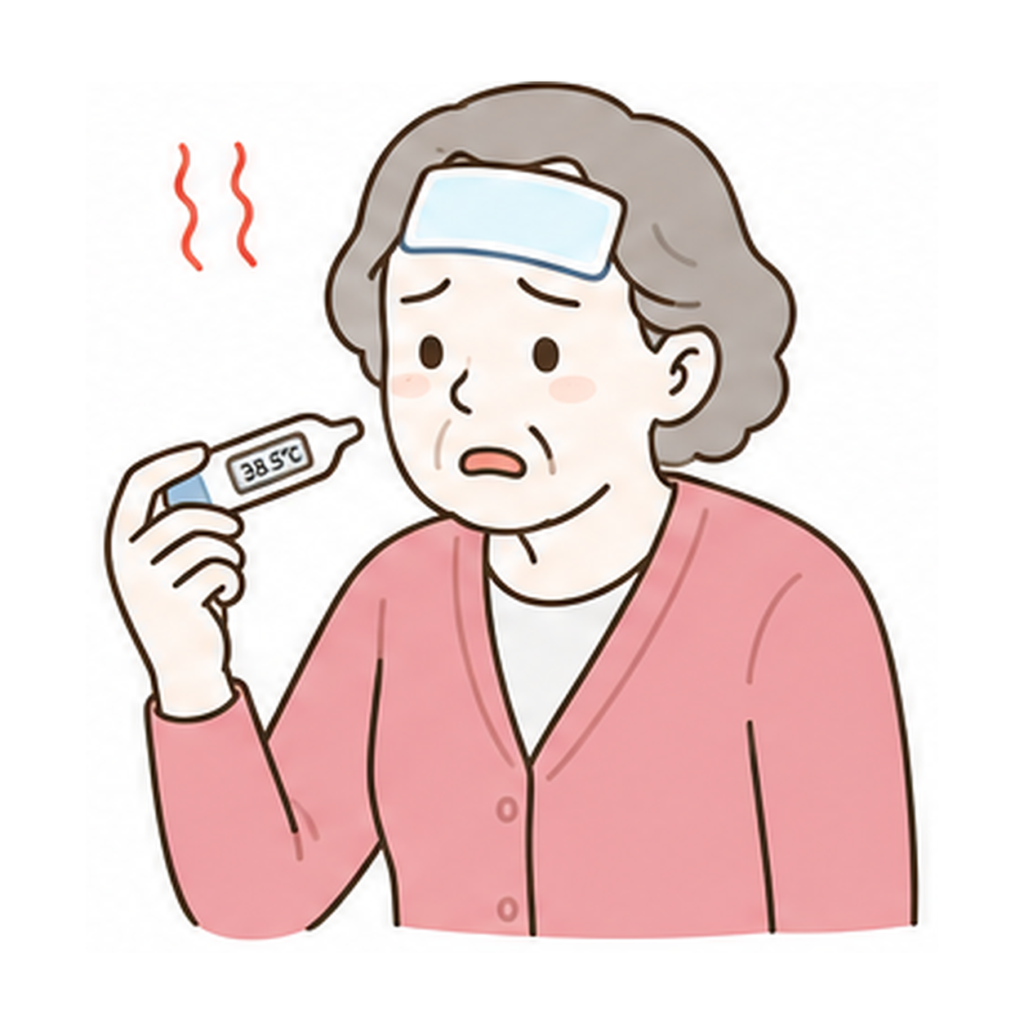
Overview
Common in children and adults, usually resolves on its own
What to notice
- Your measured temperature and how it was taken
- How long the fever has lasted and whether it keeps returning
- Whether there is cough, sore throat or difficulty breathing
- Whether there is headache, rash, vomiting, diarrhoea or abdominal pain
- Whether you feel unusually weak, confused or dehydrated
Common cause groups
Viral infections
Colds, influenza-like illnesses and many other viral infections commonly cause fever, often together with cough, sore throat, body aches or tiredness.
Bacterial infections
Some throat, chest, urinary, skin or other bacterial infections can cause fever and may need medical assessment.
Digestive or urinary infections
Fever with vomiting, diarrhoea, abdominal pain or urinary symptoms may point towards an infection involving the digestive or urinary system.
Other causes
Inflammation, reactions to some medicines and heat-related illness can also raise body temperature, although infection remains a common cause of fever.
Associated signs
Chills or shivering
Headache
Cough
Sore throat
Body aches
Rashes
Abdominal pain
Vomiting or diarrhoea
How it may be assessed
A doctor will usually consider the temperature, how long the fever has lasted, other symptoms and possible recent exposures or illnesses. Examination often helps guide the next step. Blood, urine or other tests may be considered when the cause is unclear, symptoms persist or a particular infection is suspected.
Assessment and investigations
Full Blood Examination
A blood count may provide useful information when fever persists or when the clinical picture suggests infection, inflammation or changes in blood cells should be assessed.
Urine Test
Urine testing may be considered when fever occurs with urinary symptoms or when a urinary infection is one of the possible causes.
When to get checked
Consider medical assessment if fever persists, keeps returning, is getting worse, or occurs with significant symptoms such as persistent vomiting, rash, worsening cough, urinary problems or marked weakness.
Urgent warning signs
Seek urgent medical care if fever occurs with difficulty breathing, chest pain, confusion, fainting, seizures, severe headache with neck stiffness, significant dehydration, persistent vomiting, or rapidly worsening illness.
Frequently asked questions
What can cause a fever?
Fever is commonly caused by infections, including viral and bacterial infections. Other causes such as inflammation, certain medicines or heat-related illness are possible, so the cause depends on the overall symptoms and clinical context.
When should I see a doctor for a fever?
Consider medical assessment if the fever persists, keeps returning or comes with significant symptoms such as breathing difficulty, persistent vomiting, rash, severe weakness or dehydration.
Can fever occur with a cough or rash?
Yes. Fever can occur with cough during respiratory infections and with rashes during several different illnesses. The combination does not identify a specific cause by itself, so other symptoms and examination matter.