










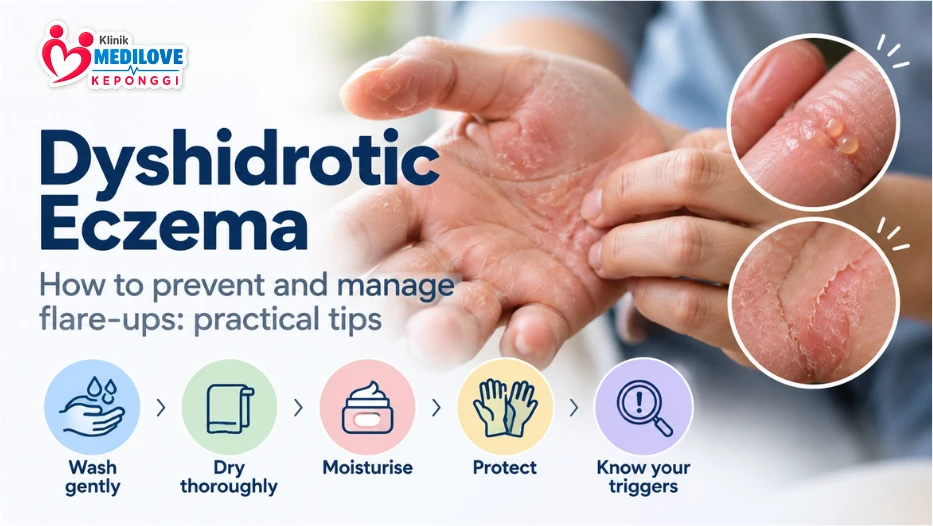
Tiny Itchy Blisters on Your Fingers? It Could Be Dyshidrotic Eczema
Small, intensely itchy, fluid-filled blisters on the fingers, palms or feet may be dyshidrotic eczema (pompholyx) — a recurrent form of eczema that can often be managed with appropriate skin care and treatment.
What is dyshidrotic eczema?
Dyshidrotic eczema, also called pompholyx, is a form of eczema that mainly affects the sides of the fingers, palms, toes and soles. It typically causes small, deep-seated, fluid-filled blisters that can be extremely itchy.
The blisters may cluster together and occasionally form larger blisters. As a flare settles, the skin can become dry, flaky, cracked or sore.
What does a flare look and feel like?
Clinical examples
Dyshidrotic eczema can look different as it evolves. Swipe or use the arrows to view examples.

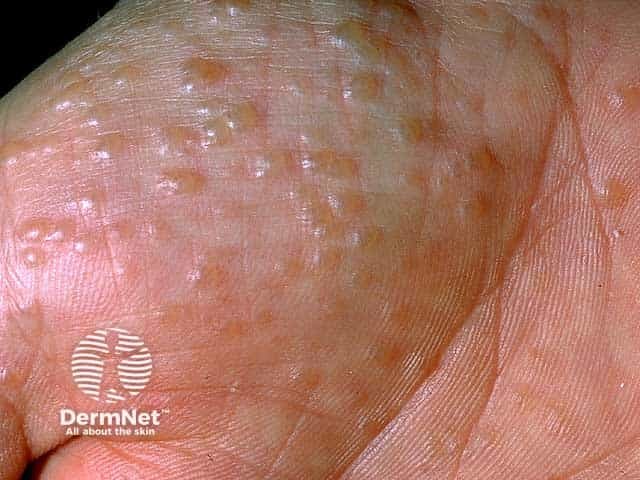
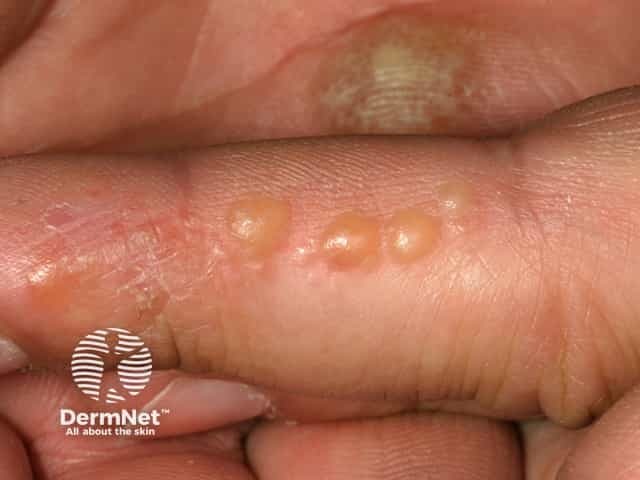


Clinical photographs are for education only. Appearance varies between patients and photographs alone cannot confirm a diagnosis. Images credited to DermNet New Zealand / dermnetnz.org and linked to the supplied source pages where available.
1. Itching, burning or prickling
Some people notice intense itching or a burning sensation before obvious blisters appear.
2. Small fluid-filled blisters
Clusters commonly occur along the sides of the fingers or on the palms. The feet can also be affected.
3. Peeling and dryness
As the blisters resolve, the affected skin may become dry, scaly or flaky.
4. Cracking and soreness
Repeated or severe flares can leave the skin painful and fissured. Individual episodes commonly settle over several weeks, although recurrence can occur.
Why does it happen?
There is no single cause. Despite its older name, dyshidrotic eczema is not simply caused by blocked sweat glands.
Factors associated with flares can include:
- frequent exposure to water or wet work
- soaps, detergents and cleaning chemicals
- heat and sweating
- contact with certain metals, including nickel or cobalt
- eczema or sensitive skin
- occupational irritants
- stress in some people
Not everyone can identify a specific trigger. In Malaysia’s warm and humid climate, heat, sweating and frequent hand washing may be particularly relevant for some patients.
Not every hand blister is eczema
Several skin conditions can resemble dyshidrotic eczema. These include fungal infection, contact dermatitis, other forms of hand eczema, psoriasis, scabies and some infectious skin conditions. See our guide to common skin rashes for other causes.
A doctor usually assesses the appearance and distribution of the rash, severity of itching, recurrence pattern and possible occupational, chemical or allergen exposures. Typical cases can often be diagnosed clinically.
If the condition is unusual, persistent or not responding as expected, additional assessment may be considered — for example, testing for fungal infection or evaluating possible contact allergy.
How is dyshidrotic eczema treated?
Treatment has two practical goals: settle the current inflammation and reduce future flares.
1. Restore the skin barrier
Regular use of a bland, fragrance-free moisturiser or emollient helps protect dry and damaged skin. Moisturising after hand washing can be particularly useful.
2. Reduce irritant exposure
Try to identify repeated exposure to detergents, cleaning products, shampoos, prolonged water contact or occupational chemicals. Appropriate protective gloves may help, although prolonged sweating inside gloves can also irritate susceptible skin.
3. Control inflammation
During an active flare, a doctor may prescribe a topical corticosteroid. The palms and soles have relatively thick skin, so the appropriate preparation and potency may differ from medicines used on thinner skin such as the face.
The treatment should therefore be selected according to the location, severity and diagnosis rather than simply using any steroid cream available at home.
4. Reassess persistent disease
Severe, recurrent or treatment-resistant disease may need further assessment. Selected patients may require dermatology input or treatments such as phototherapy or systemic therapy.
Preventing and managing flare-ups: practical tips
Treatment can settle an active episode, but everyday skin habits are an important part of reducing irritation and helping prevent future flares.
1 Wash gently ⌄
Use lukewarm water and a gentle, fragrance-free, non-soap cleanser. Remove rings and jewellery before washing so soap and water do not remain trapped underneath.
2 Dry thoroughly ⌄
Gently dry the hands and feet after washing, including between the fingers or toes. Avoid leaving the skin persistently damp.
3 Moisturise ⌄
Apply a bland, fragrance-free emollient every day and especially after hand washing to support the skin barrier.
4 Protect ⌄
Reduce direct exposure to detergents, cleaning chemicals and prolonged wet work. For dishwashing or similar tasks, cotton gloves underneath water-resistant gloves may help protect the skin.
5 Know your triggers ⌄
Notice whether chemicals, metals, heat, sweating, stress or particular activities repeatedly precede your flares. Reducing avoidable triggers can be an important part of long-term control.
Tap each step to open or close the practical advice.
1Keep skin clean, dry & moisturised
Gently clean your hands and feet, dry them thoroughly, and apply an emollient every day — especially after hand washing.
2Make handwashing gentler
Remove rings and jewellery before washing so soap and water do not remain trapped underneath. Use lukewarm water and a gentle, fragrance-free, non-soap cleanser. Avoid unnecessarily hot water and harsh soaps.
3Identify & reduce triggers
Notice whether particular chemicals, metals, heat, sweating or activities repeatedly precede a flare. Reduce direct skin contact with known irritants or allergens where possible.
4Protect your hands during wet work
For dishwashing and similar wet tasks, consider cotton gloves underneath water-resistant gloves. Protective gloves can also be useful for cleaning, gardening and other irritant exposures.
5Manage stress where relevant
Emotional stress can be a flare trigger for some people. Regular exercise, breathing exercises, meditation or other sustainable stress-management strategies may help.
👣 If your feet are affected
Moisture and friction can aggravate foot symptoms. Choose breathable socks and footwear, change damp socks during the day, avoid tight-fitting shoes, and look for footwear that reduces rubbing and allows room around the toes.
Continue gentle cleansing and regular moisturising, minimise known irritants and use prescribed treatment as directed. If symptoms are worsening despite treatment, triggers remain unclear, or the diagnosis is uncertain, arrange a medical review rather than repeatedly trying different creams.
Practical prevention guidance adapted and summarised from Harvard Health Publishing, “Dyshidrotic eczema: Effective management strategies” (March 2024). Higher-risk or individualised home treatments are not presented here as routine self-care.
When should I see a doctor?
Consider medical assessment if this is your first unexplained episode, the itch is severe, the skin becomes painful or significantly cracked, the rash keeps returning, it is spreading, treatment has not worked as expected, or you are unsure whether it is eczema or another condition.
Can it come back?
Yes. Dyshidrotic eczema can follow a flare-and-remission pattern. Skin may return to normal between episodes and then flare again after a trigger — or sometimes without an obvious reason.
Skin problems can often be assessed in primary care
Many common skin conditions, including dyshidrotic eczema, can be assessed and treated in a primary-care clinic. Learn more about our clinical services.
At 仁爱医务所 Klinik Medilove Keponggi, our doctors can assess and manage many common skin problems, including eczema and dermatitis, fungal skin infections, common bacterial skin infections, acne and other frequently encountered rashes.
We first try to answer an important question: “What is causing this rash?”
Where the diagnosis is uncertain, the condition is severe, or specialist investigation or treatment is required, we can advise on the appropriate next step or dermatology referral.
Frequently asked questions
Is dyshidrotic eczema caused by sweating?
Heat and sweating can aggravate symptoms in some people, but the condition is not simply caused by blocked sweat glands.
Can I pop the blisters?
It is generally better not to deliberately burst them. Breaking the skin may increase irritation and the opportunity for secondary infection.
Is it a fungal infection?
Not necessarily. Eczema and fungal infection can sometimes resemble each other. If the diagnosis is uncertain, a clinician may consider fungal testing.
Can an allergy contribute?
Contact allergy can contribute in some patients. Nickel and cobalt are among the reported associations. Patch testing may be considered when allergic contact dermatitis is suspected.
Can it be cured permanently?
There is no guaranteed permanent cure. Some people experience recurrent episodes, while others improve considerably. Treatment and trigger reduction can help control symptoms and reduce flares.
References & further reading
- Fisher J. Dyshidrotic eczema: Effective management strategies. Harvard Health Publishing; 8 March 2024.
- National Eczema Association. Dyshidrotic Eczema: Symptoms, Causes & Treatment. Updated 7 March 2026.
- Calle Sarmiento PM, Chango Azanza JJ. Dyshidrotic Eczema: A Common Cause of Palmar Dermatitis. Cureus. 2020;12(10):e10839.