








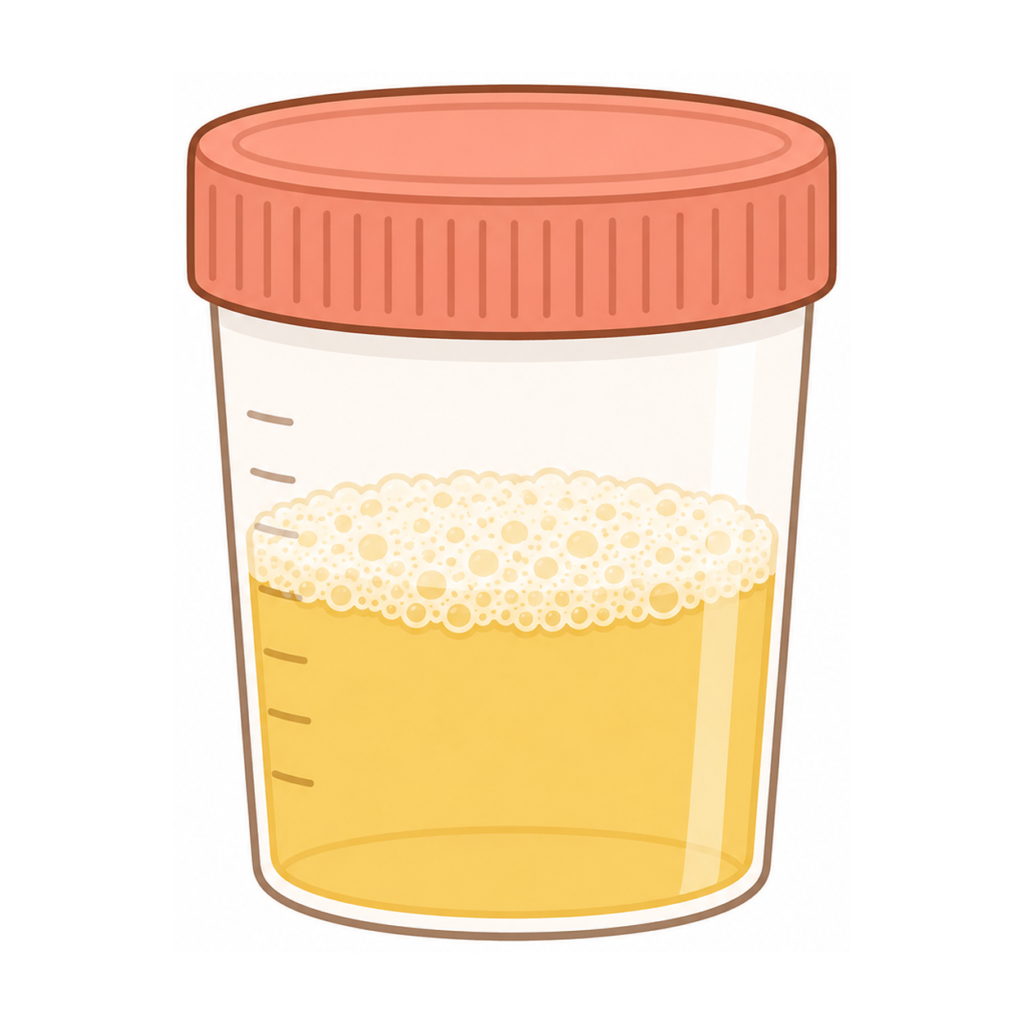
What to notice
- Whether the urine is occasionally bubbly or repeatedly very foamy
- Whether the foam seems to be becoming more noticeable over time
- Whether there is swelling around the ankles, legs or face
- Whether you are urinating more often than usual
- Whether there is blood, pain or another visible change in the urine
- Whether you also have fatigue or other unexplained symptoms
Common cause groups
Occasional bubbles
Bubbles can sometimes appear without indicating a disease, particularly when the change is brief and does not keep occurring.
Concentrated urine
When urine is more concentrated, such as with dehydration, bubbles or foam may sometimes appear more noticeable.
Protein in the urine
Persistent foamy urine can sometimes occur when protein is present in the urine, but appearance alone cannot confirm proteinuria.
Kidney or metabolic health
Kidney disease, diabetes and high blood pressure can be associated with changes in urine protein, which is why persistent foam may sometimes lead to urine and kidney assessment.
Associated signs
Leg or ankle swelling
Facial puffiness or swelling
Frequent urination
Fatigue
Blood in the urine
Changes in urine amount
How it may be assessed
A doctor will usually ask how long the foamy urine has been present, whether it happens consistently and whether there are other symptoms or health conditions. A urine sample can check for protein or other abnormalities, while selected blood tests may be used to assess kidney function when appropriate.
Assessment and investigations
Urine Test
A urine examination can check for protein, blood and other changes that may help clarify whether persistent foamy urine needs further assessment.
Urine Microallbumin
A urine microalbumin test can detect small amounts of albumin in the urine and may be considered when kidney or diabetes-related risk is relevant.
Kidney Function Test
Blood tests such as creatinine and eGFR may help assess kidney function when persistent foamy urine or urine abnormalities suggest further evaluation is appropriate.
When to get checked
Consider medical assessment if foamy urine occurs consistently, becomes increasingly noticeable, keeps returning, or appears together with swelling, blood in the urine, frequent urination or other unexplained changes.
Urgent warning signs
Seek prompt medical assessment if foamy urine occurs with significant swelling, visible blood in the urine, markedly reduced urine output, or a rapid worsening in your general condition.
Frequently asked questions
Does foamy urine always mean there is protein in the urine?
No. Urine can sometimes appear bubbly or foamy without abnormal protein levels. Persistent foam may be a reason to check a urine sample, but appearance alone cannot confirm proteinuria.
What is the difference between bubbles in urine and foamy urine?
Occasional bubbles can happen and may disappear quickly. Foamy urine tends to look more noticeably frothy or repeatedly produce foam. Persistence and other symptoms are more useful than appearance alone.
Can foamy urine be related to kidney problems?
It can sometimes be associated with protein in the urine or kidney conditions, but foamy urine by itself does not diagnose kidney disease. Urine and kidney-function tests may be considered when the change persists.
Screening context
Related Screening Guides
Comprehensive Health Screening
Comprehensive health screening builds on the basics with extra checks chosen for your age, risk and history, rather than every test available.
Learn MoreKidney Health Screening
Kidney screening combines a blood test (eGFR) and a urine albumin test (ACR) to spot kidney disease early, especially with diabetes or high blood pressure.
Learn More