










Key facts
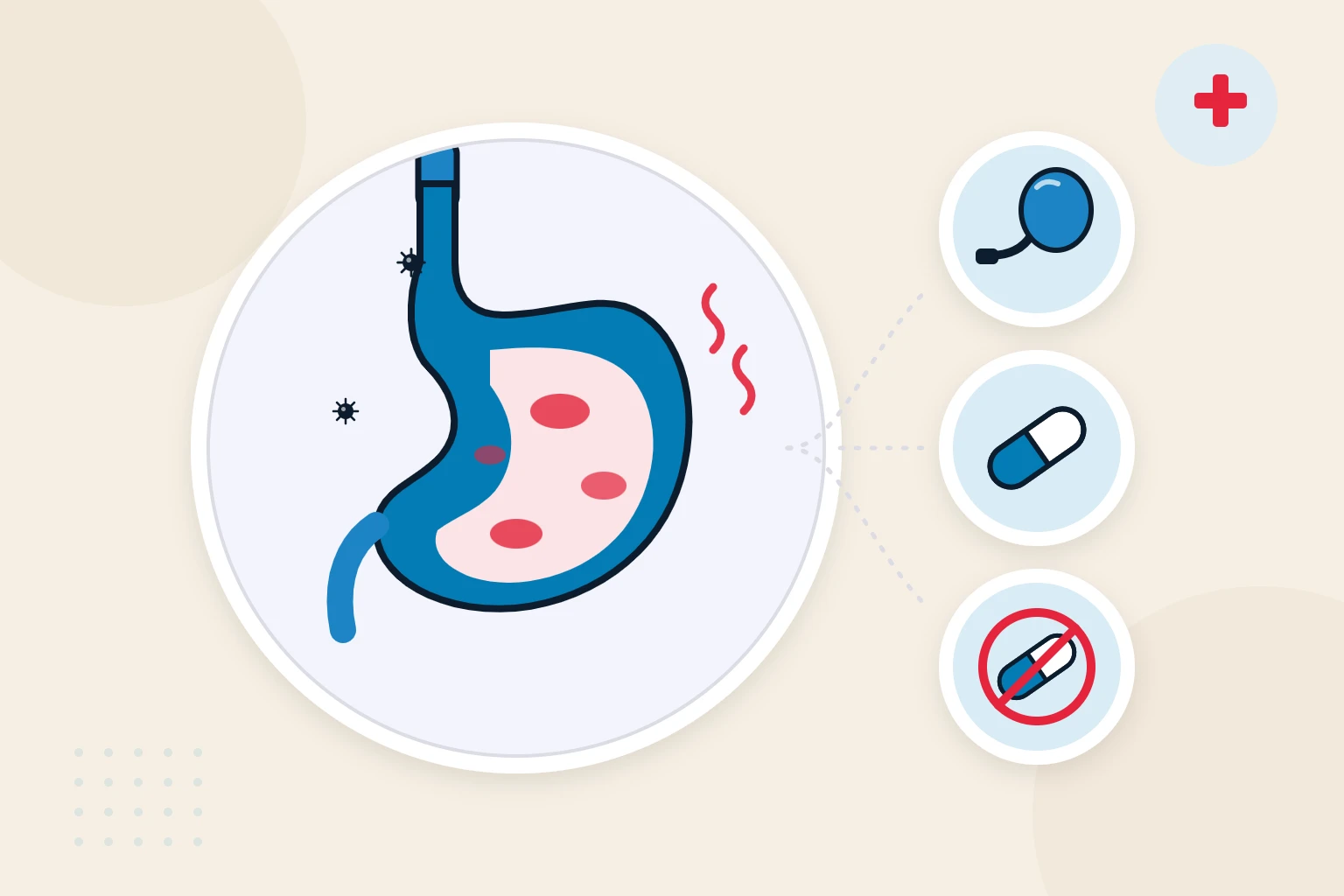
- Gastritis means inflammation of the stomach lining, and many people have no symptoms.
- H. pylori infection is the most common cause of gastritis.
- NSAID painkillers, alcohol and smoking can also irritate the stomach.
- A urea breath test is an accurate way to check for H. pylori.
- Vomiting blood or passing black stools needs urgent medical care.
Signs and symptoms
Many people with gastritis have no symptoms. When symptoms occur, they may include burning or pain in the upper tummy, bloating, nausea or vomiting, loss of appetite, and feeling full quickly or uncomfortably full after meals.
These symptoms overlap with indigestion, stomach ulcers, acid reflux and sometimes heart or gallbladder problems. Symptoms alone cannot show the cause, so a doctor's review is needed if they persist.
Risk factors
H. pylori infection
Regular use of NSAID painkillers or aspirin
Alcohol
Smoking
Severe physical illness, such as major surgery or burns
Common causes
The most common cause is H. pylori, a bacterium that infects the stomach lining. Other causes include NSAID painkillers such as ibuprofen and aspirin, alcohol, bile reflux and, less commonly, severe physical illness.
How it is checked
Your doctor will ask about your symptoms, medicines, alcohol, smoking, family history and any warning signs, and examine your tummy. Testing for H. pylori, usually with a urea breath test or stool test, is recommended for many people with ongoing indigestion. An endoscopy (camera test) may be advised if there are warning signs or symptoms do not improve.
Assessment and investigations
H. pylori Blood Test (Antibody)
Shows whether you have had H. pylori, but cannot tell past from current infection or confirm that treatment has worked.
Full Blood Count
Checks for anaemia, which can be a sign of slow bleeding from the stomach and needs further assessment.
When to see a doctor
See a doctor if indigestion or upper tummy pain lasts more than a few weeks or keeps coming back, or sooner if you have unexplained weight loss, difficulty swallowing, persistent vomiting or a family history of stomach cancer.
Urgent warning signs
Seek urgent medical care if you vomit blood or material that looks like coffee grounds, pass black sticky stools, have severe tummy pain or feel faint.
Treatment and management
Treatment depends on the cause. H. pylori is treated with a combination of an acid-reducing medicine and antibiotics, followed by a breath test about 4 weeks later to confirm it has cleared. Acid-reducing medicines can ease symptoms, and stopping or changing NSAID painkillers may help when they are the cause.
Do not stop prescribed aspirin or other medicines without talking to your doctor.
Prevention
Avoid unnecessary NSAID painkillers, limit alcohol, stop smoking and notice foods that trigger your symptoms. Getting persistent indigestion checked allows H. pylori to be found and treated, which lowers the risk of stomach ulcers.
Frequently asked questions
What is 'gastric' pain?
In Malaysia, 'gastric' usually means pain or discomfort in the upper tummy from gastritis or indigestion. Similar pain can come from ulcers, reflux or other organs, so ongoing symptoms should be checked.
Can H. pylori be cured?
Yes, in most cases. It is treated with an acid-reducing medicine and antibiotics, and a breath test about 4 weeks after treatment checks that it has cleared.
Is my gastric caused by stress?
Not directly. Everyday stress can make stomach symptoms feel worse, but common causes of gastritis include H. pylori and NSAID painkillers, so these are worth checking.
Which painkillers are safer for my stomach?
NSAIDs such as ibuprofen and aspirin can irritate the stomach lining. Ask your doctor or pharmacist which pain relief suits you, especially if you have gastritis or ulcers.
Do I need an endoscopy?
Not always. Many people can be tested and treated for H. pylori first, but an endoscopy is advised if you have warning signs such as bleeding, weight loss, difficulty swallowing or persistent vomiting.