










Key facts
- Prediabetes usually causes no symptoms.
- It is usually found through blood tests such as fasting glucose, HbA1c or an oral glucose tolerance test.
- In Malaysian guidelines, an HbA1c of 5.7% to below 6.3% is in the prediabetes range.
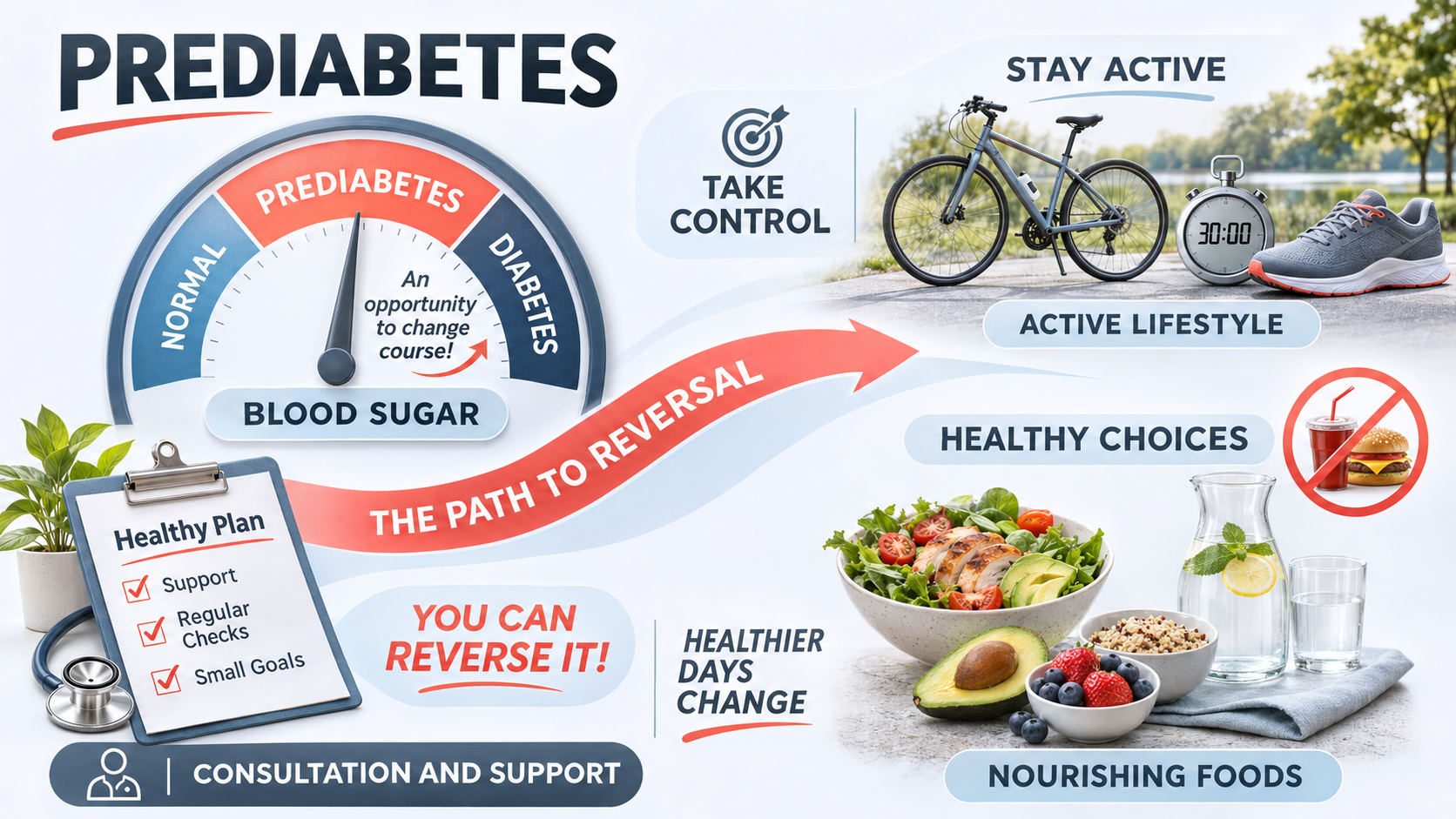
- Healthy eating, regular activity and modest weight loss can lower the chance of developing type 2 diabetes.
- Adults over 30 with risk factors are advised to have regular blood sugar screening.
Signs and symptoms
Prediabetes usually causes no symptoms, and many people only find out through a routine blood test. Feeling well does not mean blood sugar is normal.
If blood sugar rises into the diabetes range, some people notice more thirst, passing urine more often, tiredness or blurred vision. Symptoms alone cannot tell whether someone has prediabetes, so a blood test is needed.
Risk factors
Overweight, especially extra weight around the waist
Family history of type 2 diabetes
Older age
Low physical activity
High blood pressure or abnormal cholesterol
Previous gestational diabetes or having a large baby
Common causes
Prediabetes develops when the body becomes less responsive to insulin and cannot keep blood sugar fully in the normal range. Extra body weight, inactivity, family genes and ageing all contribute.
How it is checked
Your doctor will ask about your health, family history and lifestyle, and check your weight, waist and blood pressure. Blood tests such as fasting blood glucose and HbA1c are used, and sometimes an oral glucose tolerance test. Results are followed over time, usually at least once a year, to see whether they are improving or rising.
Assessment and investigations
Fasting Blood Sugar Test
Measures blood sugar after an overnight fast; a level slightly above normal can point to impaired fasting glucose.
HbA1c (3-Month Sugar Average)
Reflects average blood sugar over the past 2 to 3 months and shows whether it is in the normal, prediabetes or diabetes range.
Weight and BMI Check
Helps assess weight-related risk using Asian BMI cut-offs and tracks progress with lifestyle changes.
When to see a doctor
See a doctor if you are over 30 with risk factors and have not had a recent blood sugar test, if a screening report shows borderline sugar or HbA1c, if you have had gestational diabetes, or if you notice more thirst or urination.
Urgent warning signs
Seek prompt medical care if you have marked thirst and urination together with vomiting, abdominal pain, fast breathing, drowsiness or confusion, as these can be signs of dangerously high blood sugar.
Treatment and management
The main treatment is lifestyle change: healthier eating, regular physical activity and, if you are overweight, gradual weight loss. Losing around 7% or more of body weight has been shown to help prevent type 2 diabetes. Your doctor may also check blood pressure and cholesterol, as these affect heart risk.
Medicine is sometimes considered for people at higher risk, after discussion with your doctor. Blood sugar is usually rechecked at least once a year.
Prevention
Staying active (building up towards about 150 minutes a week), eating balanced meals with fewer sugary drinks, and keeping a healthy weight can lower the chance of prediabetes and type 2 diabetes. Adults over 30 with risk factors should have their blood sugar checked regularly so changes are found early.
For practical steps, read Can You Reverse Prediabetes? 4 steps for Malaysians.
Frequently asked questions
Can prediabetes be reversed?
Often, yes. Many people bring their blood sugar back to the normal range with healthier eating, more physical activity and modest weight loss, but follow-up tests are still important.
Does prediabetes always turn into diabetes?
Not necessarily. Prediabetes raises the chance of type 2 diabetes, but studies show that lifestyle changes can lower that chance.
What HbA1c level is prediabetes?
In Malaysian guidelines, an HbA1c of 5.7% to below 6.3% is in the prediabetes range. Other countries use slightly different cut-offs, so your doctor will explain your own result.
Do I need medicine for prediabetes?
Usually lifestyle change comes first. Medicine may be considered for some people at higher risk, and your doctor will discuss whether it suits you.
How often should I check my blood sugar if I have prediabetes?
Most people are rechecked at least once a year, or sooner if advised. Your doctor will decide the timing based on your results and risk factors.