








You already know you should eat better, move more and sleep earlier. The hard part is doing it between work, school runs, traffic and a lifetime of favourite hawker food. If you have tried before and given up, you are not lazy. Most plans simply ask for too much at once. This guide shows how to start a healthy lifestyle with small, realistic habits that busy Malaysians can actually keep.
How to Start a Healthy Lifestyle: 7 Habits Busy Malaysians Can Keep

Why a healthy lifestyle matters in Malaysia
Everyday habits decide a lot about your long-term health. The National Health and Morbidity Survey (NHMS) 2023 found that among Malaysian adults:
- More than half (54.4%) are overweight or obese.
- About 3 in 10 (29.9%) are not physically active enough.
- Only about 1 in 20 (4.9%) eat enough fruit and vegetables.
- Nearly 1 in 3 (29.2%) has high blood pressure, and about 1 in 6 (15.6%) has diabetes.
Many people with these conditions feel completely well and do not know they have them. The good news is that the same few habits lower your risk of all of them at once.
How to start a healthy lifestyle without feeling overwhelmed
- Pick one habit, not seven. Choose the one that feels easiest, not the one you think is most important.
- Make it tiny. “Walk 10 minutes after dinner” is better than “exercise every day”.
- Attach it to something you already do. For example: after I park the car, I take the stairs.
- Plan for bad days. Use an if-then plan: if it rains, then I walk inside the shopping mall.
- Add the next habit only when the first feels automatic, usually after 2–4 weeks.
7 healthy habits that make the biggest difference
1. Build a Malaysian Healthy Plate
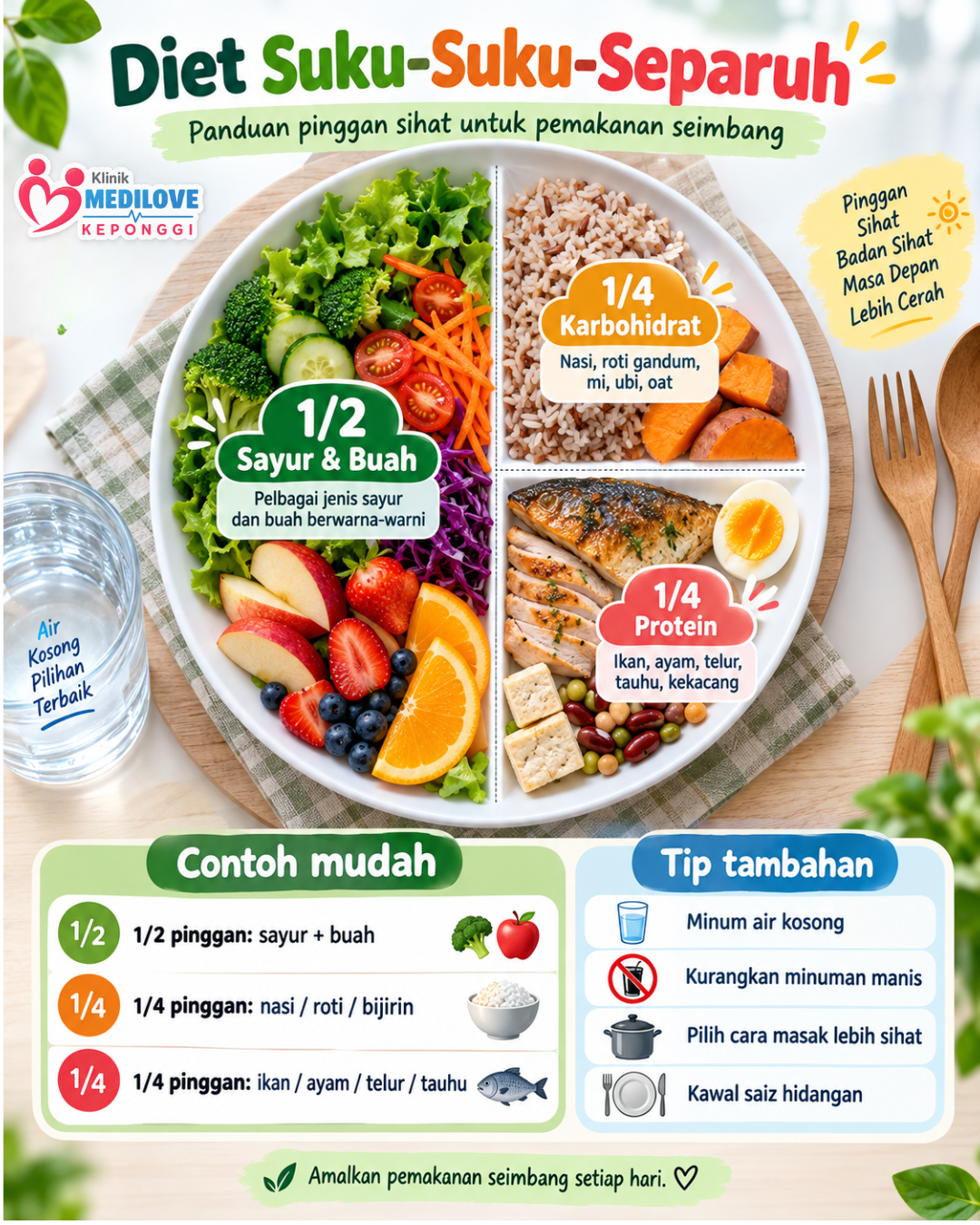
Use the Ministry of Health’s Malaysian Healthy Plate (“Suku-Suku Separuh”) for most meals: half the plate vegetables and fruit, a quarter rice, noodles or bread (wholegrain when possible), and a quarter protein such as fish, chicken, eggs, tofu or beans. At the economy rice stall, ask for two vegetables and one protein, with less gravy.
2. Move for 150 minutes a week (walking counts)
The World Health Organization recommends that adults do 150–300 minutes of moderate activity a week, such as brisk walking, plus muscle-strengthening on at least 2 days. That is about 30 minutes on 5 days, and 10-minute blocks count. Squats, wall push-ups and carrying groceries are simple strength exercises you can do at home. Sitting less also helps, so stand up and move every 30–60 minutes at work.
3. Cut sugary drinks first
Drinks are often the easiest place to cut sugar without feeling hungry. Swap one sweet drink a day for plain water, or order kurang manis or kosong. Teh tarik, 3-in-1 sachets, bubble tea and canned drinks add up quickly. You don’t have to give up nasi lemak or roti canai. Enjoy them less often or in smaller portions.
4. Protect at least 7 hours of sleep
Most adults need 7 hours or more of sleep a night. Regularly sleeping less is linked with weight gain, high blood pressure, low mood and poorer concentration. Keep a similar bedtime and wake time, even at weekends, and put your phone away 30 minutes before bed. If you snore loudly, wake up gasping or feel exhausted despite enough sleep, see a doctor to check for sleep apnoea.
5. Manage stress before it manages you
Long-term stress affects sleep, eating and blood pressure. Regular movement, time outdoors, staying connected with people you trust and short breaks during the day all help. If low mood, worry or poor sleep last more than two weeks or affect your work or family life, talk to a doctor. Asking for help early is a strength, not a weakness.
6. Stop smoking and limit alcohol
Stopping smoking is one of the single most powerful things you can do for your heart, lungs and cancer risk, and it helps at any age. Many people need several attempts, and support greatly improves your chances. The Ministry of Health’s mQuit programme and your clinic doctor can help with a quit plan. If you drink alcohol, drink less and less often. There is no amount that is completely risk-free.
7. Know your numbers with regular health screening
High blood pressure, diabetes and high cholesterol usually cause no symptoms for years. In NHMS 2023, many adults with these conditions did not know they had them, especially younger adults. A basic check of blood pressure, blood sugar, cholesterol, weight and waist size shows where you stand and which habit to focus on first. Your doctor will advise how often to check, based on your age, family history and risk factors.
A simple 4-week healthy lifestyle starter plan
| Week | One focus | What to do |
|---|---|---|
| Week 1 | Drinks | Replace one sweet drink a day with plain water or a kosong drink. |
| Week 2 | Movement | Add a 10-minute walk after dinner on at least 5 days. |
| Week 3 | Plate | Make half your plate vegetables at lunch. |
| Week 4 | Sleep and check-up | Set a fixed bedtime and book a basic health screening. |
Missed a day? That’s normal. Simply restart the next day. One missed day doesn’t undo your progress.
When to see a doctor before changing your routine
Healthy changes are safe for most people, but speak to a doctor first if you:
- Have heart disease, diabetes, kidney disease or high blood pressure, or take regular medication
- Are pregnant or planning a pregnancy
- Have not exercised for a long time and are over 40, or have joint problems
- Want to try a strict diet, weight-loss medication or supplements
Stop exercising and seek urgent medical help if you get chest pain or tightness, severe breathlessness, fainting, or a racing or irregular heartbeat.
Frequently asked questions
I’m busy. What is the one thing I should start with?
Start with whatever feels easiest. For many people that means cutting one sweet drink a day or taking a 10-minute walk after dinner. Small wins build the confidence to do more.
Is walking really enough exercise?
Yes. Brisk walking counts as moderate-intensity activity. Aim to build up to 150 minutes a week, and add simple strength exercises twice a week for extra benefit.
Do I need vitamins or supplements to be healthy?
Most healthy adults who eat a varied diet do not need routine supplements. Some people do, for example in pregnancy or with a proven iron or vitamin D deficiency. Ask your doctor before starting any, especially if you take regular medication.
I’m in my 50s or 60s. Is it too late to start?
No. Stopping smoking, becoming more active, sleeping better and controlling blood pressure all bring benefits at any age. Your doctor can suggest a safe starting point.
How long does it take to see results?
Many people notice better energy and sleep within a few weeks. Changes in weight, blood pressure, blood sugar and cholesterol usually take longer, which is why repeat checks with your doctor help you see real progress.
How Klinik Medilove Keponggi can help
You don’t have to figure it out alone. At our Kepong clinic, our doctors can check your health numbers, explain what they mean for you, and agree a realistic plan for weight, eating, activity, sleep or quitting smoking, with follow-up along the way. Explore more in our Healthy Living guides, or read what’s included in a full body health screening.
Ready to take the first step? WhatsApp us to book a health check.