










Key facts
- About 90% of HFMD cases in Malaysia occur in children aged five and under.
- It spreads through saliva, nose and throat discharge, blister fluid and stool.
- Children are most contagious in the first week, but the virus can stay in stool for weeks.
- There is no specific treatment; care focuses on fluids and relief of fever and pain.
- HFMD is a notifiable disease in Malaysia, and sick children should stay away from nursery or school.
Signs and symptoms
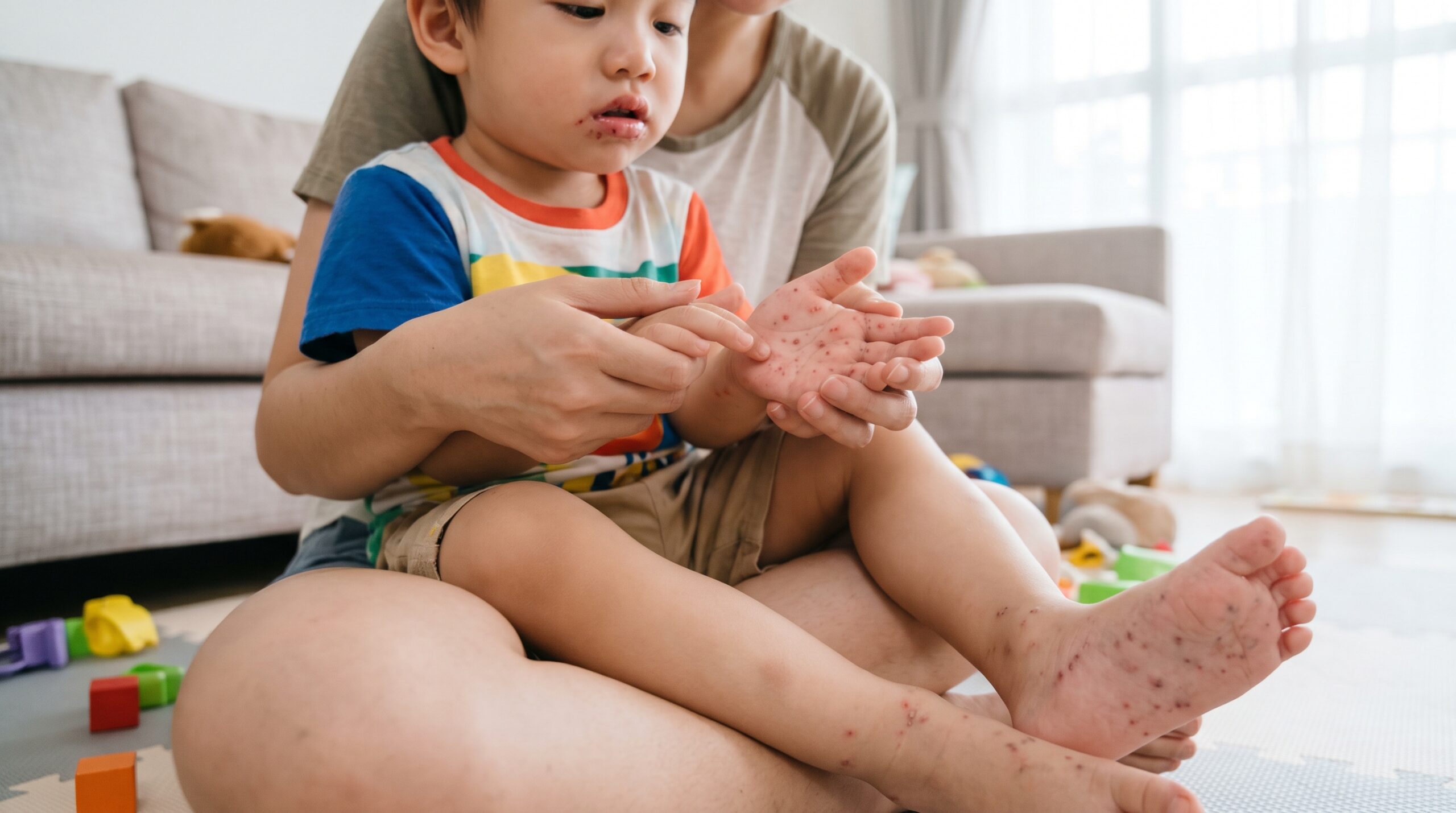
HFMD often starts with fever, sore throat, tiredness and poor appetite. A day or two later, painful ulcers may appear in the mouth, along with a rash or small blisters on the palms, soles and sometimes the buttocks or nappy area. The rash is usually not itchy.
Mouth pain can make children refuse to eat or drink, which can lead to dehydration. Most children recover in 7 to 10 days, but a few develop serious complications, so watch for warning signs.
Risk factors
Age five and under
Attending a nursery, kindergarten or childcare centre
Close contact with an infected person
Outbreak periods in the community
Not washing hands after using the toilet or changing nappies
Common causes
HFMD is caused by enteroviruses, most often coxsackievirus A16 and enterovirus 71 (EV71). EV71 is more often linked to serious complications affecting the brain and has caused outbreaks in Malaysia.
How it is checked
Your doctor will ask about your child's symptoms, eating, drinking and urine output, and look at the mouth, hands, feet and skin. HFMD is usually diagnosed by examination, without lab tests. Swabs or other tests are sometimes taken in severe cases or outbreaks, and the doctor will check for warning signs that need hospital care.
When to see a doctor
See a doctor if your child has a fever with mouth ulcers or a rash on the hands and feet, is drinking less than usual, or if you are unsure whether it is HFMD.
Urgent warning signs
Seek urgent medical care if your child has a fever above 38.5°C or lasting more than 2 days, is very drowsy or irritable, vomits repeatedly, has sudden jerks or startles, weakness or unsteady walking, fast breathing, refuses to drink or passes very little urine, or has a fit.
Treatment and management
There is no specific antiviral treatment for HFMD, and antibiotics are not needed. Care focuses on fluids, rest, and paracetamol for fever and mouth pain. Avoid aspirin in children. Children who cannot drink enough or show warning signs may need hospital care.
Prevention
Wash hands with soap after using the toilet, after changing nappies and before eating. Clean toys and frequently touched surfaces, and do not share cups, towels or utensils. Keep sick children at home and away from nursery or school until they have recovered, following your doctor's and local health office advice.
Frequently asked questions
How long is HFMD contagious?
Children are most contagious in the first week of illness, but the virus can stay in stool for several weeks, so good handwashing should continue after recovery.
When can my child go back to school or nursery?
Follow your doctor's advice and your district health office rules. Malaysian guidelines advise keeping the child at home until recovered, usually at least 10 days from the start of symptoms.
Can adults get HFMD?
Yes. Adults can be infected, although it is much more common in young children.
Is there a vaccine for HFMD in Malaysia?
Not yet. As of late 2026, no HFMD vaccine is approved for use in Malaysia, although one is being assessed.
What should my child eat and drink with HFMD?
Offer plenty of fluids and food that is easy to swallow. Paracetamol can ease fever and mouth pain; avoid aspirin in children.