










Key facts
- Dengue is spread by infected Aedes mosquitoes, which mainly bite during the day.
- There are four types of dengue virus, and a second infection can carry a higher risk of severe dengue.
- Warning signs often appear around the time the fever settles, so this period needs close attention.
- Paracetamol is preferred for fever; ibuprofen and aspirin should be avoided.
- Emptying and cleaning water containers every week helps stop mosquitoes breeding.
Signs and symptoms
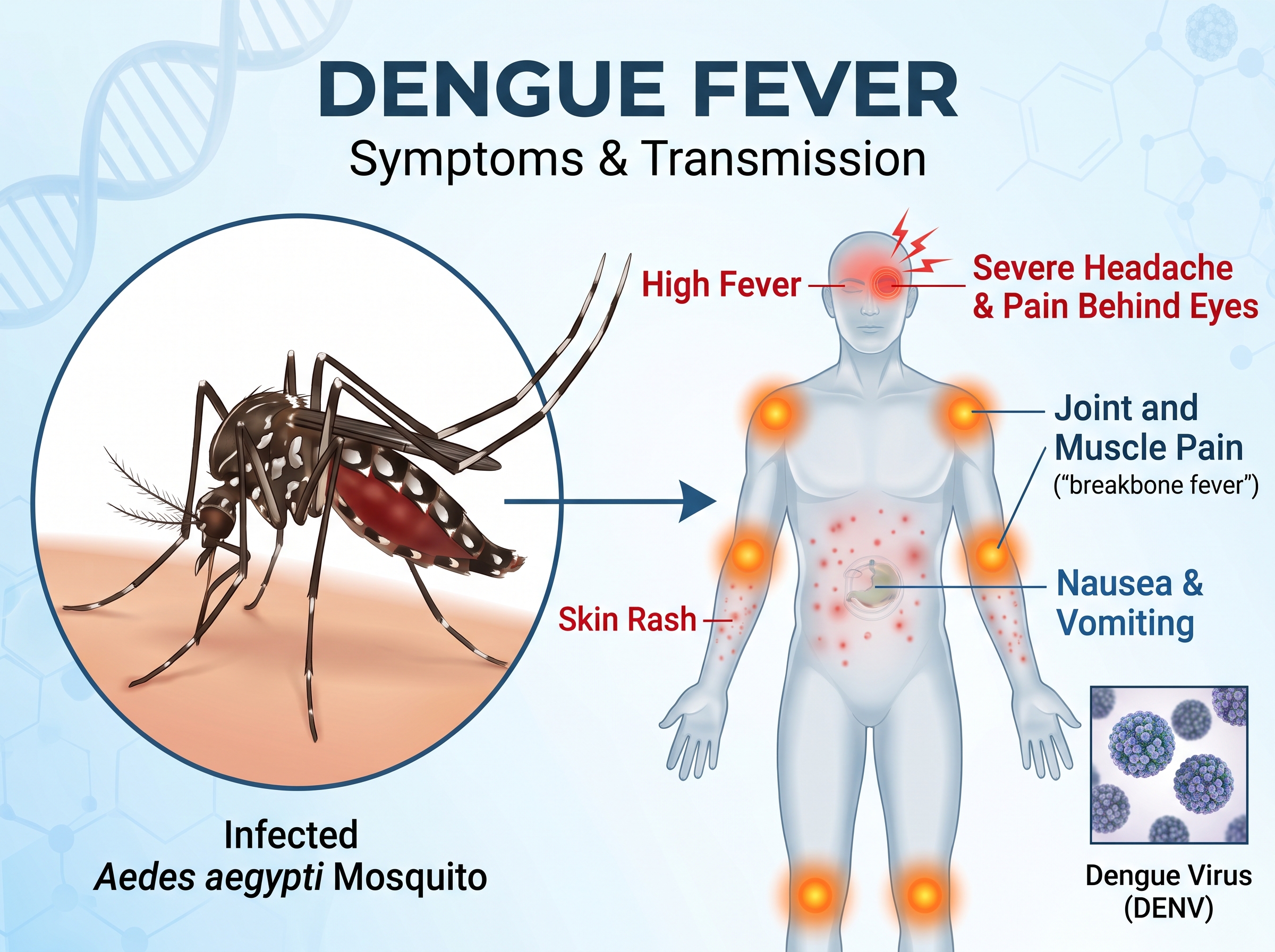
Dengue usually starts suddenly with a high fever that may last 2 to 7 days. Common symptoms include severe headache, pain behind the eyes, muscle and joint aches, nausea, vomiting and a rash.
Some people feel better when the fever goes down but then develop warning signs such as abdominal pain, persistent vomiting, bleeding from the gums or nose, or unusual tiredness or restlessness. Symptoms alone cannot confirm dengue, so blood tests and a medical review are needed.
Risk factors
Living in or visiting an area with active dengue cases
Mosquito breeding sites around the home or workplace
A previous dengue infection
Pregnancy, older age or long-term medical conditions, which may need closer monitoring
Common causes
Dengue is caused by the dengue virus, which has four types (DENV-1 to DENV-4). It is passed to people through bites from infected Aedes aegypti and Aedes albopictus mosquitoes.
How it is checked
Your doctor will ask when the fever started, about your symptoms and any dengue cases nearby, and check your blood pressure, hydration and signs of bleeding. Blood tests such as the dengue NS1 antigen test, dengue antibody tests and a full blood count help confirm the infection and monitor platelets and haematocrit. Review is often needed daily from about day 3 of the illness.
Assessment and investigations
Full Blood Count
Checks white cells, platelets and haematocrit, and is repeated during the illness to spot changes that need closer monitoring.
Blood Pressure and Pulse Check
Helps assess hydration and circulation, which matter most during the critical phase of dengue.
When to see a doctor
See a doctor early if you have a sudden fever, especially with headache, body aches or a rash, or if someone at home or nearby has dengue.
Urgent warning signs
Seek prompt medical care if you have abdominal pain, vomiting more than 3 times in 24 hours, bleeding from the gums or nose, blood in vomit or stool, or become drowsy, restless or confused, especially as the fever settles.
Treatment and management
There is no specific medicine that cures dengue. Care focuses on rest, drinking enough fluids, paracetamol for fever and pain, and close monitoring, especially around the time the fever settles. Avoid ibuprofen and aspirin. Antibiotics do not treat dengue.
Some people need hospital care for intravenous fluids and closer observation if warning signs appear.
Prevention
The best protection is to prevent mosquito bites and breeding. Use mosquito repellent and wear long sleeves, especially during the day. Empty, cover or clean water containers at least weekly and remove standing water around your home.
If you have dengue, avoiding mosquito bites helps reduce spread to others at home.
Frequently asked questions
Can I take ibuprofen for dengue fever?
No. Ibuprofen and aspirin should be avoided in dengue. Paracetamol is usually preferred, at the dose on the label or as advised by your doctor.
When is dengue most dangerous?
The critical phase often starts after about day 3 of fever, around the time the fever settles, and usually lasts 24 to 48 hours. This is when warning signs need close attention.
Does a low platelet count mean my dengue is severe?
Not necessarily. Platelet count alone does not show how severe dengue is. Your doctor will look at your symptoms, blood pressure, haematocrit and other results together.
Can you get dengue more than once?
Yes. There are four types of dengue virus, and a second infection with a different type can carry a higher risk of severe dengue.
How much should I drink if I have dengue?
Drink plenty of fluids such as water, oral rehydration solution and soup. Adults are often advised around 2 to 3 litres a day unless a doctor advises otherwise.