










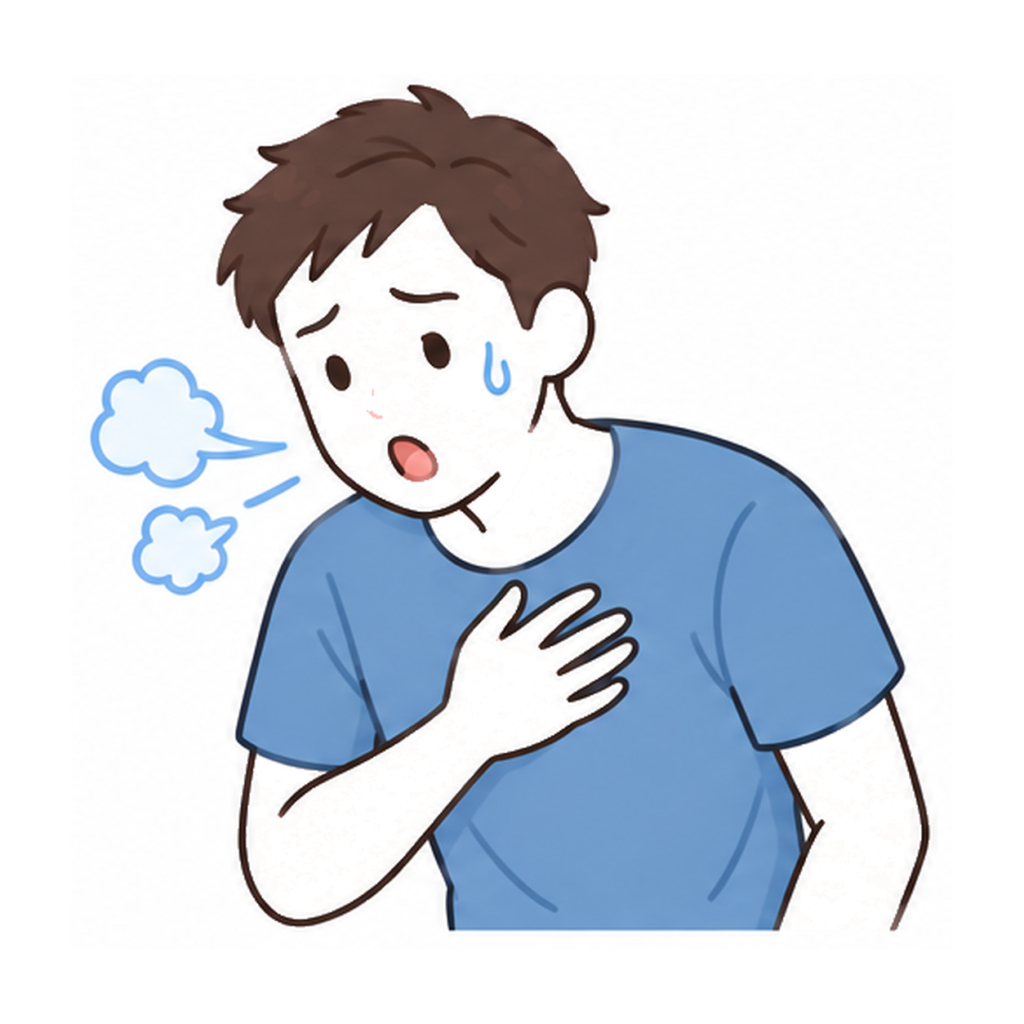
What to notice
- Whether the breathlessness started suddenly or gradually
- Whether it happens at rest, during activity or both
- Whether it is getting more frequent or severe
- Whether there is chest pain, palpitations or dizziness
- Whether there is cough, wheezing or another breathing symptom
- Whether there is swelling in the legs or ankles
- Whether it is limiting walking, exercise or normal daily activities
Common cause groups
Lung and airway causes
Respiratory infections, asthma and other lung or airway problems can make breathing feel more difficult.
Heart and circulation-related causes
Some heart conditions can cause breathlessness, particularly during activity or when it occurs together with leg swelling or reduced exercise tolerance.
Blood-related causes
Anaemia can reduce the blood's ability to carry oxygen and may contribute to breathlessness together with fatigue, dizziness or palpitations.
Thyroid and other health causes
Thyroid conditions and other health problems can sometimes contribute to breathlessness, particularly when other symptoms are also present.
Associated signs
Chest pain or discomfort
Heart palpitations
Dizziness
Leg or ankle swelling
Cough or wheezing
Fatigue
Fainting or near-fainting
How it may be assessed
A doctor will usually ask when the shortness of breath began, whether it happens at rest or with activity, how quickly it is changing and whether there are other symptoms. A clinical examination and basic observations usually come first. Depending on the pattern, selected blood, thyroid, heart or chest investigations may then be considered.
Assessment and investigations
Full Blood Examination
A blood count may help identify anaemia or other blood changes when shortness of breath occurs with fatigue, dizziness or reduced exercise tolerance.
Iron Studies
Iron studies may be considered when blood results or symptoms suggest iron deficiency could be contributing to anaemia and breathlessness.
Thyroid Function Test
Thyroid testing may be considered when breathlessness occurs with symptoms such as palpitations, tremor, heat intolerance or unexplained weight change.
When to get checked
Consider medical assessment if shortness of breath is new, keeps returning, is gradually getting worse, occurs with less activity than before, or begins interfering with normal walking, exercise or daily activities.
Urgent warning signs
Seek urgent medical care if shortness of breath is sudden, severe or rapidly worsening, particularly when it occurs with chest pain or fainting.
Frequently asked questions
What can cause shortness of breath?
Shortness of breath can have many causes, including lung or airway problems, heart conditions, anaemia and some thyroid conditions. The pattern of breathlessness and other symptoms help guide what should be assessed.
When is shortness of breath an emergency?
Sudden, severe or rapidly worsening breathing difficulty needs urgent medical attention, particularly when it occurs with chest pain or fainting.
Can anaemia cause shortness of breath?
Anaemia can contribute to breathlessness because the blood may carry less oxygen than usual. Symptoms such as fatigue, dizziness or palpitations may also occur, but blood tests are needed to assess whether anaemia is present.