








Screening Guide
Extensive Health Screening
Extensive screening adds more detailed tests when your risk calls for them. More tests are not always better, so your doctor helps you pick wisely.
Overview
An extensive health screening goes a step further than a basic check. Depending on your situation, it may include heart tests such as an ECG (a tracing of your heart rhythm), imaging such as an ultrasound scan, and a wider range of blood tests.
It is natural to think that more tests means more peace of mind. The honest answer is that it depends. Each extra test can find something useful, but it can also raise false alarms or pick up harmless findings that lead to worry and further tests.
That is why there is no one-size-fits-all package. Your doctor looks at your age, family history, lifestyle and any existing conditions, then suggests the tests that are most likely to help you.
Who may want to understand this screening
This kind of screening may suit you if you have several risk factors, such as diabetes, high blood pressure, smoking, a strong family history of heart disease or cancer, or long-term liver conditions. It can also help if it has been a long time since your last check and you want a more thorough review.
More is not automatically better. The World Health Organization (WHO) Regional Office for Europe, in its 2020 short guide on screening programmes, warns that the public often seem unaware that screening can cause harm. WHO Europe describes these harms as false positives that lead to extra tests and anxiety, false negatives that give false reassurance, and overdiagnosis (finding conditions that would never have caused problems).
Some tests are specifically not advised for people at low risk. The US Preventive Services Task Force (USPSTF) recommends against screening with a resting or exercise ECG in adults with no symptoms who are at low risk of heart disease. It found that screening can lead to procedures such as angiography without clear benefit.
If you have symptoms, please don't wait for a screening appointment. See a doctor soon for chest pain or tightness, breathlessness, fainting, unexplained weight loss, or blood in your stools or urine.
What screening may involve
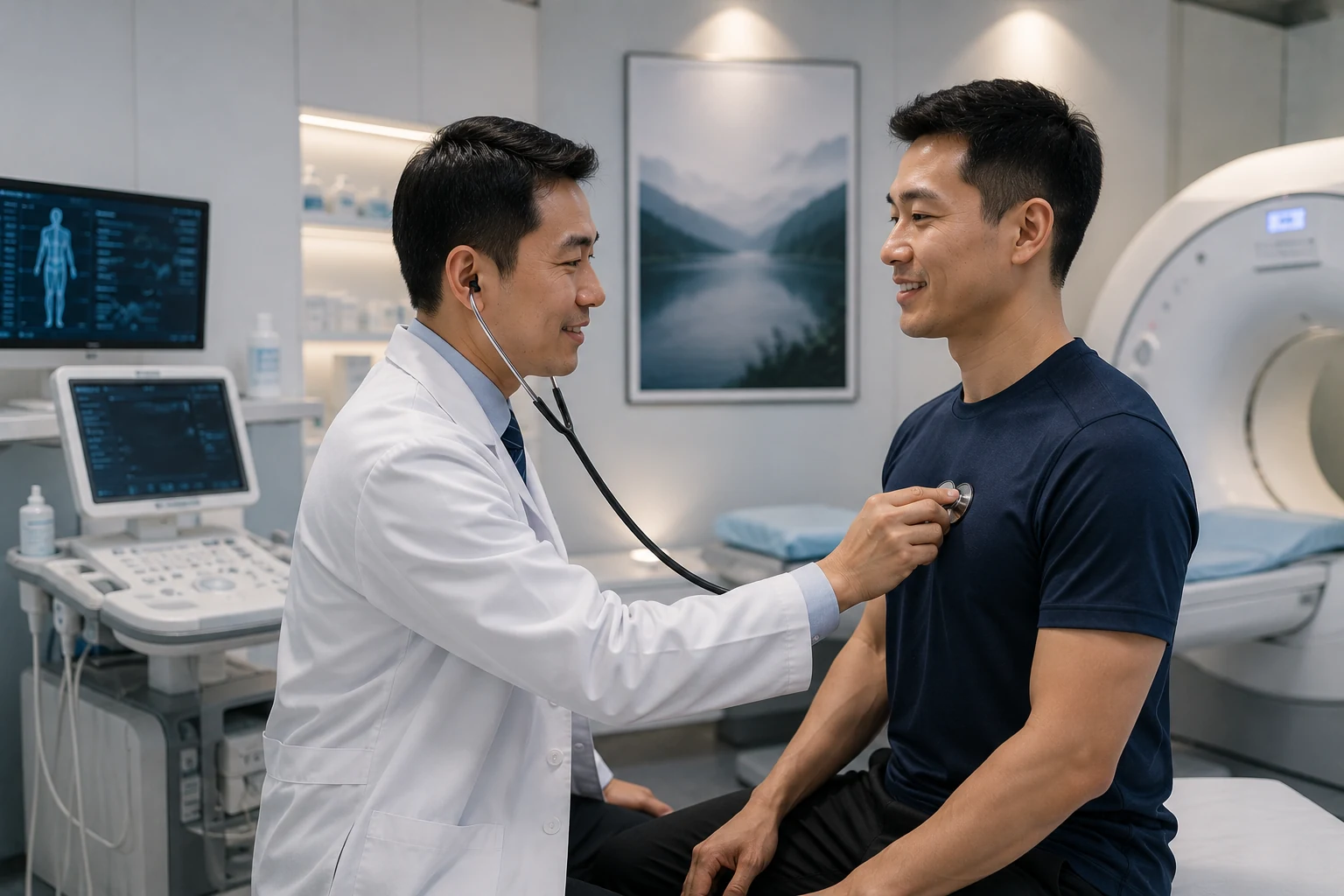
Your visit starts with a conversation. The doctor asks about your health, medicines, family history and lifestyle, then checks your blood pressure, weight and BMI (body mass index, a measure of weight for height). Together you decide which tests make sense.
Depending on your risk, the tests may include blood tests for sugar (such as HbA1c), cholesterol, kidney and liver function, and heart tests such as an ECG or echocardiogram (an ultrasound of the heart). Imaging, such as an abdominal or pelvic ultrasound, is chosen based on your risk and history rather than done for everyone.
You may be offered tumour markers such as CEA, CA 19-9, CA 125 or CA 15-3 elsewhere. It is worth knowing that these are not recommended for screening people without symptoms. The US National Cancer Institute explains that they often miss cancer and can be raised in people who do not have cancer.
What screening can — and cannot — tell you
An extensive check can show risk factors early, such as high blood sugar, high cholesterol or reduced kidney function. It can also give a clearer picture of your heart health if you are at higher risk.
It cannot rule out every disease. A normal result is reassuring, but it does not mean you will stay well, and some conditions are simply not visible on these tests.
Extra tests also bring extra chances of unclear results. Scans often find small, harmless things, such as simple cysts, that may need repeat scans to be sure. The USPSTF notes that for ovarian cancer, screening with CA 125 and ultrasound led some women without cancer to have unnecessary surgery.
If something needs a closer look, your doctor will explain what it means and whether follow-up is needed. Try not to read too much into a single number on its own.
Practical considerations
Ask the clinic beforehand whether you need to fast. Some blood tests, such as fasting glucose, and an abdominal ultrasound may need an empty stomach, while a pelvic ultrasound may need a full bladder. Plain water is usually fine.
Bring a list of your medicines and supplements, any previous test results or scan reports, and notes on your family history. Wear comfortable clothing that makes it easy to do an ECG or scan.
Plan a follow-up visit to go through the results. This is the most important part, because it turns numbers into a clear plan for you.
Sources
1. Screening programmes: a short guide. Increase effectiveness, maximize benefits and minimize harm — World Health Organization Regional Office for Europe, 2020
2. Sweden's health authorities streamline health screening programmes — World Health Organization Regional Office for Europe, 2020
3. Cardiovascular Disease Risk: Screening With Electrocardiography — US Preventive Services Task Force, 2018
4. Tumor Markers — US National Cancer Institute, 2023
5. Ovarian Cancer: Screening — US Preventive Services Task Force, 2018
Common questions
Is an extensive screening better than a basic one?
Not necessarily. It is better only if the extra tests match your risks. For many people, a well-chosen basic check is enough.
Should I have an ECG even if I feel fine?
Not always. The USPSTF recommends against ECG screening in adults without symptoms who are at low risk of heart disease. Your doctor may suggest one if you have risk factors or symptoms.
Can tumour markers detect cancer early?
They are not reliable for screening. Tumour markers can miss cancer and can be raised for harmless reasons, so they are mainly used to monitor people already diagnosed.
What if a scan finds something small?
Most small findings, such as simple cysts, are harmless. Your doctor will explain whether it needs a repeat scan or no action at all.
Do I still need to see a doctor if my results are normal?
Yes, if you develop symptoms. Normal results do not protect against future illness, so do not ignore new or worrying symptoms.