







Preparing for your blood test.
Simple blood test preparation tips: whether to fast, how to make the needle easier, what to tell us, and how to look after your arm afterwards.
Blood test preparation: before your visit
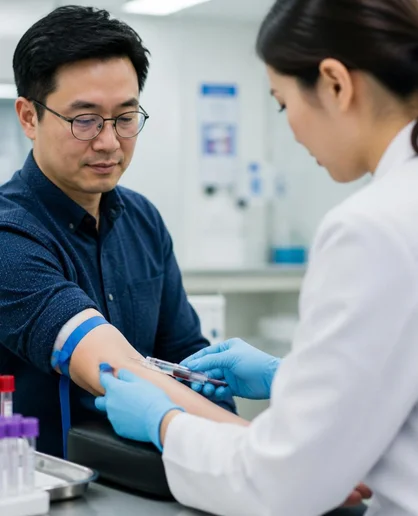
A few minutes of blood test preparation makes the vein easier to find, the needle easier to bear and your results more reliable.
Do you need to fast?
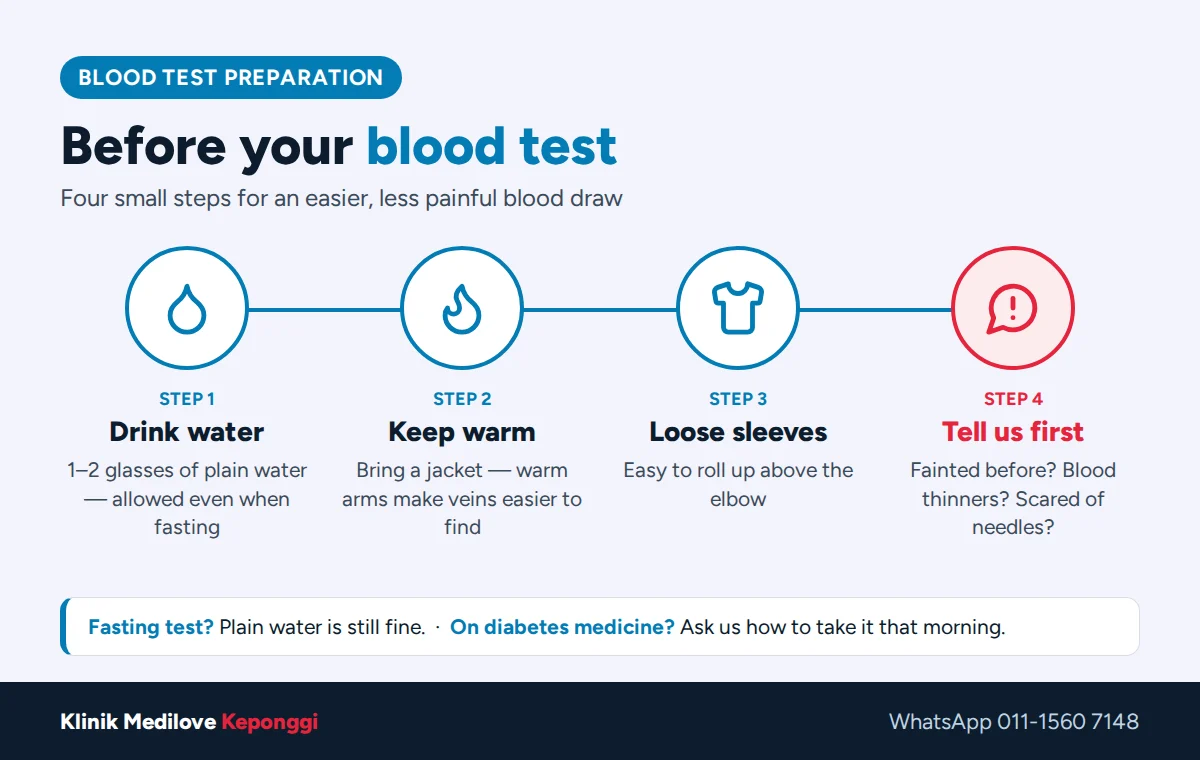
Not every blood test needs fasting. Sugar and cholesterol tests usually need 8–10 hours without food; many others, such as HbA1c, do not. Your blood test preparation starts with asking us — WhatsApp us if you are not sure.
Drink plain water
Have one or two glasses of plain water in the hour or two before your test, even if you are fasting. Well-hydrated veins are easier to find. If your doctor has told you to limit fluids, follow that advice instead.
Keep your arms warm
Cold makes veins shrink. Bring a light jacket for the air-conditioned waiting area and keep your hands warm until it is your turn.
Medicines
Take your usual blood pressure, heart and thyroid medicines with water. If you take diabetes tablets or insulin, do not take them while fasting — bring them and take them with your meal after the blood test, unless your doctor has advised otherwise.
Supplements
Stop biotin (vitamin B7) and hair-skin-nail supplements 2–3 days before, as they can upset thyroid and hormone results. Tell us about any blood thinners.
Wear the right clothes
Short sleeves, or loose sleeves that roll up easily above the elbow. A tight sleeve bunched around the upper arm gets in the way.
Bringing a child
For a child, blood test preparation means planning ahead. Numbing cream works well but needs about an hour on the skin, so tell us when you book. Bring a favourite toy or video, and plan to hold your child upright on your lap in a hug.
What to bring
IC or passport, previous blood test reports, your medicines or a list, and a small snack and drink for after a fasting test.
Your blood test, step by step
Blood test preparation continues when you arrive. Here is what happens — most blood tests take only a few minutes.
- 1
Check-in
Show your IC, confirm which tests you are having and whether you have fasted.
- 2
Tell us before we start
Let us know if you have fainted before, if your veins are hard to find (or which spot worked last time), if you take a blood thinner, if you have had breast surgery or lymph nodes removed on one side, or if you are scared of needles.
- 3
Get comfortable
Sit with your arm resting straight and relaxed. If you tend to faint, you can lie down for the whole test.
- 4
The needle
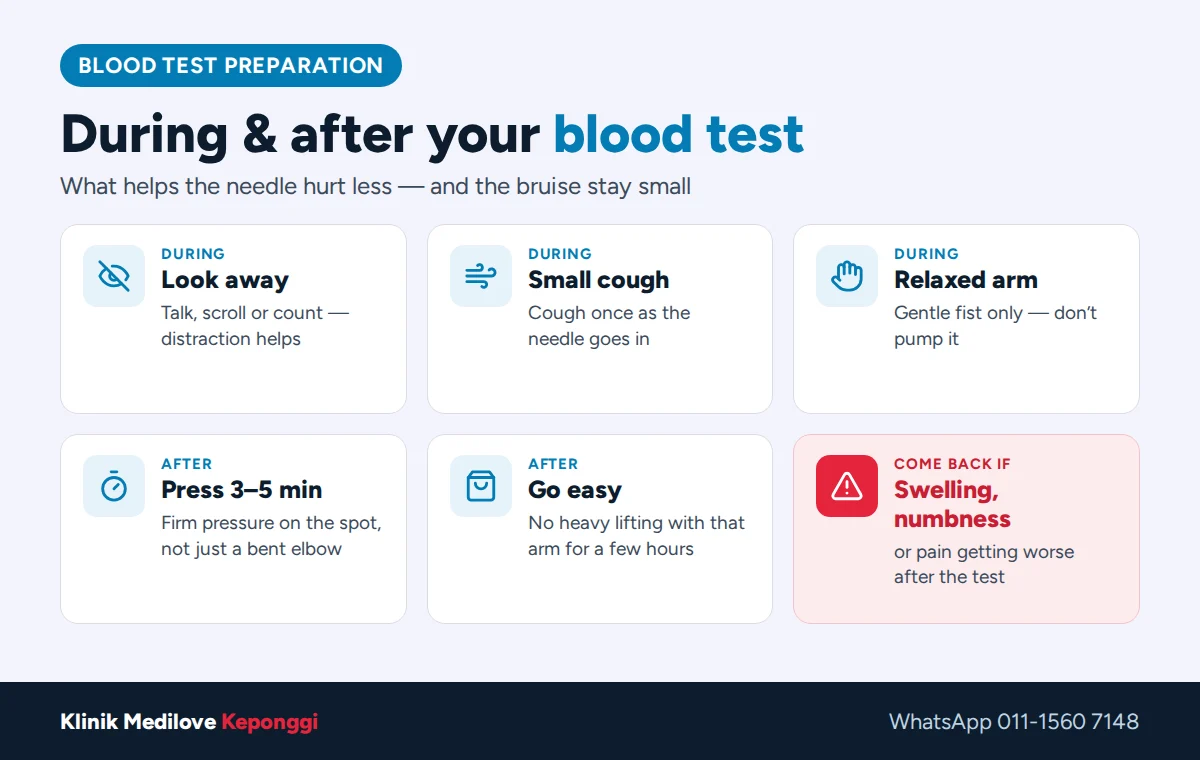
Look away, talk to us or scroll your phone. A small cough as the needle goes in helps some people. Make a gentle fist only when asked — do not pump it.
- 5
Press the spot
Press firmly on the cotton for 3–5 minutes, longer if you take a blood thinner. Bending your elbow over the cotton is not enough on its own.
- 6
Eat and go
After a fasting test you can eat, drink and take your usual medicines straight away.
- 7
Results with your doctor
Most results are ready in 24–48 hours. Your doctor goes through each one with you and agrees a follow-up plan.
Do’s and don’ts for blood test preparation
The simple blood test preparation rules that make the biggest difference.
Do
- Drink plain water before your blood test, even when fasting.
- Keep warm and wear loose, short-sleeved clothing.
- Tell us if you have fainted before — you can lie down for the test.
- Tell us about blood thinners, and which arm or vein has worked before.
- Look away and keep your arm relaxed while the needle is in.
- Press firmly on the spot for 3–5 minutes afterwards.
Don’t
- Eat, chew gum, or drink coffee, tea or juice while fasting.
- Pump your fist or squeeze a stress ball — it can falsely raise potassium results.
- Drink alcohol in the 24 hours before a fasting test.
- Take diabetes tablets or insulin while fasting, unless your doctor has told you to.
- Rely on bending your elbow instead of pressing on the cotton.
- Carry heavy bags with that arm for the next few hours.
After your blood test
Blood test preparation does not stop at the needle: looking after your arm keeps bruising small.
Small bruise?
A small bruise is common and usually fades over a week or two. A cold pack in the first day can ease it.
Feeling faint afterwards
Sit or lie down with your legs raised, drink water and eat something. Tell us before you leave if you feel unwell.
Plaster and activity
Keep the plaster on for about an hour, and avoid heavy lifting or gym weights with that arm for a few hours.
Come back to see us if you notice
Swelling at the site that keeps getting bigger, numbness or tingling down the arm or into the fingers, pain that gets worse instead of better after a day or two, or redness, warmth or pus at the site.
Scared of needles? You are not alone, and it is worth telling us. Read our full guide, A Less Painful Blood Test: What Actually Helps, for the evidence behind each blood test preparation tip, help for children, and what to do if needle fear is stopping you from having tests.
Blood test preparation FAQ
Quick answers to the blood test preparation questions our patients in Kepong ask most.
Do I need to fast before my blood test?
Not always. Fasting blood sugar and cholesterol tests usually need 8–10 hours without food, with plain water allowed. Many other tests, such as HbA1c, full blood count and kidney or liver tests, do not need fasting. If you are not sure, WhatsApp us before your visit.
Can I drink water before a fasting blood test?
Yes. Plain water is part of good blood test preparation and makes the blood test easier because well-hydrated veins are easier to find. Avoid coffee, tea, juice, milk and chewing gum until your blood is taken.
Should I take my usual medicines before the test?
Yes, take blood pressure, heart and thyroid medicines with water as usual. Do not take diabetes tablets or insulin while fasting — bring them and take them with your meal after the blood test, unless your doctor has advised otherwise.
I have fainted during a blood test before. What should I do?
Tell us when you arrive. You can lie down for the whole test, which is the simplest way to prevent fainting. Drinking water beforehand and tensing your leg muscles during the test may also help.
How can I make my blood test less painful?
Drink water, keep warm, look away, give a small cough as the needle goes in, and keep your arm relaxed. Our full guide explains why each step works.
Is it normal to get a bruise after a blood test?
Yes, a small bruise is common and usually fades within a week or two. Pressing firmly on the spot for 3–5 minutes straight after the test makes one less likely.
What is the most important blood test preparation step?
Telling us what we need to know: whether you have fasted, if you have fainted before, if you take a blood thinner, and if you are scared of needles. Good blood test preparation is mostly about a short conversation before the needle.
Should I avoid exercise or alcohol as part of blood test preparation?
Yes, for about 24 hours. Heavy exercise such as gym training or a long run can raise muscle and liver enzyme readings, and alcohol can raise triglycerides and liver tests. A gentle walk is fine. Keeping your routine light the day before helps your results reflect your usual health, not a single busy day.
Do vitamins or supplements affect blood test results?
Some can. High-dose biotin (vitamin B7), often found in hair, skin and nail supplements, can give falsely high or low thyroid and some heart test results. Bring your supplements or a photo of the labels, and ask us whether to pause them for 2–3 days before your test. Do not stop prescribed medicines on your own.
What if I feel unwell on the day of my blood test?
Let us know before we start. A fever, cough or stomach upset can temporarily change results such as white cell count, inflammation markers and blood sugar. For a routine health screening it is often better to wait until you have recovered for about a week. If your doctor needs the test to check the illness itself, come in as planned.

Questions before your blood test?
Our team is happy to help with your blood test preparation — just WhatsApp or call us.
Find usLot C-08-G (ground floor), KepongGi, Jalan Rimbunan Teratai 1, 52100 Kepong, Kuala Lumpur
KepongGi Square · beside Taman Metropolitan Kepong
Phone / WhatsApp011-1560 7148
Opening hoursMon–Fri 8:00 am – 9:00 pm
Sat–Sun 8:00 am – 6:00 pm
This page gives general information and does not replace advice from your doctor. If your doctor gives you different instructions, follow your doctor.