








HPV test: what to expect and how to prepare.
An HPV test is the recommended cervical cancer screening test for most women aged 30–65 in Malaysia. This HPV test guide for patients in Kepong explains how to prepare, what happens during the test and what your result means. The sample takes only a few minutes, results are usually ready in 5–7 days, and you can stop at any time.
HPV test: your 30-second guide
What is an HPV test?
A screening test that looks for high-risk human papillomavirus (HPV) — the cause of almost all cervical cancers.
What does the HPV test look for?
The HPV DNA test checks a cervical or vaginal sample for the genetic material of high-risk HPV types, including HPV 16 and 18. Long-lasting infection with these types can slowly cause abnormal cervical cells, which may turn into cancer over many years if not found and treated.
How is it different from a Pap smear?
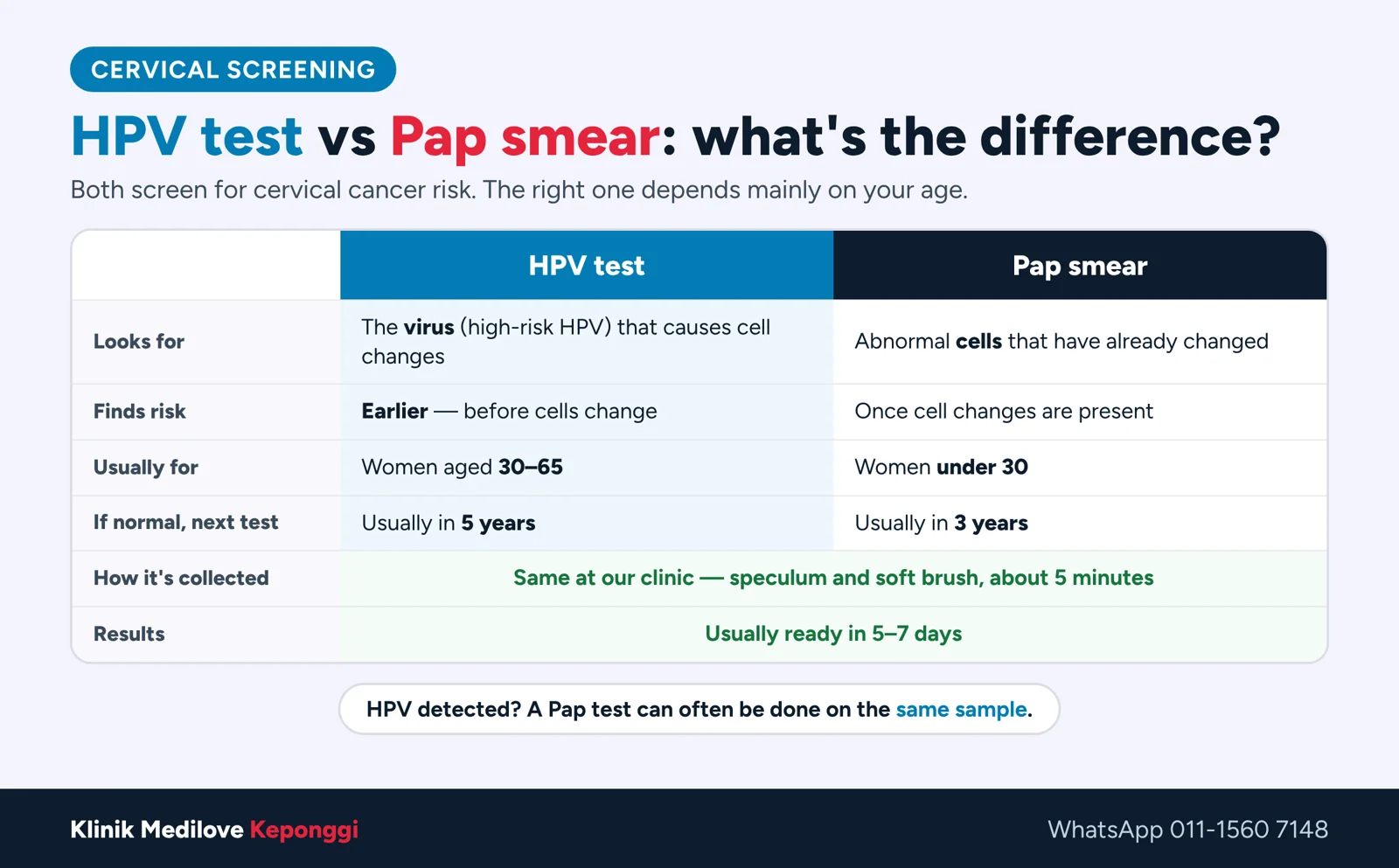
A Pap smear looks for cells that have already changed. An HPV test finds the virus that causes those changes — often earlier. The HPV test and Pap smear are collected in the same way at our clinic. A negative HPV test gives strong reassurance, which is why the screening interval can safely be longer.
Is HPV common?
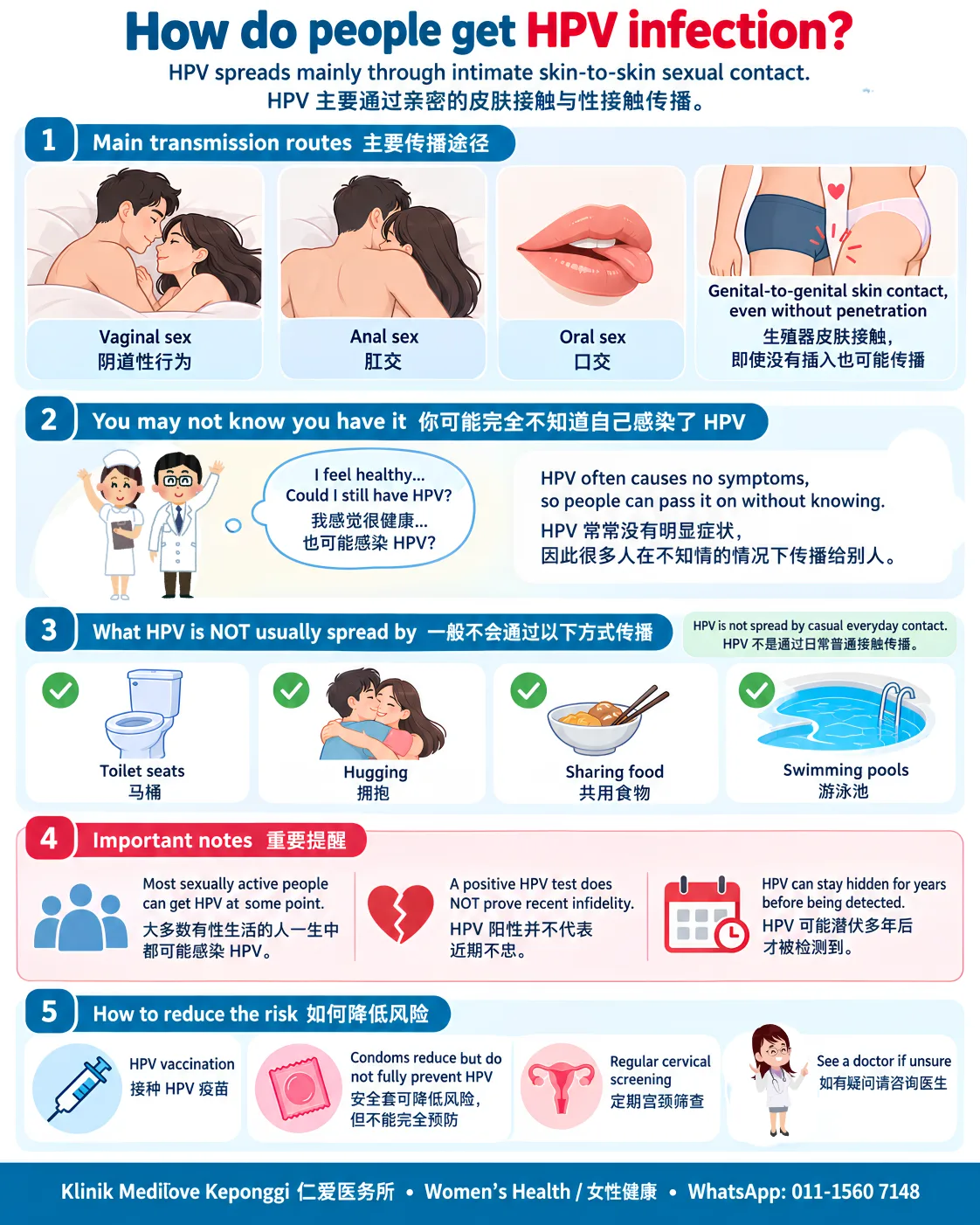
Very. Most sexually active people get HPV at some point in life, usually without any symptoms. In most people the immune system clears it within one to two years. Screening is about finding the small number of infections that persist.
Does the HPV test diagnose cancer?
No. It is a screening test for people without symptoms. A positive HPV test means you need follow-up — not that you have cancer.
How do people get HPV?
HPV spreads mainly through intimate skin-to-skin sexual contact — vaginal, anal or oral sex, and genital skin contact even without penetration. It is not usually spread by toilet seats, hugging, sharing food or swimming pools. Because HPV rarely causes symptoms and can stay hidden for years, regular HPV testing is the only reliable way to know whether screening follow-up is needed.
Who should have an HPV test?
The right cervical screening test depends on your age, previous results and health.
Is the HPV test right for me?
| Your situation | Usual approach |
|---|---|
| Aged 30–65, ever sexually active | HPV test is the preferred screening test |
| Under 30 | Pap smear is usually used instead — HPV is very common and usually clears on its own at this age |
| HPV vaccinated | Still screen — vaccines do not cover every cancer-causing HPV type |
| Weakened immunity (e.g. HIV, transplant, long-term immunosuppressants) | May need earlier and more frequent screening — ask your doctor |
| Over 65 with regular normal results | Screening may be able to stop — discuss with your doctor |
| Hysterectomy | Depends on the reason and whether the cervix was removed — bring your surgical history |
How is the HPV test collected at our clinic?
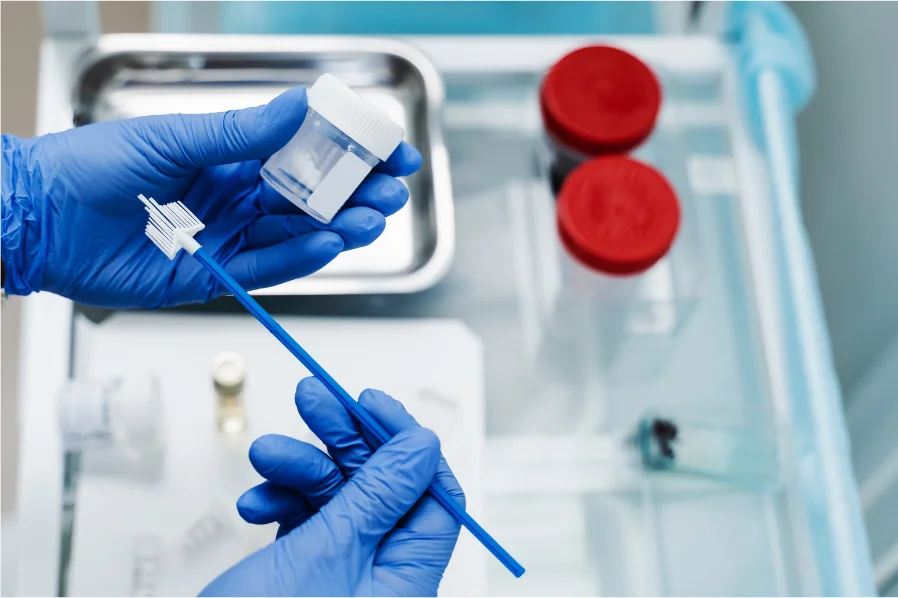
At Klinik Medilove Keponggi, the HPV test is collected by the doctor from the cervix.
Doctor-collected HPV test (cervical sample)
- Similar to a Pap smear: a speculum is used and a small brush collects cells from the cervix.
- The doctor can look at the cervix at the same time.
- The same sample can often be used for a Pap (cytology) test if HPV is detected, so you may not need to come back for another swab.
- Suitable if you have symptoms, previous abnormal results or are under follow-up.
What about HPV self-sampling?
HPV self-sampling (a vaginal swab you take yourself) is used in some Malaysian screening programmes. We are temporarily not offering self-sampling at our clinic. If you feel anxious about the examination, tell us — we will go at your pace, and you can pause or stop at any time.
Tell the doctor before your HPV test if…
These details may change the type of test, its timing or your follow-up plan.
Let us know if you…
- May be pregnant, or gave birth in the last 6 weeks.
- Had an abnormal Pap smear, positive HPV test, CIN, colposcopy or cervical treatment before.
- Have had a hysterectomy.
- Have weakened immunity.
- Have vaginal dryness, vaginismus or found a previous examination painful.
Symptoms need a check-up, not just screening
Bleeding after sex, bleeding between periods, bleeding after menopause, persistent blood-stained or unusual discharge, or ongoing pelvic pain should be examined by a doctor. Please do not rely on a self-sample HPV test alone if you have these symptoms.
How should I prepare for an HPV test?
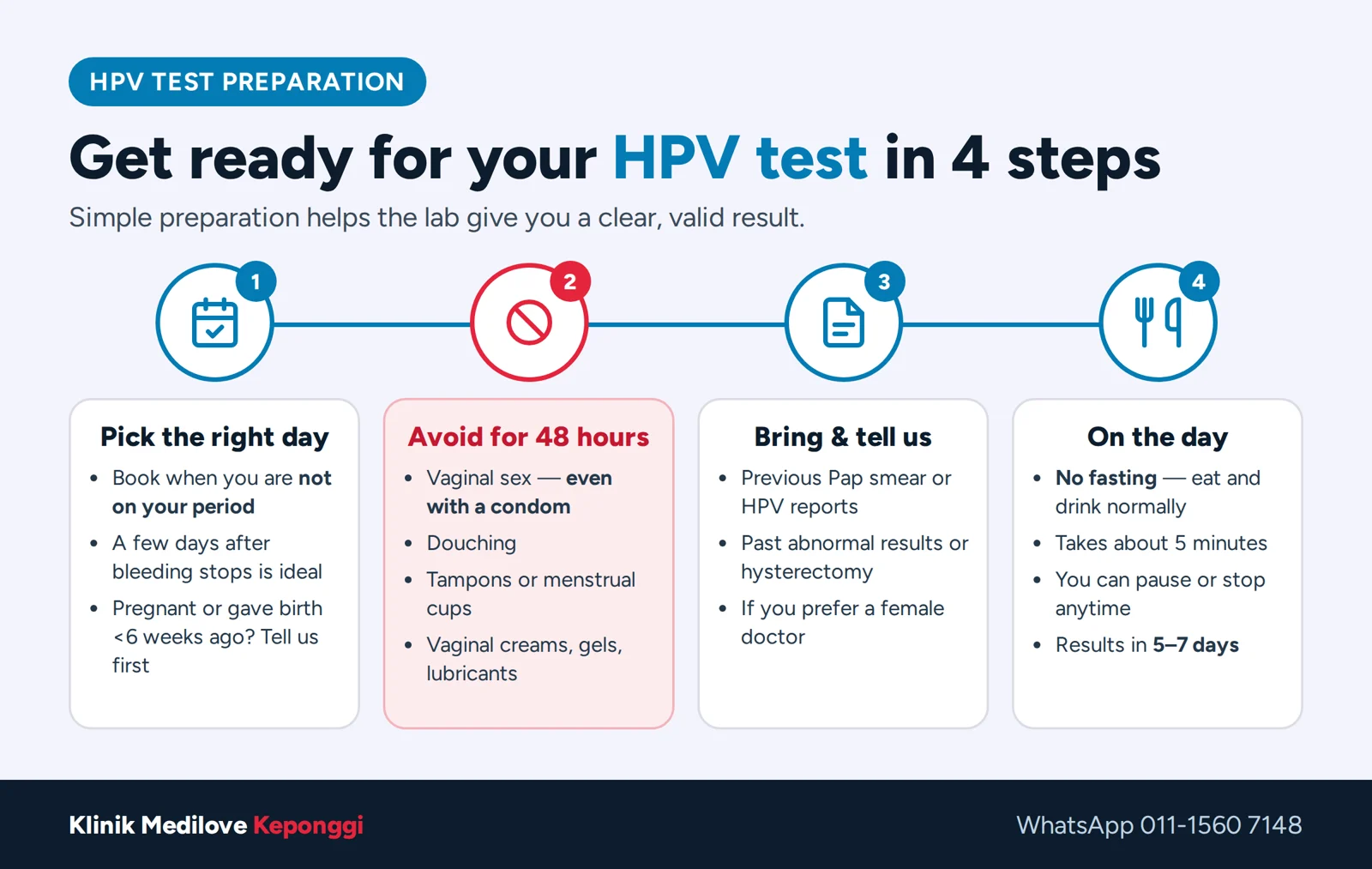
Simple preparation helps the laboratory get a clear, valid HPV test result.
Do
- Book a day when you are not having your period.
- Bring previous Pap smear or HPV reports, if available.
- Eat and drink normally — no fasting needed.
- Tell us if you prefer a female doctor.
- Tell us if you feel anxious — we can go at your pace.
Avoid for 48 hours beforehand
- Vaginal sexual intercourse (even with a condom).
- Vaginal douching or washing inside the vagina.
- Tampons or menstrual cups.
- Vaginal creams, gels, lubricants, spermicides or pessaries, unless prescribed.
What happens during the HPV test, step by step?
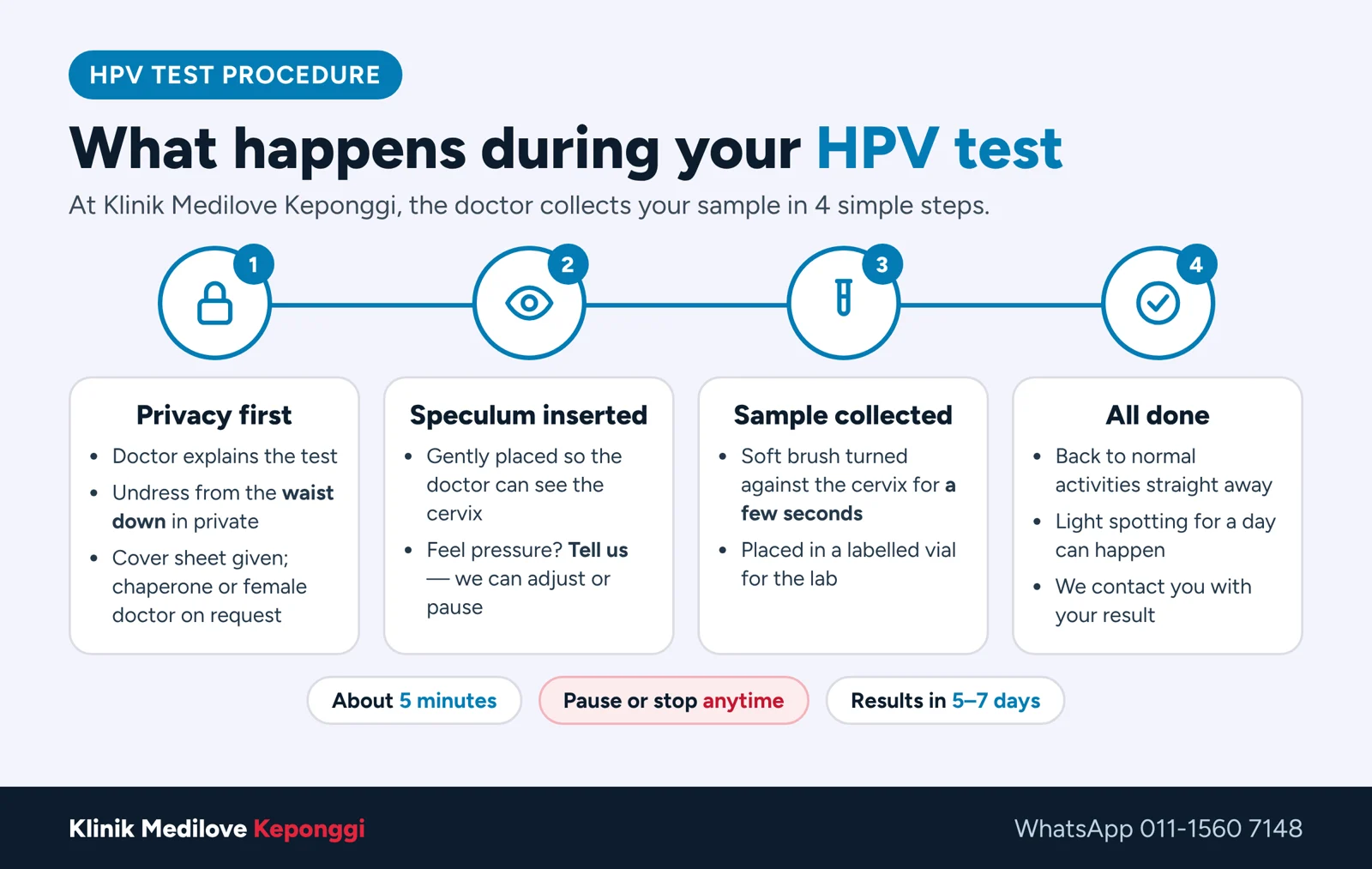
Knowing the sequence makes the HPV test much easier — especially the first time.
Privacy and explanation
You undress from the waist down in private and are given a cover sheet. A chaperone can be present.
A speculum is gently inserted
This lets the doctor see the cervix. Tell us straight away if it is uncomfortable — we can adjust or pause.
A small sample is collected
A soft brush is rotated against the cervix for a few seconds and placed in a liquid container for the laboratory.
Done
The speculum is removed. The whole examination usually takes about five minutes.
Does an HPV test hurt?
Most people feel brief pressure or discomfort, similar to a Pap smear, rather than significant pain.
Light spotting after the HPV test can happen and usually settles within a day. You can go back to work, exercise, eat and drive straight after the HPV test.
HPV test results: what do they mean?
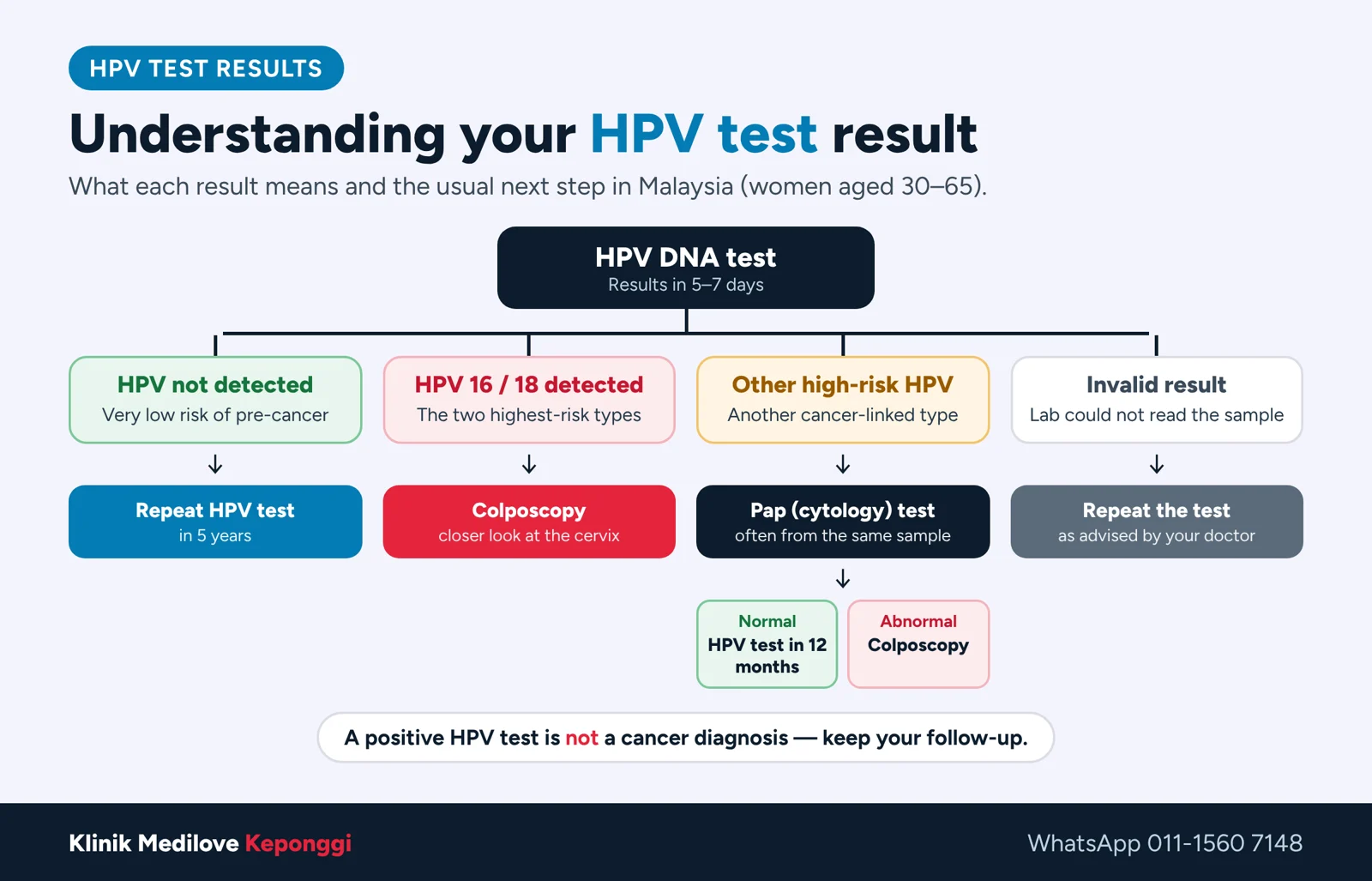
HPV test results are usually ready in 5–7 days. We will explain your HPV test result and the next step.
| HPV test result | What it generally means | Usual next step |
|---|---|---|
| High-risk HPV not detected | Very low risk of cervical pre-cancer in the next few years | Routine HPV test again in about 5 years |
| HPV 16 and/or 18 detected | The two highest-risk types are present | Referral for colposcopy (a closer look at the cervix) |
| Other high-risk HPV detected | Infection with another high-risk type | Pap (cytology) test — if normal, repeat HPV test in about 12 months; if abnormal, colposcopy |
| Invalid / unsatisfactory | The laboratory could not get a reliable result | Repeat the HPV test |
My HPV test is positive — what now?
Feeling worried is normal. Here is what a positive result does — and does not — mean.
What it means
- You have a common infection that needs monitoring.
- Most HPV infections clear by themselves within 1–2 years.
- If abnormal cells develop, they can usually be treated early and simply.
- Keeping your follow-up appointment is the most important step.
- Stopping smoking helps your body clear HPV.
What it does NOT mean
- It does not mean you have cancer.
- It does not prove your partner was unfaithful — HPV can stay silent for many years.
- It does not mean your partner needs an HPV test — there is no routine screening test for men.
- There is no medicine that removes HPV itself; follow-up checks are what protect you.
When should I seek medical attention?
Heavy bleeding or severe pain is not expected after an HPV test.
HPV test Kepong: frequently asked questions
Quick answers to common HPV test questions from our patients in Kepong.
How do I prepare for an HPV test?
Book a day when you are not on your period. For 48 hours beforehand, avoid vaginal intercourse, douching, tampons and vaginal creams, gels or lubricants unless prescribed. No fasting is needed.
How long do HPV test results take?
HPV test results at our Kepong clinic are usually ready in 5–7 days. We will contact you and explain the result and any next step.
Do you offer HPV self-sampling?
Not at the moment — self-sampling is temporarily unavailable at our clinic. Your HPV test will be collected by the doctor, and you can pause or stop at any time.
How often do I need an HPV test?
If high-risk HPV is not detected, the next HPV test is usually due in 5 years. You may need testing more often if you have weakened immunity or previous abnormal results.
Can I do an HPV test during my period?
It is best to avoid testing during normal menstruation because blood can affect the sample. Rebook a few days after your period ends.
I have had the HPV vaccine. Do I still need an HPV test?
Yes. The vaccine protects against the most common cancer-causing types but not all of them, and you may have been exposed before vaccination.
Does a positive HPV test mean my partner cheated?
No. HPV can remain silent for many years, so a positive result cannot tell when or from whom the infection came.
Can I have an HPV test if I am pregnant?
Tell the doctor first. Routine screening is often postponed until at least 6 weeks after delivery, unless you are due for follow-up of an abnormal result.
Can I request a female doctor?
Yes. A female doctor is available — please ask the clinic to confirm when you book your HPV test in Kepong.
Clinical sources
- Ministry of Health Malaysia. Guidelines for Cervical Cancer Screening in Malaysia 2023. Primary HPV testing for women aged 30–65; preparation guidance including avoiding menstruation and avoiding intercourse and intravaginal products for 48 hours.
- World Health Organization. WHO guideline for screening and treatment of cervical pre-cancer lesions for cervical cancer prevention, 2nd edition, 2021. HPV DNA detection recommended as the primary screening test.
Book your HPV test in Kepong
Not sure whether you need an HPV test or a Pap smear? We will review your age, previous results and symptoms and recommend the right cervical screening test for you. Read our Pap smear preparation guide too.
Ask us on WhatsAppPatient-friendly primary care, screening and women’s health services.
Find us
Lot C-08-G (ground floor), KepongGi,
Jalan Rimbunan Teratai 1,
52100 Kepong, Kuala Lumpur
Contact
011-1560 7148
Mon–Fri 8:00 am–9:00 pm
Sat–Sun 8:00 am–6:00 pm