Heart and circulation
This is the group most people picture first, and for good reason — cardiovascular disease is among the leading causes of death in Malaysia, and its main risk factors are silent.
A screening in this group typically covers:
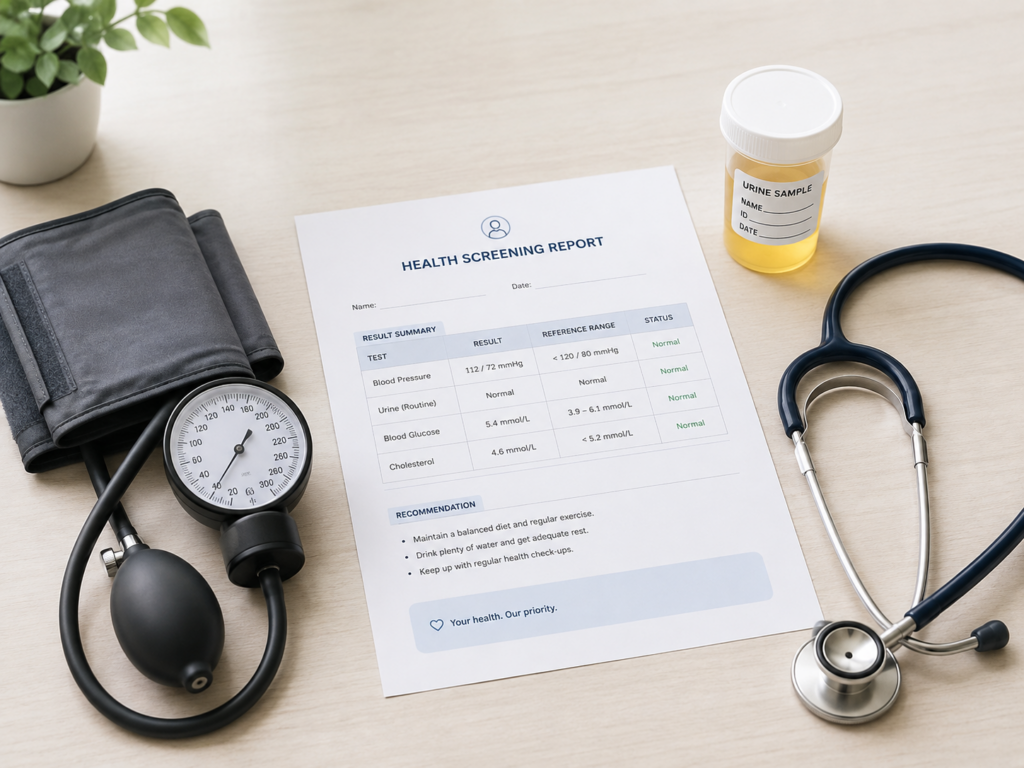
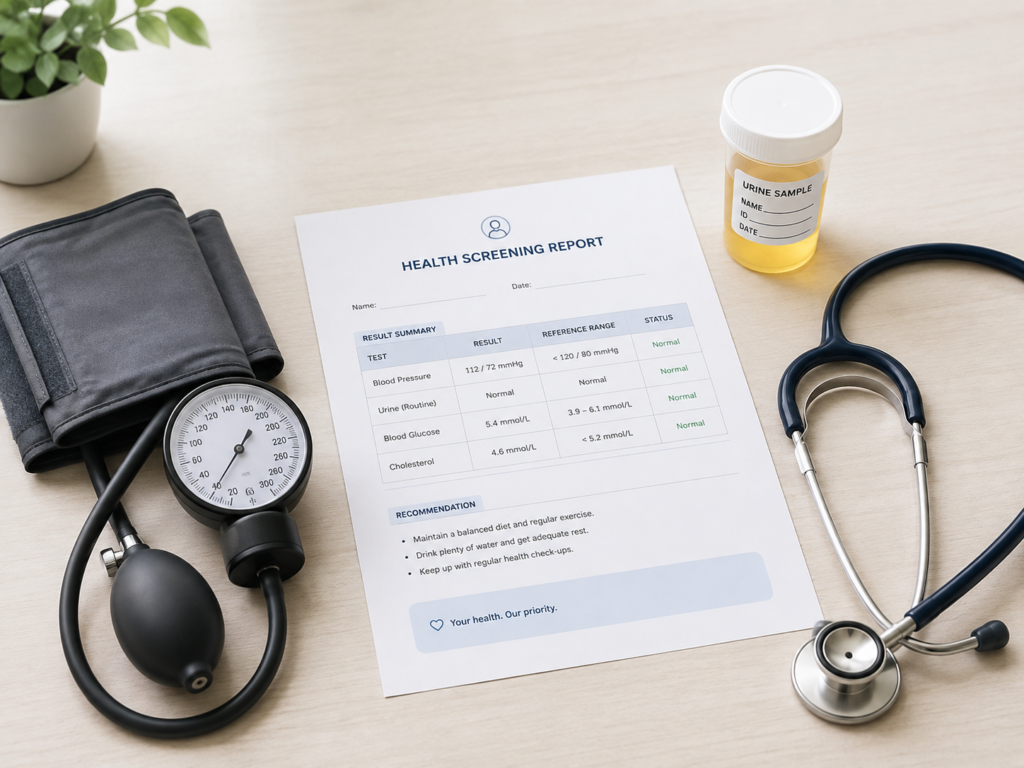
- Blood pressure — measured directly. High blood pressure has no reliable symptoms; the reading is the diagnosis.
- Cholesterol and lipids — a fasting blood test covering total, LDL, HDL and triglycerides. These cluster with blood sugar and blood pressure and are treated together.
- A resting ECG where clinically appropriate — a trace of the heart’s rhythm, offered based on your age, symptoms and risk rather than as a routine line for everyone.
Who needs it most: adults from around age 30 onwards, and earlier if you have a family history of heart disease, high cholesterol or high blood pressure.
Metabolic and blood sugar
The metabolic group is the highest-yield part of most screenings in our population, because diabetes and pre-diabetes are common and frequently undiagnosed.
Typically included:
- Fasting blood glucose or HbA1c — HbA1c reflects your average blood sugar over roughly three months and does not always need fasting. Either can pick up diabetes and pre-diabetes.
- Body measurements — weight, height, BMI and, importantly, waist circumference. Central weight around the middle at a normal BMI is common locally and is a risk signal on its own.
Who needs it most: screening for diabetes is recommended from age 30, annually — and earlier if you are overweight or obese (BMI ≥23 kg/m², or a waist of 80 cm or more in women and 90 cm or more in men) combined with another risk factor such as family history, high blood pressure or physical inactivity.
Kidney
Kidney damage is silent until it is advanced, which is exactly why it belongs in a screening rather than being left until symptoms appear.
Typically included:
- Kidney function on a blood test — a marker of how well the kidneys filter.
- Urine protein — protein leaking into the urine is one of the earliest signs of kidney stress, often before any blood-test change.
Who needs it most: anyone with diabetes or high blood pressure — for whom this is monitoring, not optional — and adults with a family history of kidney disease. If a report shows early kidney changes and you want to understand what the stages mean, CKD Stages Explained: What Stage 1–5 Mean for You walks through it.
Liver, thyroid and blood
This group rounds out the general blood panel and picks up abnormalities that are common but easy to miss.
Typically included:
- Liver function — enzymes and related markers.
- Full blood count — can reveal anaemia and other blood abnormalities.
- Thyroid function where clinically appropriate — thyroid problems are common, especially in women.
Who needs it most: these are generally part of a standard adult blood panel; thyroid testing in particular is guided by symptoms and risk rather than done routinely for everyone.
Cancer screening — a separate, targeted group
This is the part most often misunderstood. There is no blood test that clears you of all cancers, and a general screening does not rule cancer out. What exists instead are specific, evidence-based programmes for specific cancers:
- Cervical — HPV testing every five years for women aged 30–65 who test negative. The sample can be self-collected.
- Breast — clinical breast examination, and mammogram from age 50 (or from 40 with risk factors).
- Colorectal — a stool test (iFOBT) every two years for adults aged 50–75, done at home.
These are not a line on a general blood report; they are separate tests, chosen by your age and sex. Any screening that implies a single blood draw can rule out cancer is overstating what it can do.
The consultation — the part that isn’t a test
A “full body” screening is not just the tests. Two conversations do the real work:
- Before — your history, family history and what you’re actually worried about, which determines which of the groups above apply to you. Screening should be chosen to fit you, not sold as a fixed total.
- After — a results consultation, where the numbers are explained in the context of your age, sex and risk. A number on a page is not the same as knowing what it means for you.
So what does “full body” really mean?
It means a screening grouped to cover your major systems — heart, metabolism, kidneys, liver and blood — plus the targeted cancer programmes relevant to your age and sex. It does not mean a scan that sees everything, and it cannot promise you a clean year ahead; a normal result describes today.
The right screening for you is the one matched to your age, sex and risk — not the longest list. More tests mean more findings that need chasing, and not all of them matter.
If you already have a symptom
A screening is designed for people without symptoms, and it can be falsely reassuring if you already have one. If something is already wrong, see a doctor about that symptom rather than booking a screening.
See a doctor promptly if you have: a new breast lump, blood in your stool or urine, unintentional weight loss, a persistent change in bowel habit, a cough lasting more than two weeks — the threshold for tuberculosis testing in Malaysia — a cough with fever or night sweats, coughing up blood, unusual vaginal bleeding, or persistent unexplained tiredness.
Seek emergency care immediately for: chest pain or pressure; sudden weakness or numbness in the face, arm or leg, especially on one side; a drooping face; difficulty speaking or sudden confusion; sudden loss or blurring of vision; a sudden severe headache; difficulty breathing; fainting; or sudden severe abdominal pain. Go to the nearest emergency department or call 999. Do not wait for an appointment.
Common questions
Is a “full body” screening a full-body scan? No. It is a set of blood, urine and physical tests grouped across your major organ systems, plus targeted cancer screening by age and sex. It is not a single scan of your whole body, and no screening rules out all cancers.
Do I need every test on the list? Usually not. The right screening is matched to your age, sex and risk. A longer list produces more borderline results to chase, and not all of them are meaningful.
Do I need to fast? Usually yes for glucose and cholesterol — typically 8 to 10 hours, water allowed. You’ll be told when you book. If you have diabetes and take medication, ask how to handle your morning dose.
Can the cervical and colorectal tests be done without a clinic procedure? The HPV sample can be self-collected and the iFOBT stool test is done at home, then processed by the lab. This removes the embarrassment barrier for a lot of people.
What happens if something comes back abnormal? One abnormal number is information, not a diagnosis. Most are repeated or confirmed with a second test and interpreted alongside everything else about you, then you get a plan you actually understand.