Women’s Health · Breast Cancer Awareness · Pink October
Pink October reminds us about breast cancer. But knowing about it and taking action are two different things.
“I feel healthy. I don’t have a lump or any pain. Do I really need a mammogram?” It’s a question many women ask.
Breast cancer is the most commonly diagnosed cancer among Malaysian women. Yet some women put off screening for years. The challenge is not simply awareness: it’s helping people feel informed and supported enough to act.
Here’s how to turn breast cancer awareness into action: what screening means, when to consider it, and where to get help in Malaysia.
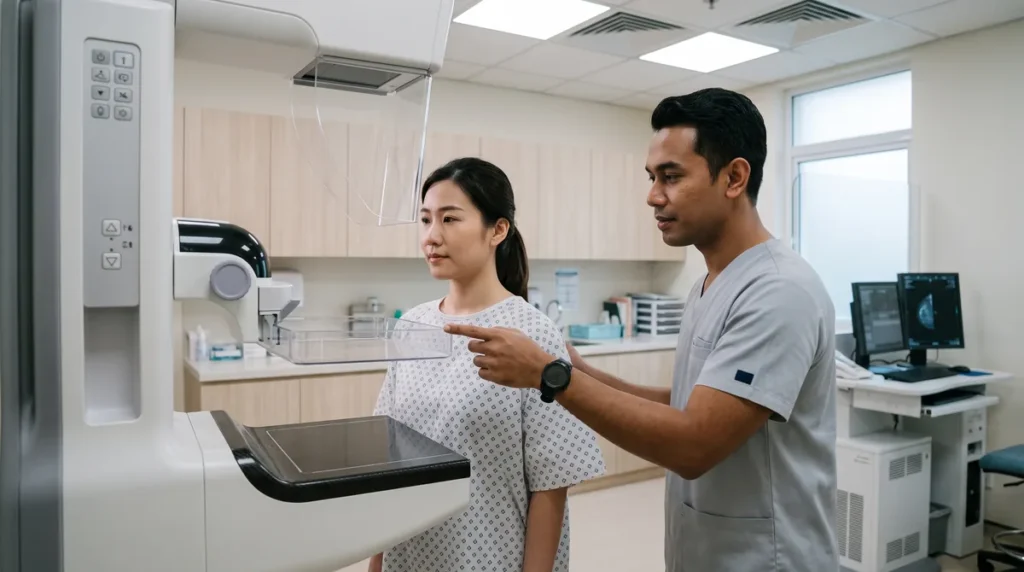
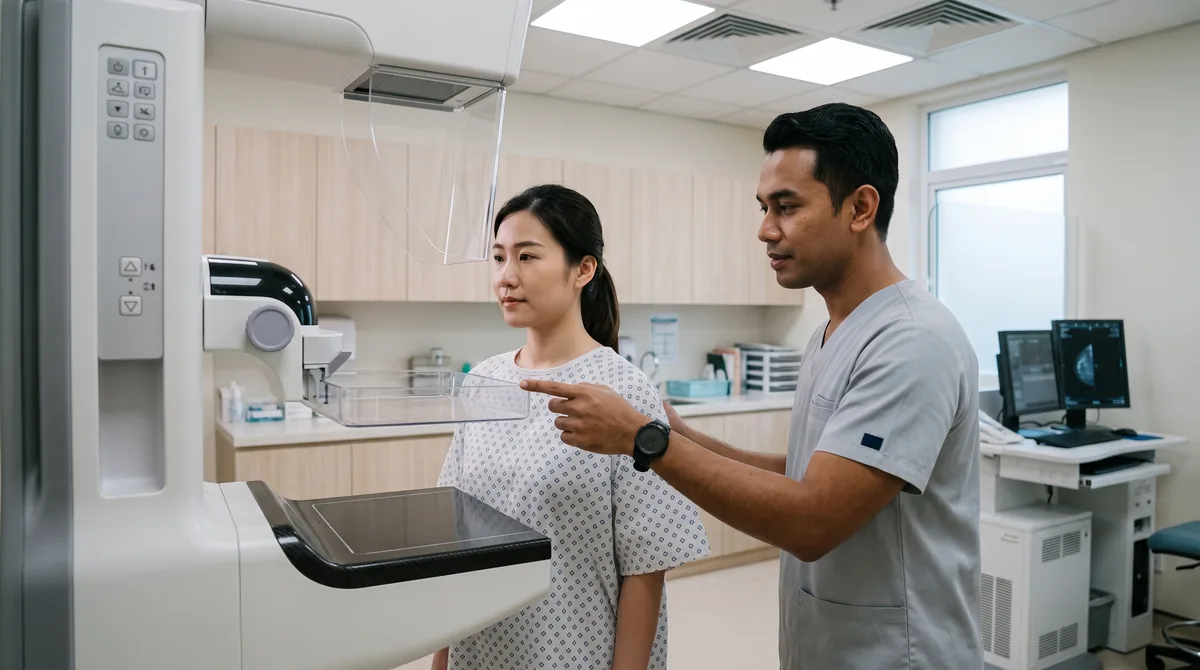
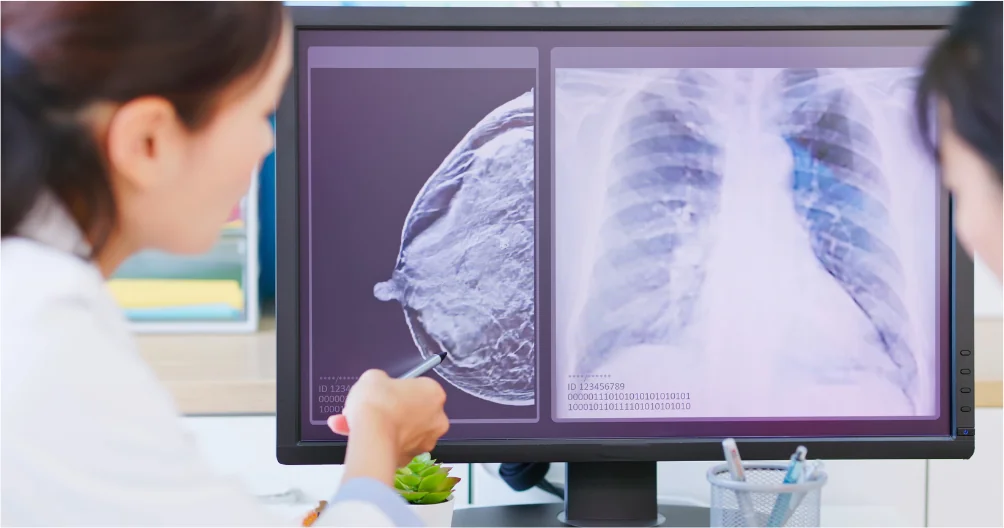
A radiographer explains what to expect before a screening mammogram. Routine screening is intended for people without symptoms.
Breast Cancer Awareness in Malaysia: Why This Matters
Two figures from Malaysian health reports show why timely screening and diagnosis deserve our attention.
About halfof breast cancers with a recorded stage were diagnosed at stage III or IV.
12.8%of Malaysian women aged 40 and above reported a screening mammogram within the preceding three years in NHMS 2023.
Early breast cancer may cause no noticeable symptoms. A screening mammogram can sometimes find a cancer before it can be felt, although no screening test detects every cancer. Earlier diagnosis is generally associated with better outcomes and more treatment options. That is why breast cancer awareness needs to lead to action, not just recognition of the pink ribbon.
Why Do Women Put Off Breast Cancer Screening?
It’s normal to have questions or concerns. These are six common reasons women may delay—and one thing worth knowing about each.
“I feel fine.”
Feeling healthy is good, but breast cancer can be present without pain or a lump. Screening is designed for people without symptoms.
“What if they find something?”
An abnormal mammogram does not automatically mean cancer. Sometimes further images or tests are needed to clarify the finding.
“I’m embarrassed.”
You can ask about a female radiographer, request an explanation and discuss privacy or discomfort before the examination.
“I don’t know where to go.”
There are government and private options, including the LPPKN mammogram subsidy for eligible women.
“I’m too busy.”
Work and family responsibilities can take priority. Start by checking when you last had a mammogram.
“Nobody told me I was due.”
Not everyone receives an individual reminder. Your doctor can help you decide when screening is appropriate.
Awareness is the first step. Action comes next.
Turning breast cancer awareness into action may be a conversation, checking your screening date, or arranging an appointment for an unusual breast change.
When Should You Start Mammograms in Malaysia?
There is no single schedule for everyone. The following summarises Malaysia’s Ministry of Health breast cancer guidance for women without symptoms.
Age / risk
General guidance
Under 40, average risk
Routine screening mammography is generally not recommended. Seek assessment for new breast changes.
40–49, average risk
Discuss your individual risk and the benefits and limitations of screening with a doctor; routine screening is not advised for everyone in this group under Malaysian guidance.
50–74, average risk
Consider screening mammography every two years, taking personal health and preferences into account.
Higher risk
A personalised plan, potentially involving earlier imaging or MRI, may be needed. Discuss family history and genetic risk with your doctor.
Some international guidelines begin routine screening at age 40. Recommendations may differ, so individual discussion matters.
Screening is for people without symptoms. A new breast change needs clinical assessment rather than waiting for the next screening mammogram.
New lump or thickening in the breast or armpit
Change in breast size or shape
Skin dimpling or an orange-peel appearance
New nipple inversion, persistent rash or crusting
Spontaneous nipple discharge, especially if bloody
Persistent, unexplained pain in one area
Most breast changes are not cancer, but they should still be checked—even after a normal mammogram.
Where Can You Get Breast Screening in Malaysia?
Suitable services depend on your age, symptoms, personal risk and programme eligibility.
LPPKN Mammogram Subsidy
A subsidy programme for eligible Malaysian women, targeting ages 40–70 with priority for higher-risk women. Check current income rules and panel-centre availability.
A Klinik Kesihatan, family doctor, imaging centre or breast specialist can help assess symptoms and risks, discuss screening, and arrange appropriate referrals.
You don’t need to do everything today. Pick the step that is relevant to you:
Age 50–74: Check your last mammogram date and discuss screening if you are due.
Age 40–49: Ask whether screening would be appropriate for your personal risk.
Family history: Discuss whether you need an earlier or more personalised plan.
New lump or breast change: Arrange a medical assessment promptly.
Someone you care about: Offer a helpful, supportive reminder—without pressure.
Frequently Asked Questions
Do I need a mammogram if I feel healthy?
Possibly. Screening is intended for people without symptoms. Your age and individual risk determine whether and when it is appropriate.
What happens during a mammogram?
A radiographer positions each breast on the machine and gently compresses it for a few seconds while X-ray images are taken, usually two views of each breast. The appointment usually takes about 20–30 minutes. Avoid deodorant, powder or lotion on the day, as these can show up on the images.
Is a mammogram painful?
Breast compression can cause brief discomfort. Tell the radiographer if you are worried; the compression for each image usually lasts only a few seconds.
Can ultrasound or a tumour-marker blood test replace a mammogram?
Not routinely. Ultrasound is useful in selected diagnostic situations, but it is not generally a substitute for average-risk screening mammography. Tumour markers such as CA 15-3 are not recommended for routine breast cancer screening.
Does an abnormal mammogram mean I have cancer?
No. Many abnormal findings are benign. Additional imaging or, sometimes, a biopsy may be needed to determine what a finding means.
Should I still check my own breasts?
Yes. Being breast aware, knowing how your breasts normally look and feel, is a core part of breast cancer awareness. It helps you notice a change early, but you still need a screening mammogram when you are in the recommended age group.
Does a family history mean I will get breast cancer?
No. Most women with a family history do not develop breast cancer, and many women who are diagnosed have no close relative with it. A strong family history may mean you need earlier or more frequent screening, so tell your doctor about any close relatives with breast or ovarian cancer.
Can men develop breast cancer?
Yes, although it is uncommon. A new lump or unusual nipple change in a man should also be assessed.
When is Breast Cancer Awareness Month?
October is Breast Cancer Awareness Month, often called Pink October. It is a good time to check when your last mammogram was and to have a breast change assessed, but screening and symptom checks are important all year round.
Is PeKa B40 a free mammogram programme?
No. The PeKa B40 health screening includes clinical breast examination for eligible women. The LPPKN programme is a separate route to subsidised mammography for eligible women.
A Final Thought: Breast Cancer Awareness Is Only the Beginning
Pink ribbons remind us that breast cancer matters. But breast cancer awareness becomes more useful when it helps someone ask a question, understand their options or get a new breast change checked.
You don’t need to do everything today. Just take the next appropriate step for your health.
Breast Health Support at Klinik Medilove Keponggi
At Klinik Medilove Keponggi 仁爱医务所, during Breast Cancer Awareness Month and all year round, our medical team can discuss your breast concerns and risk factors, and advise on assessment, imaging or specialist referral where indicated.
Address: Lot C-08-G, KepongGi, Jalan Rimbunan Teratai 1, 52100 Kepong, Kuala Lumpur